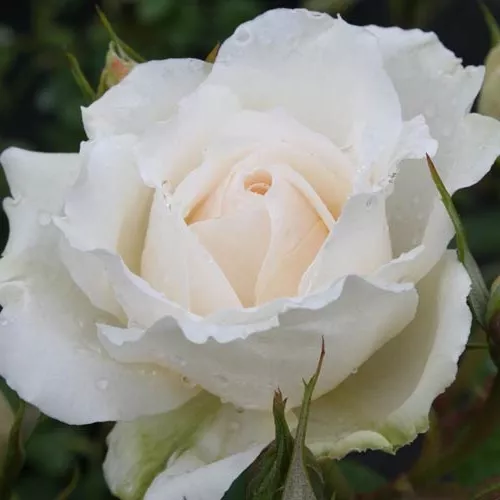
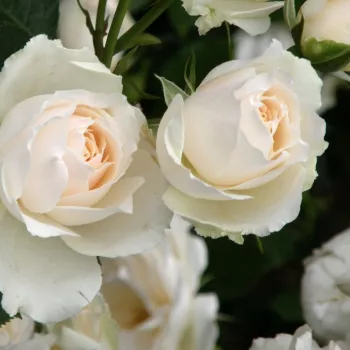
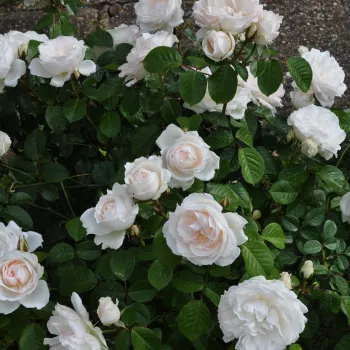
PRINCESS OF WALES – white bedding floribunda rose – Harkness
On a breezy Cornish afternoon, Princess of Wales settles calmly into coastal gardens, its bushy habit and pure white blooms creating a gentle windbreak that feels naturally refreshing. This compact floribunda is well suited to small family plots and balcony pots, coping steadily with blustery days and damp spells while still flowering generously over a long season. In a roomy 40–50 litre container or a neat bed, its semi-double, pollinator-friendly flowers and dark glossy foliage develop year by year as roots, then shoots, then full ornamental value knit it securely into the soil, making it a reliable choice for low-fuss coastal-style verandas.
Usage options
| Target area |
Reasoning |
| Small coastal flower beds near a seating area |
Compact, bushy growth (around 65–95 cm) forms a gentle, low barrier that softens wind around a terrace, while the pure white clusters stand out against shingle or gravel with minimal shaping required, ideal for beginners. |
| Large containers on a coastal veranda (40–50 litres) |
Performs well in generous pots where its moderate height and dense foliage give structure without overpowering the space; a 40–50 litre container allows stable roots and easier watering control on exposed balconies, perfect for busy-owners. |
| Long-season flowering feature by the front door |
Remontant flowering with a generous second flush keeps the entrance bright for much of the season, the medium, semi-double blooms refreshing the display without complex pruning or deadheading regimes, suited to time-poor. |
| Low, informal hedge along a path or driveway |
Recommended hedge spacing (around 35 cm) creates a continuous, low flowering line that is easy to maintain and renew over the years, giving a long-lived structural edge without demanding specialist skills, reassuring for homeowners. |
| Family garden bed with clay or heavier soils |
Once established in improved but heavier ground, the bushy, well-anchored root system supports reliable flowering and reduces the risk of plants rocking in bad weather, especially valuable where winter storms are common for coastal gardeners. |
| Mixed white-and-silver “seaside” border |
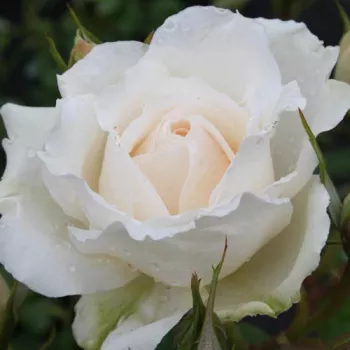
The stable pure white colour, with a soft ivory centre that barely fades even in bright sun, gives a clean, cool focal tone that works across the whole season without replanting, appreciated by stylists. |
| Lightly scented, relaxing seating corner |
Medium, softly sweet fragrance adds a gentle note around a bench or tea table, noticeable without being overpowering and needing no special care beyond routine feeding and watering, attractive for scent-lovers. |
| Wildlife-friendly yet tidy family border |
Semi-double blooms with accessible stamens support visiting pollinators, and modest orange-red hips add autumn interest, all within a contained, bushy framework that stays neat for years with basic seasonal pruning, ideal for nature-minded. |
Styling ideas
- Seaside-Edge Border – combine with blue Festuca and sea kale along a shingle strip to echo beach tones for relaxed coastal-style lovers
- White-Tea Corner – plant near a small bistro set with lavender in matching pots to frame a calm spot for late-afternoon tea drinkers
- Veranda Statement Pot – grow one rose in a 50 litre clay container with trailing thyme to soften the rim for balcony and veranda owners
- Pathway Ribbon – repeat at 35 cm intervals along a front path with low Gaillardia behind for informal hedge enthusiasts
- Soft-Girly Mix – weave through pastel perennials and silvery foliage in a small bed for those creating a light, feminine garden feel
Technical cultivar profile
| Parameter |
Data |
| Name and registration |
Floribunda bed rose, registered as HARdinkum; sold as Princess of Wales Masterpiece Collection HARdinkum, exhibition shrub / floribunda class, verified authenticity for premium garden use. |
| Origin and breeding |
Bred by Robert B. Harkness in the United Kingdom from ‘Sexy Rexy’ × (‘Pearl Drift’ × ‘Autumn Fire’); introduced and first distributed by R. Harkness & Co. Ltd. in 1997. |
| Awards and recognition |
Holder of the RHS Award of Garden Merit since 2002, indicating dependable performance, sound garden value and relative ease of cultivation under typical British growing conditions. |
| Growth and structural characteristics |
Bushy, medium-height shrub reaching about 65–95 cm high and 50–70 cm wide, moderately thorny, with dense, dark green glossy foliage that provides good visual cover in beds and containers. |
| Flower morphology |
Semi-double, medium-sized clustered blooms with roughly 13–25 petals, cup-shaped and freely produced; remontant, with a reliable second flowering wave after the main early-summer display. |
| Colour data and phenology |
Pure white base colour with a subtle ivory centre; buds open cream to white, holding tone well even in bright weather; overall effect remains cool and fresh as petals age and become slightly translucent. |
| Fragrance and aroma |
Softly sweet, medium-strength fragrance that is clearly noticeable at close range without overwhelming seating or doorway areas, adding a gentle sensory layer to compact family gardens. |
| Hip characteristics |
Forms small, spherical hips about 10–14 mm in diameter, orange-red and moderately abundant, providing additional ornamental interest from late season into autumn and early winter. |
| Resistance and winter hardiness |
Hardy to around –21 to –18 °C (RHS H7, Swedish zone 3, USDA 6b); disease resistance assessed as medium for powdery mildew, black spot and rust, requiring routine but not intensive monitoring. |
| Horticultural recommendations |
Best in sunny positions with well-drained soil; suitable for beds, edging, low informal hedges and larger containers, at 35–65 cm spacing depending on use, with moderate maintenance and occasional pest control. |
Princess of Wales HARdinkum offers compact, long-season white flowering, soft fragrance and neat structure in beds or large containers, with the steady resilience of an own-root rose, making it a thoughtful choice for calm, coastal-inspired gardens.