PRINCESSE DE MONACO® GPT – cream-white-pink climbing rose - Meilland
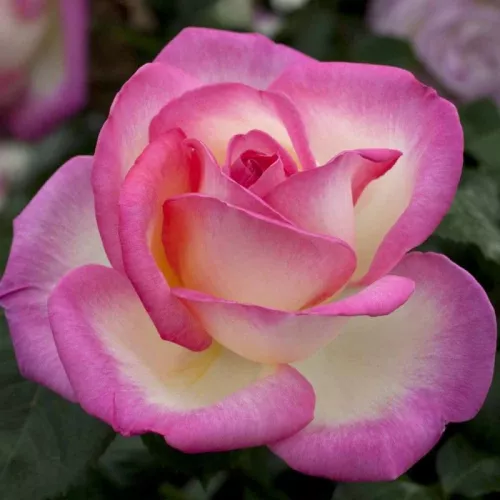
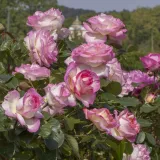
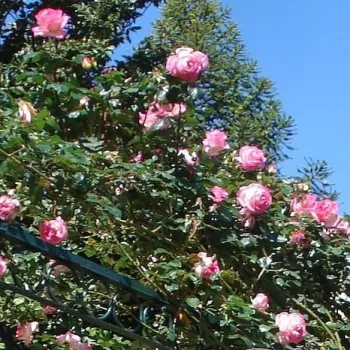
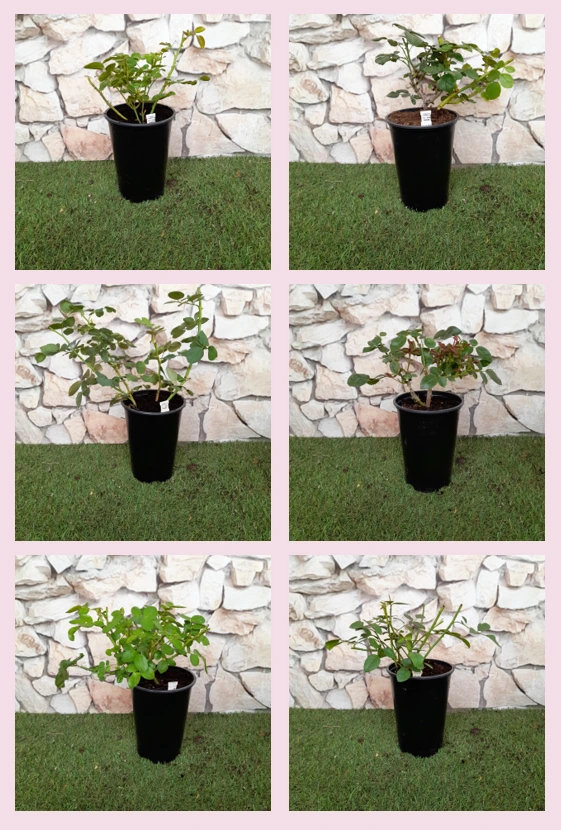
Along a coastal veranda or sunny fence this rose quickly builds a gently screening green wall, its dense foliage creating a natural anchor against breezy, salt-laced air while you enjoy late-afternoon tea in sheltered corners. Large, cupped blooms open in a refined cream-white with a ruby-pink edge, repeating reliably from summer onwards for a long flowering season in an average family garden. As an own-root plant it develops steadily, with roots in year one, taller flowering shoots in year two and full ornamental value by year three for reassuring long-term stability. Trained on an arbour, pergola or house wall it softens hard structures, while a minimum 40–50 litre container lets you enjoy its colour on compact verandas. With moderate care – mainly watering in dry spells and the occasional tidy – it rewards you with clean-lined, elegant blooms that suit both classic and contemporary coastal-inspired spaces.
Usage options
| Target area | Reasoning |
|---|
| Coastal veranda windbreak |
The dense, glossy foliage trains easily along railings, giving a soft green screen that filters sun and breeze without feeling heavy, ideal where you want privacy and shelter on a small deck for a relaxed beginner. |
| Wall-trained feature by a seating nook |
Its tall, climbing habit covers bare brick or render with height and structure, while the large cream-white and pink flowers frame a bench or bistro set, creating a long-season focal point for the busy urban homeowner. |
| Pergola or arbour over a path |
Trained over an arbour or light pergola, the strong framework and repeat flowering give a romantic tunnel of colour without complex pruning, offering a dependable seasonal highlight for the casual cottage-garden gardener. |
| Large container on a small terrace |
In a 40–50 litre or larger pot, it makes a vertical accent where borders are limited, its own-root vigour filling a trellis with flowers while staying manageable for the space-conscious balcony or terrace owner. |
| Family garden boundary or partition |
Planted along a low fence with recommended spacing, it forms a loose living curtain that defines play areas and dining spaces, keeping views soft while remaining practical to look after for the time-pressed family gardener. |
| Clay soil corner with improved drainage |
Once the planting hole has been prepared with drainage and organic matter, the robust framework and own-root stamina cope well as the soil settles, offering reliable structure and flower display to the cautious first-time planter. |
| Refined “girly” coastal border |
The cream-white and pink blooms pair beautifully with greys and blues for a soft, seaside-inspired palette, giving an elegant, feminine note without fuss for lovers of romantic, coastal-style design. |
| Long-term investment planting near the house |
As an own-root climber it matures steadily, regenerating from the base if winter or wind cause damage, so a single planting can serve for many years with only moderate maintenance for the practical, value-conscious buyer. |
Styling ideas
- Seaside-Veranda Screen – Train it along a balcony trellis with blue pots and light gravel underfoot for a breezy coastal feel – ideal for flat-dwellers wanting privacy without losing light.
- Romantic-Arbour Walk – Arch two plants over a narrow path and underplant with soft grasses for a gentle tunnel of colour – suited to families who like a pretty “wow” moment in a small garden.
- Pastel-Coastal Border – Combine with sea kale, Festuca and pale phlox to echo Cornish shingle tones – perfect for coastal-style lovers aiming for an elegant, feminine planting strip.
- Cottage-Fence Charm – Let it climb a low fence with woodland sage at the base for colour all summer – good for hobby gardeners seeking impact from just a few reliable plants.
- Courtyard-Statement Pot – Grow it in a large 50 litre container with a slim obelisk for vertical height – best for busy owners of paved courtyards who want drama with simple care.
Technical cultivar profile
| Parameter | Data |
|---|
| Name and registration |
Climbing large-flowered rose, registered as MEIbergamu, marketed as PRINCESSE DE MONACO® GPT in the MEILLAND Classics collection; exhibition name Princesse de Monaco, Cl. |
| Origin and breeding |
Sport of ‘Princesse de Monaco’, bred by Meilland International, Australia 1985, later introduced by Meilland Richardier in France in 2014; exact registration year not documented. |
| Growth and structural characteristics |
Vigorous climbing habit reaching about 210–310 cm in height and 120–190 cm spread, with dense, dark green, glossy foliage and moderate thorns; self-cleaning tendency is only moderate. |
| Flower morphology |
Large, double, cup-shaped blooms with around 26–39 petals, usually borne solitary; remontant with a notably abundant second flush, giving an extended flowering season in suitable conditions. |
| Colour data and phenology |
Cream-white petals edged with pink to carmine; newly opened blooms show a clear ruby edge, which softens to peach-pink before lightening in strong sun; colour retention overall is moderate. |
| Fragrance and aroma |
Fragrance is very light, with only a fresh, lively impression detectable at close range; double flowers and limited scent mean it is grown mainly for visual impact rather than aroma. |
| Hip characteristics |
Rose hips form sparsely due to the double flowers; where present, they are ellipsoidal, orange-red, roughly 10–14 mm in diameter and mainly of ornamental interest late in the season. |
| Resistance and winter hardiness |
Hardy to about -34 to -32 °C (H7, USDA 4a, Swedish Zon 5); disease resistance to black spot, powdery mildew and rust is moderate, and warm, dry spells require regular watering. |
| Horticultural recommendations |
Best in full sun on walls, fences, pergolas or arbours; allow 140–250 cm between plants depending on use, with 0.4–0.5 plants/m² in mass schemes, and plan occasional pruning and cleaning of spent blooms. |
PRINCESSE DE MONACO® GPT offers long-season flowering, elegant screening and dependable own-root longevity, making it a thoughtful choice for gardeners who want lasting structure with manageable care.