RHEA – red hybrid tea rose – pharmaROSA®
Bring a sense of sun-warmed coastal refreshment to your garden with RHEA, a compact hybrid tea whose velvety wine-red blooms glow even on breezy, overcast days. Bred for reliability, it suits typical family plots in Cornwall, Devon and other exposed areas, coping well where strong winds and salt-laden air meet heavier soils and careful drainage is essential. The bushy, barely thorny habit makes everyday maintenance straightforward, while its strong scent drifts across patios and verandas for relaxed evening tea-time moments. As an own-root plant, RHEA offers steady longevity and the capacity to regenerate if cut back hard, settling in gradually as year one builds roots, year two fills with shoots and year three reveals its full ornamental value. Ideal in containers or beds for small coastal-style spaces, its repeat-flowering performance keeps colour coming long after other plants have faded.
Usage options
| Target area |
Reasoning |
| Front garden feature by the path |
The compact, bushy habit and moderate height let RHEA sit neatly by a front path without overpowering the space, while its rich red flowers and strong scent create a welcoming, smart first impression for passing visitors and returning homeowners. |
| Coastal veranda or balcony container |
RHEA’s good heat tolerance and adaptable roots make it reliable in a large container of at least 40–50 litres, suiting Cornish and Devon verandas where steady watering, shelter from the harshest gusts and attention to free-draining compost support coastal-style lovers. |
| Small family seating area wind-filter |
The dense, leafy structure forms a low, decorative screen around seating, softening wind without blocking light; this helps create a calm corner for tea after a beach walk, particularly where coastal breezes and heavier soils demand thoughtful planting for families. |
| Mixed flower bed with perennials |
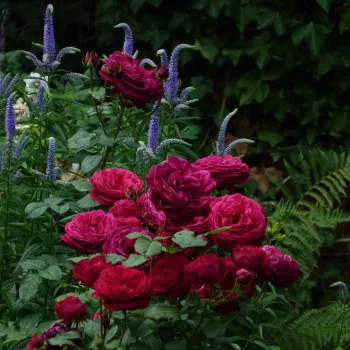
Its repeat-flowering and rich wine-red tones stand out among cool grasses and low groundcovers, while the compact footprint leaves space for perennials; combining with sea kale or ornamental fescues gives a long-season, textural display valued by busy gardeners. |
| Cutting patch for home bouquets |
The long-stemmed, very full hybrid tea blooms are ideal for simple, elegant arrangements, providing reliable stems through the season so you can cut flowers without stripping the garden, suiting flower-loving but time-poor beginners. |
| Low-maintenance family border |
High disease resistance to black spot, mildew and rust means little spraying or intervention, making it easy to keep borders looking tidy and healthy through typical British summers, an advantage for busy-owners. |
| Child-friendly, narrow side return |
The barely thorny growth minimises scratches on passing hands and sleeves in tight side paths or play areas, while the compact spread fits narrow strips and still provides colour and scent for curious young families. |
| Long-term structural planting in small gardens |
As an own-root shrub, RHEA retains shape and vigour for many years, regenerating well if pruned harder after harsh winters and gradually strengthening rather than weakening with age, which reassures long-term-minded homeowners. |
Styling ideas
- Sea-breeze classic – Plant RHEA in a 50-litre tub with pale gravel mulch and a low Festuca grass skirt for a pared-back, coastal look – ideal for coastal-style lovers.
- Veranda trio – Group three pots of RHEA along a sunny railing, underplanted with trailing Saxifraga for soft edges – perfect for balcony and veranda owners.
- Wine-red focus – Use a single RHEA as a centrepiece in a small front bed with silver foliage and sea kale to highlight its velvety colour – suited to design-conscious beginners.
- Family-friendly hedge – Line a short path with spaced RHEA plants to form a low, nearly thorn-free flowering border – convenient for families with children and pets.
- Cutting corner – Combine RHEA with airy grasses and simple white perennials in a dedicated patch for easy, repeat cutting – attractive to home bouquet enthusiasts.
Technical cultivar profile
| Characteristic |
Data |
| Name and registration |
RHEA is a hybrid tea rose marketed as Rhea Hybrid tea rose pharmaROSA®, a garden and cutting variety from the hybrid tea group, verified for authenticity for consumer planting. |
| Origin and breeding |
Hybrid tea of unknown parentage, discovered and selected by PharmaRosa® in Germany in 2002, distributed by PharmaRosa® Ltd. and introduced as an own-root garden rose. |
| Growth and structural characteristics |
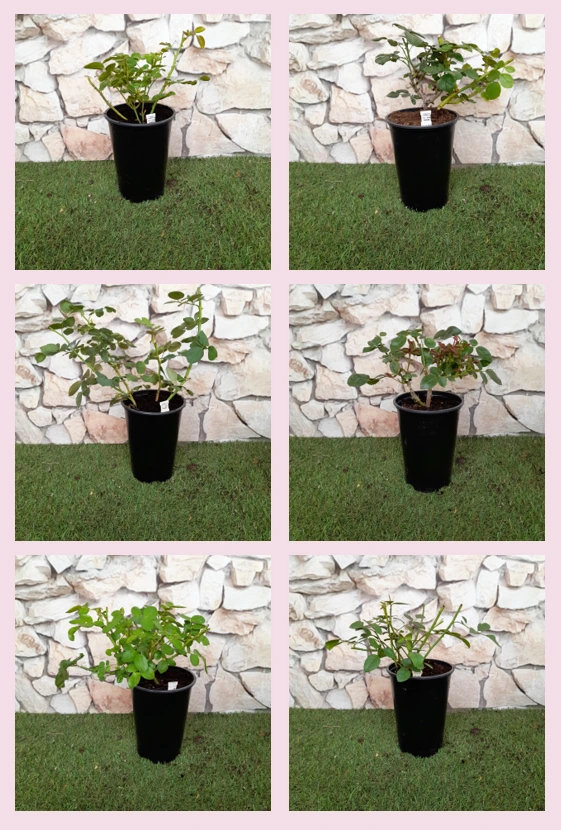
Compact, bushy shrub reaching about 75–105 cm in height and 50–70 cm spread, with moderately dense, dark green glossy foliage and comparatively few prickles on the stems. |
| Flower morphology |
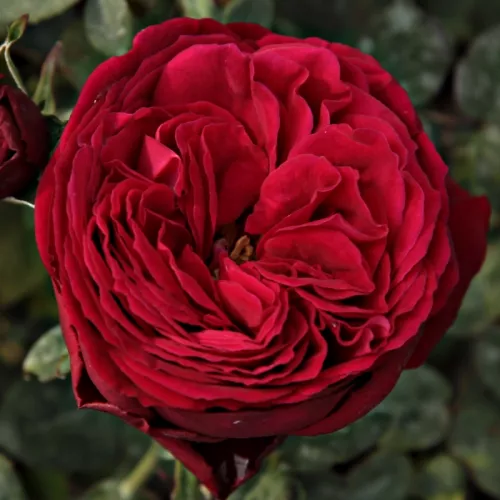
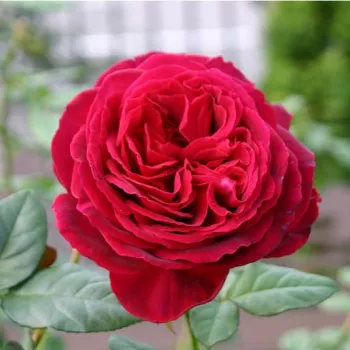
Very full, rosette-shaped hybrid tea flowers, usually borne singly on stems, with more than 40 petals per bloom and large flower size in the 2.75–3.95 inch diameter range. |
| Colour data and phenology |
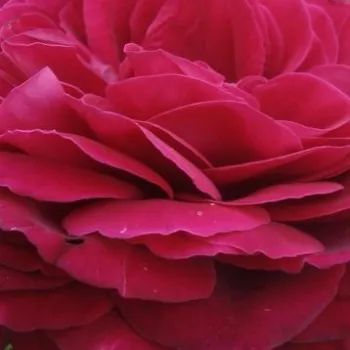
Rich wine-red blooms with velvety texture; tones vary from deep carmine and ruby when opening, then soften towards mahogany-chestnut shades, generally retaining colour well through the season. |
| Fragrance and aroma |
Strongly scented hybrid tea, with a noticeable perfume detectable from a distance in still air, designed primarily as an ornamental and cutting flower rather than for pollinator support. |
| Hip characteristics |
Hip set is sparse due to the very double blooms; where formed, small rounded hips about 10–15 mm across may appear, but they rarely contribute significantly to ornamental effect. |
| Resistance and winter hardiness |
Shows good resistance to powdery mildew, black spot and rust, with low maintenance needs; winter hardy approximately to −21 to −18 °C, corresponding to RHS H7 and USDA zone 6b. |
| Horticultural recommendations |
Performs best in sunny beds, specimens or large containers; allow about 50–100 cm spacing, keep soil well drained, water during prolonged droughts and deadhead to encourage repeat flowering. |
RHEA – red hybrid tea rose – pharmaROSA® offers compact, long-lived, strongly scented blooms for beds or containers, with own-root resilience that simplifies care; consider it if you want lasting colour from a straightforward garden rose.