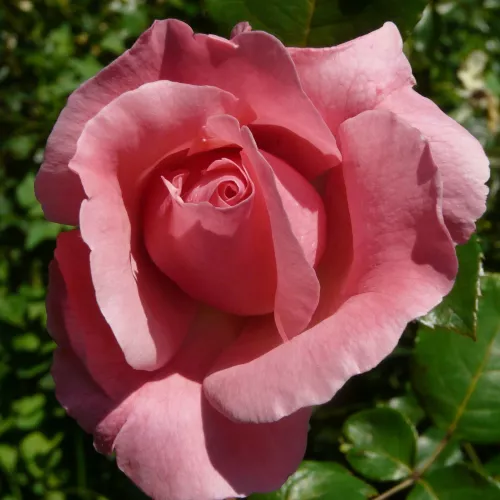
QUEEN ELIZABETH – pink bedding grandiflora rose - Lammerts
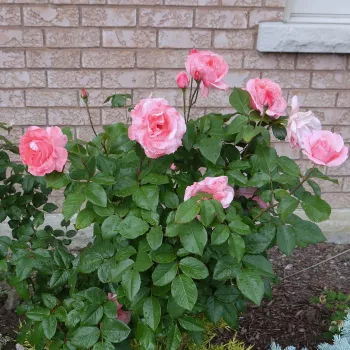
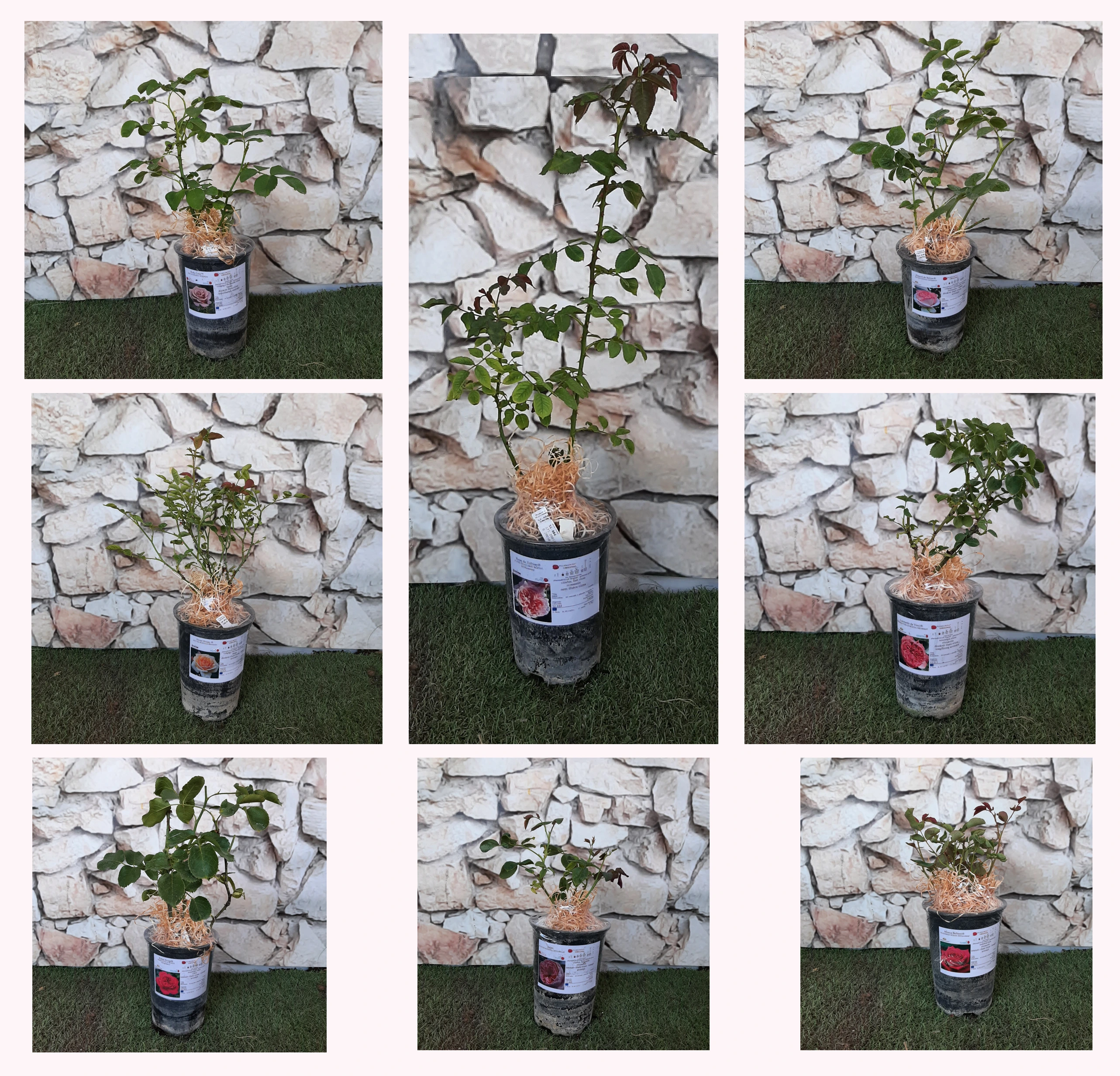
Imagine a sheltered coastal veranda where Queen Elizabeth stands tall, its silky mid-pink blooms catching the sun while the breeze carries a light, sweet fragrance. This upright grandiflora forms a naturally tidy, vertical screen that copes well with brisk seaside conditions and calmly brushes off salty winds and showers, giving you privacy without fuss. In a 2‑litre pharmaROSA® ORIGINAL pot, your rose arrives well rooted for straightforward planting in borders or 40–50 litre containers, settling quickly with minimal attention beyond basic watering and a simple yearly tidy. Over time, its own-root resilience supports a long, reliable life and steady flowering, so you can enjoy increasingly generous flushes from spring to autumn as it integrates into your everyday outdoor routine, offering an easy, long-term focal point for family gardens, relaxed afternoons and unhurried coastal weekends with tea, books and scattered seashells on the table.
Usage options
| Target area | Reasoning |
|---|
| Coastal windbreak on a veranda |
The tall, upright habit forms a slim vertical screen, ideal for edging a balcony or terrace without overwhelming limited space. Planted in deep, heavy containers, it anchors well and copes with gusty, salty air in exposed Cornish or Devon settings – a calm solution for the beginner. |
| Feature rose in a small front garden |
Its statuesque height and clear mid-pink flowers create instant kerb appeal in a modest plot, while the narrow spread keeps paths and driveways easy to manage. Own-root vigour underpins a long lifespan, so you can plan the space once and enjoy it for years – reassuring for the busy homeowner. |
| Mixed border with perennials |
Clustered, remontant blooms add structure and colour rhythm from early summer onwards, weaving neatly between perennials without sprawling. As the framework strengthens each year, you gain reliable height and repeat colour with little more than seasonal pruning – ideal for relaxed hobby-gardeners. |
| Low-maintenance flowering hedge |
The dense, glossy foliage and repeated flushes of pink flowers create an elegant, semi-formal hedge along boundaries or driveways. Moderate self-cleaning means you can deadhead when time allows, without losing overall neatness – a practical choice for time-pressed families. |
| Large container on a sheltered patio |
In a 40–50 litre pot with good drainage, the upright shape delivers height and privacy where borders are limited. Regular watering and occasional feeding are usually enough to keep flowers coming, so you enjoy a long season from a compact footprint – a good fit for small-space gardeners. |
| Cutting patch for home arrangements |
Long, straight stems and well-formed, cupped blooms make this rose excellent for vases, giving you classic, fragrant stems to bring indoors. The remontant habit means fresh cuts throughout the season without compromising the display outside – perfect for creative flower-loving owners. |
| Long-term structural planting in family gardens |
This own-root rose is bred for durability, developing strong roots in the first year, more substantial top growth in the second, and its full ornamental impact by the third, supporting decades of dependable presence – a thoughtful choice for forward-planning buyers. |
| Coastal-style gravel or shingle bed |
Planted into improved, free-draining pockets within shingle or gravel, it offers vertical colour and glossy foliage above drought-aware groundcovers, while shrugging off blustery showers and persistent sea breezes, creating a bright, low-fuss accent – well suited to seaside-style enthusiasts. |
Styling ideas
- Seaside-Screen – line a veranda edge with Queen Elizabeth in large, matching tubs, underplanted with silver Festuca to echo dune grasses – ideal for coastal balcony owners seeking soft privacy.
- Pink-Promenade – flank a front path with a loose hedge of this rose, interplanted with low Lavandula to add scent and contrast – suited to families wanting welcoming, easy-care structure.
- Tea-Corner – place a single specimen in a 50 litre container beside a bistro set, with trailing sea kale in nearby pots – for homeowners who enjoy quiet afternoon breaks outdoors.
- Perennial-Ribbon – weave Queen Elizabeth through a border of Echinacea and Artemisia, its vertical lines rising above relaxed drifts – attractive for hobby gardeners favouring naturalistic planting.
- Shell-Garden – set the rose in a shingle bed dotted with pale stone and low Hypericum, evoking a bright coastal walk – perfect for beginners wanting a simple, beach-inspired layout.
Technical cultivar profile
| Parameter | Data |
|---|
| Name and registration |
Queen Elizabeth grandiflora bedding rose; ARS exhibition name ‘Queen Elizabeth’; group: grandiflora bed rose, primarily used as a bedding, hedge and specimen variety. |
| Origin and breeding |
Bred by Walter Edward Lammerts, Armstrong Nurseries, USA, from ‘Charlotte Armstrong’ × ‘Floradora’; breeding completed 1951, introduced 1954 via Jackson & Perkins. |
| Awards and recognition |
Winner of Portland Gold Medal, AARS and multiple international gold medals; inducted into the World Federation of Rose Societies Hall of Fame as World’s Favourite Rose. |
| Growth and structural characteristics |
Strong, upright habit to 180–260 cm high and 70–110 cm wide, moderately thorny, with dense, glossy dark green foliage forming a tall, narrow, well-branched framework. |
| Flower morphology |
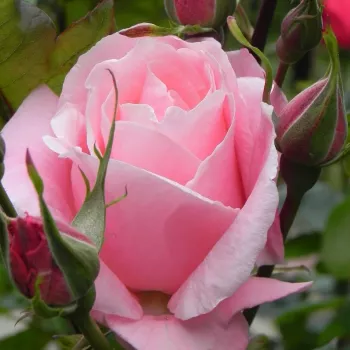
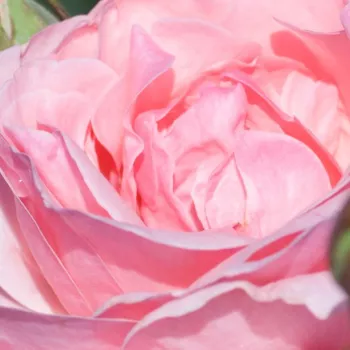
Large, double, cupped blooms with 26–39 petals, borne in clusters; flower size typically 2.75–3.95 inches, remontant with a generous second flush after the main flowering. |
| Colour data and phenology |
Mid-pink flowers with a delicate silvery sheen; ARS mp, RHS 65B outer, 65C inner; colour softens to light pearly pink in strong sun, richer in cooler, milder conditions. |
| Fragrance and aroma |
Mild, sweet and refined scent that lends a gentle perfume to seating areas and cut arrangements without overwhelming nearby spaces; primarily ornamental, of moderate pollinator interest. |
| Hip characteristics |
Moderately produced ovoid hips, 12–18 mm, orange-red and decorative in autumn; they extend seasonal interest after flowering, especially visible on taller, hedge or specimen plantings. |
| Resistance and winter hardiness |
Hardy to around −26 to −23 °C (RHS H7, Swedish Zone 4, USDA 5b); black spot resistant, with moderate susceptibility to mildew and rust, best supported by good air circulation. |
| Horticultural recommendations |
Prefers a sunny site with well-drained but moisture-retentive soil; moderate maintenance with occasional plant protection, regular deadheading and formative pruning to maintain height and flowering. |
QUEEN ELIZABETH offers statuesque vertical colour, repeat flowering and reliable own-root longevity, making it a refined, easy-care choice for lasting structure in coastal and family gardens; consider it where you want height with minimal complication.