RANDILLA ROSE – pink dwarf mini rose - Interplant
Imagine stepping onto your coastal veranda after a windy walk, the air still sharp with sea spray, and finding your shingle beds softened by Randilla – a compact rose that keeps its pastel blooms neat and close to the ground. This dwarf, own-root shrub settles in steadily, offering reliable colour while coping well with blustery weather and the kind of soil that benefits from careful drainage and water management for firm anchoring in exposed family gardens. Its naturally compact habit makes it ideal for 40–50 litre containers on a sunny or lightly sheltered terrace, while the medium maintenance level remains manageable if you prefer not to spend every weekend pruning. Over time, the own-root structure supports a long-lived, regenerating plant, helping it maintain ornamental value with minimal fuss and making it a charming choice for beginners, busy families and coastal verandas where space is precious yet you still want a touch of soft, pink romance.
Usage options
| Target area |
Reasoning |
| Small coastal veranda containers |
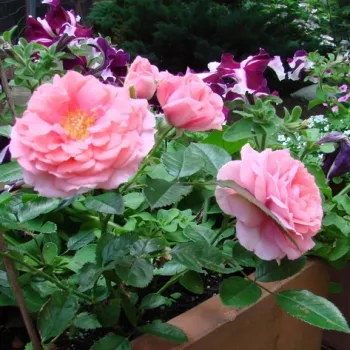
The compact height and spread make this rose ideal for 40–50 litre pots on breezy balconies or verandas, where you want gentle colour without dominating the space, particularly suited to coastal-style beginners. |
| Low edging along shingle or gravel paths |
Its dwarf, ground-hugging habit creates a tidy edging line that softens hard shingle or gravel, with repeat flowering giving long-season interest for those who prefer understated structure, ideal for informal family gardeners. |
| Front of mixed borders in family gardens |
The modest height slots easily into the front of borders without shading other plants, providing soft pink accents that remain harmonious with perennials and grasses, appealing to busy home owners. |
| Mass planting in small beds |
Recommended planting distances allow even coverage at 8–9 plants per m², quickly forming a coherent, low pink carpet that requires only occasional grooming, convenient for low-maintenance planners. |
| Rock garden pockets and raised beds |
The shallow root system of a dwarf rose adapts well to raised, free-draining sites, echoing coastal rockery planting while keeping colour close to eye level when seated, attractive for shingle-garden enthusiasts. |
| Urban courtyards and patios |
Its small footprint and medium care needs fit well into city spaces where time and room are limited, yet you still want a refined, long-lived shrub that won’t outgrow containers, reassuring for time-poor urbanites. |
| Own-root longevity planting in family plots |
Planted once and allowed to establish, the own-root form supports gradual thickening and regeneration rather than quick decline, giving a dependable, long-term pink accent valued by long-horizon gardeners. |
| Sheltered spots with challenging, heavier soils |
In areas exposed to wind and rain, improved drainage and careful watering help this compact rose anchor securely and flower reliably despite coastal conditions, especially helpful for weather-aware coastal owners. |
Styling ideas
- Shingle Chic – Nestle Randilla among pale gravel, driftwood and sea kale for a soft, seaside palette – ideal for coastal veranda minimalists.
- Pastel Border – Mix with Lavandula and Festuca to frame a path in muted pinks and blues – perfect for relaxed cottage‑style beginners.
- Container Trio – Plant one rose in a 50 litre pot with trailing thyme and silver foliage for year-round structure – suited to compact patio dwellers.
- Rock-Pocket – Tuck Randilla into raised rock garden niches with Allium and Agapanthus – appealing to collectors of textural, low-growing plantings.
- Urban Grid – Repeat small groups in square beds or troughs to create a neat pink matrix – designed for orderly, design-conscious city gardeners.
Technical cultivar profile
| Parameter |
Data |
| Name and registration |
Miniature, dwarf shrub rose registered as INTropi, marketed as Randilla Rose / Randilla Rouge, part of the Mini – dwarf rose collection for borders, pots and groundcover planting. |
| Origin and breeding |
Bred by Interplant Roses B.V. with unknown parentage, introduced in 2006 via Spring Hill Nurseries in the USA, representing compact, garden-friendly breeding for small spaces. |
| Growth and structural characteristics |
Compact, moderately dense shrub reaching about 25–35 cm in height and 30–40 cm in spread, with green foliage and moderate prickliness, forming a low, rounded, edging-friendly mound. |
| Flower morphology |
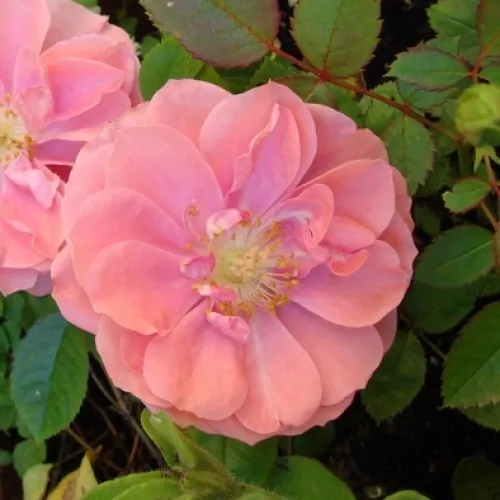
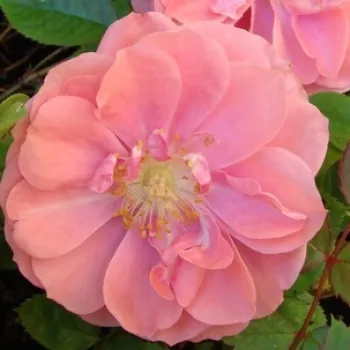
Medium-sized, double cupped flowers with 26–39 petals, produced in clusters, blooming repeatedly through the season with an especially abundant second flush for extended ornamental value. |
| Colour data and phenology |
Delicate pale pink blooms (RHS 65C outer, 62A inner) with a soft pearlescent sheen, retaining colour well, only gently whitening at the edges as flowers mature and age on the plant. |
| Fragrance and aroma |
Mild, pleasantly sweet rose fragrance that adds a subtle scented layer at close range without overwhelming nearby seating areas, suited to intimate patios and verandas rather than large perfumed borders. |
| Hip characteristics |
Rose-hip set is limited due to the double flowers, but where present small 5–7 mm, spherical, red hips may appear, adding discrete late-season interest without dominating the plant. |
| Resistance and winter hardiness |
Rated hardy to approximately −21 to −18 °C (RHS H7, USDA 6b, Swedish Zone 3), with medium resistance to powdery mildew, black spot and rust, benefiting from basic preventive care in humid seasons. |
| Horticultural recommendations |
Suited to groundcover, edging, flower beds, pots and rock gardens; plant 30–55 cm apart depending on use, in well-drained soil, with occasional grooming of spent blooms to maintain a tidy appearance. |
RANDILLA ROSE – pink dwarf mini rose - Interplant offers compact, repeat-flowering colour in tight spaces, combines well with containers, and as an own-root plant promises enduring structure with minimal fuss for your garden decisions today.