RAUBRITTER® – pink park rose - Kordes
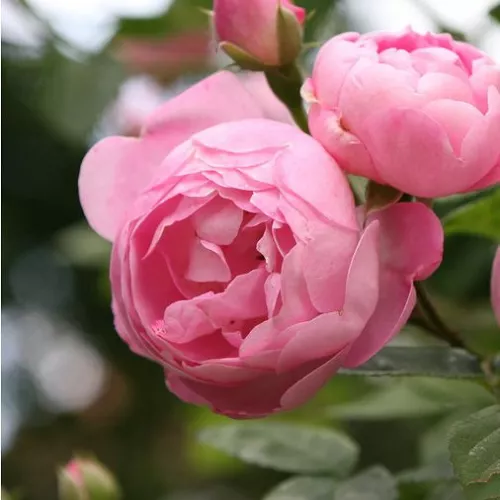
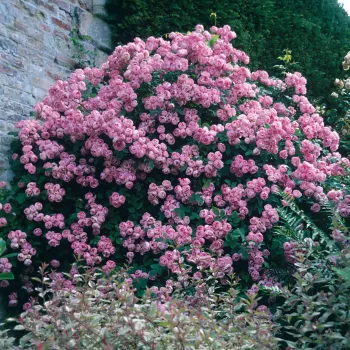
Imagine returning from the shoreline, salt in the air and a light breeze, to a sheltered nook where RAUBRITTER® wraps your veranda or fence in soft, rounded clusters of pompon blooms. This classic Kordes shrub rose forms a low, arching hedge or ground-hugging wave that copes calmly with exposed, breezy conditions in coastal family gardens, provided the soil offers reliable drainage and sensible watering. Once established, its bushy framework and good disease resistance make it a genuinely low-care choice for busy households, giving you time for tea rather than constant pruning. As an own-root rose it builds strength from below, extending its lifespan and recovering well if weather or children are a little rough with it. Think of the first year as rooting in, the second as shaping up, and the third as full character, when its nostalgic clusters of deep pink flowers create a romantic, storybook backdrop to shingle, sea kale and silvery grasses.
Usage options
| Target area |
Reasoning |
| Small coastal family garden border |
The bushy, arching habit and good disease resistance offer reliable structure with minimal intervention, even where salt-laden breezes and sudden showers are normal, appealing to beginners. |
| Informal flowering hedge along a path |
Planted at hedge spacing, RAUBRITTER® knits into a low, romantic barrier of pink clusters and matte foliage, giving gentle privacy without oppressive height for homeowners. |
| Veranda or patio in large containers |
In 40–50 litre planters it forms a rounded, arching mound that softens hard edges, with own-root resilience and modest care needs suiting urban-gardeners. |
| Groundcover on a sunny slope |
Its spreading habit and dense framework help anchor soil, while the once-a-year flush creates a striking seasonal show that then quietly greens over for practical-owners. |
| Feature shrub in a mixed coastal-style bed |
The nostalgic pompon flowers and soft pink tones pair beautifully with sea kale, Festuca and Lavandula, giving a seaside feel with straightforward upkeep for stylish-beginners. |
| Low-maintenance park-style corner of a family garden |
Good resistance to common rose diseases and low routine pruning needs make it ideal for a semi-wild, relaxed corner where you prefer watching rather than working, suiting busy-families. |
| Long-term garden framework plant |
The own-root form builds a durable shrub that thickens rather than tiring out, so over the years it keeps its shape and flowering character, reassuring long-planners. |
| Romantic entrance or pergola approach |
Set near an archway or low pergola, its arching shoots and single, abundant flush create a storybook summer moment, then step back into green, ideal for sentimental-gardeners. |
Styling ideas
- Seaside-hedge – line a shingle or gravel path with RAUBRITTER® at hedge spacing, underplant with Festuca and sea kale for a breezy coastal feel – ideal for coastal-style enthusiasts.
- Veranda-nook – place one or two in 50 litre tubs by a sheltered seating area, mixed with potted Lavandula for scent – perfect for tea-on-the-patio owners.
- Storybook-slope – use on a gentle bank as flowering groundcover, interplanted with blue Caryopteris and low grasses – suited to gardeners taming awkward levels.
- Pastel-partner – combine with Ceanothus and Liatris in a mixed border to contrast pink pompoms with blue and purple spires – attractive for colour-conscious beginners.
- Heritage-corner – plant as a specimen with old bricks, driftwood and gravel, letting its arching habit echo cottage and coastal gardens – appealing to romantically minded homeowners.
Technical cultivar profile
| Parameter |
Data |
| Name and registration |
RAUBRITTER® is a park shrub rose within the Shrub, Hybrid Macrantha group; ARS exhibition name RAUBRITTER, long grown in gardens though never formally registered. |
| Origin and breeding |
Bred by Wilhelm J. H. Kordes II in Germany, 1936, from the cross ‘Daisy Hill’ × ‘Solarium’; introduced by W. Kordes’ Söhne as a durable landscape rose. |
| Growth and structural characteristics |
Bushy, arching shrub 80–130 cm tall and 160–260 cm wide, with moderately dense, matte dark grey-green foliage and many prickles creating a full, defensive framework. |
| Flower morphology |
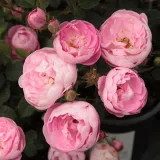
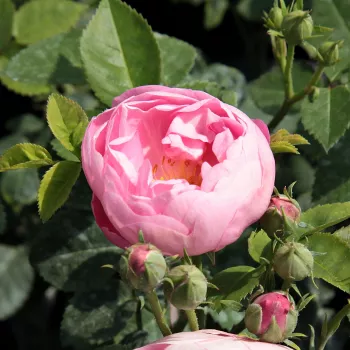
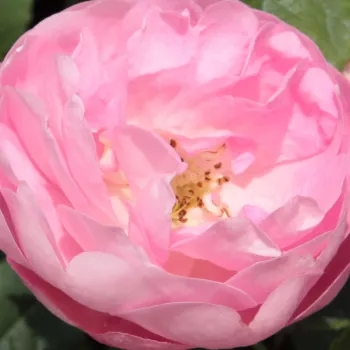
Small, very full pompon blooms (over 40 petals) borne in large clusters; once-flowering in early summer, with moderate self-cleaning after bloom, especially in dry weather. |
| Colour data and phenology |
Deep pink with a slight purplish tone; buds dark pink, centres paler, edges richer; colour lightens in strong sun and deepens in cooler weather to a stronger pink. |
| Fragrance and aroma |
Mild, soft rosy fragrance that adds a gentle background scent without overwhelming nearby seating areas; best appreciated up close on still, warm days. |
| Hip characteristics |
Produces small, spherical red hips around 6–10 mm, appearing in moderate numbers after flowering, adding a subtle seasonal accent into autumn and winter. |
| Resistance and winter hardiness |
Hardy to about −34 to −32 °C (RHS H7, USDA 4a), with good resistance to powdery mildew, black spot and rust when grown with reasonable sun and airflow. |
| Horticultural recommendations |
Suited to hedges, slopes, groundcover and specimen use; plant 120–220 cm apart, allow good drainage, irrigate during prolonged drought and prune lightly to shape. |
RAUBRITTER® offers low-maintenance structure, romantic pompon flowering and long own-root durability for relaxed coastal or family gardens, making it a thoughtful choice if you prefer dependable beauty over constant work.