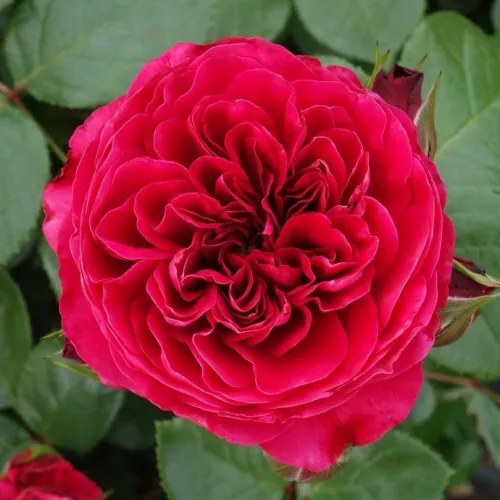
RED LEONARDO DA VINCI – deep-red nostalgic rose – Meilland
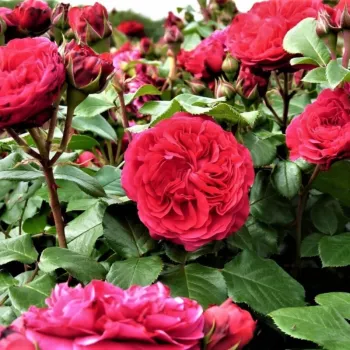
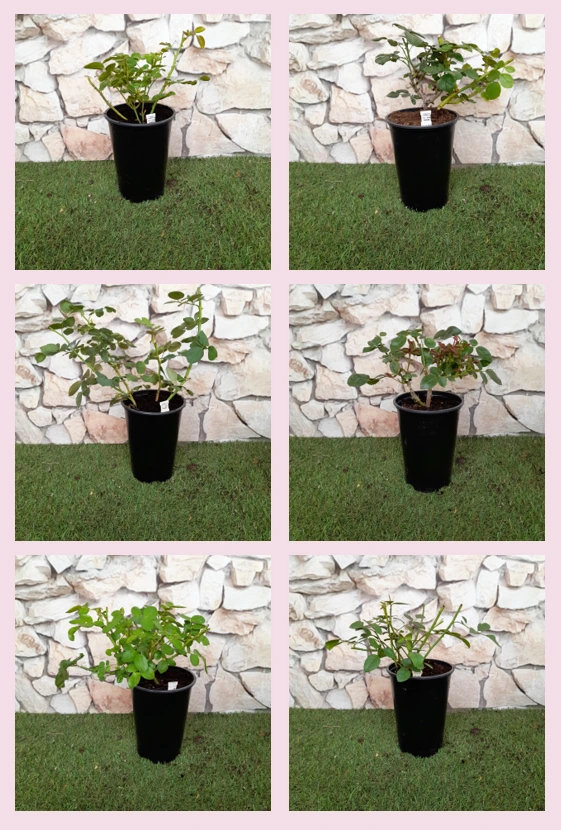
Imagine sitting out with afternoon tea, sheltered from Atlantic gusts by a low hedge of deep-red blooms: RED LEONARDO DA VINCI brings that coastal refreshment mood straight into an everyday family garden. This compact, bushy shrub forms a naturally rounded structure that anchors well in exposed sites while coping confidently with brisk, salty winds along the coast. Large, very full, rosette flowers open repeatedly in generous waves, holding their saturated colour with impressive stability even through bright summer sun. Planted as a nostalgic focal point in a shingle bed or in a 40–50 litre container on a veranda, it slips easily into busy lives: medium maintenance, reliable remontant display, and a calm, ordered presence that works in small spaces. As an own-root plant it offers reassuring longevity, quiet resilience and the gradual rhythm of Year 1 roots, Year 2 shoots, Year 3 full ornamental value.
Usage options
| Target area | Reasoning |
|---|
| Small coastal front garden bed |
The bushy, rounded habit and moderate height make this rose ideal for tight, wind-exposed front gardens, giving year-round structure and dependable flowering without dominating the space, particularly for the beginner. |
| Low flowering hedge along a path |
Planted at 40–50 cm spacings, plants knit into a dense, glossy hedge with repeated flushes of carmine-red rosettes, creating a neat, nostalgic boundary that needs only seasonal trimming for the homeowner. |
| Feature shrub in a mixed border |
The strong colour retention and full, romantic blooms hold their own among perennials, while the medium maintenance need fits a relaxed care routine that suits the hobby-gardener. |
| Large pot or 40–50 litre veranda container |
Its compact spread and bushy growth adapt well to big containers, giving a long season of flowers on sheltered verandas where space is limited yet impact is desired by the urban-gardener. |
| Coastal shingle or gravel planting |
With good heat tolerance and moderate drought resilience, it performs reliably in free-draining, stony soils that mimic beach shingle, complementing salt-tolerant schemes for the coastal-gardener. |
| Season-long colour anchor in clay-based beds |
The rounded root system and moderate size help it establish in improved heavy clay, giving a stable, long-lived colour focus once drainage is managed carefully for the family-gardener. |
| Romantic, nostalgic rose display near seating |
Very full, rosette blooms and deep-red tones create a classically romantic effect that works beautifully beside garden benches or tea corners, rewarding unhurried moments for the rose-lover. |
| Long-term planting in low-input family gardens |
ADR-certified performance, own-root security and medium maintenance demands combine into a robust, long-lived shrub that keeps its ornamental value with modest effort from the time-poor. |
Styling ideas
- Harbour-Veranda Trio – Plant RED LEONARDO DA VINCI in a 50 litre tub with trailing sea kale and blue Festuca to echo harbour tones – ideal for coastal-veranda owners.
- Romantic Path Edge – Use as a low hedge along a front path, interplanting with lavender for fragrance and structure – suited to busy homeowners wanting order with ease.
- Shingle Sundown Bed – Set in a gravel bed with sea thrift and catmint, letting the deep-red rosettes glow against stone – perfect for relaxed coastal-style gardeners.
- Nostalgic Tea Corner – Place one or three shrubs near a bench, underplanting with soft grasses to frame the richly double blooms – appealing to rose-lovers who enjoy quiet moments.
- Family-Friendly Feature – Make a central island bed, mixing this rose with compact perennials for colour all season – great for families wanting impact without complex upkeep.
Technical cultivar profile
| Parameter | Data |
|---|
| Name and registration |
Red Leonardo da Vinci ROMANTICA, floribunda nostalgia shrub rose, registered as MEIangele, ARS exhibition name Red Leonardo da Vinci, part of the Romantica Romantic rose collection. |
| Origin and breeding |
Bred by Meilland International in France from 'Rote Max Graf' × ('Cassandre' × 'Bonica'), registered 2004 and introduced 2005, distributed internationally by Meilland International SA. |
| Awards and recognition |
ADR-certified in 2023, indicating strong garden performance and reliability under no-spray trial conditions, with emphasis on long-term ornamental value and robust, balanced growth. |
| Growth and structural characteristics |
Bushy, compact shrub 75–105 cm high and 60–85 cm wide, moderately thorny with dense, dark green glossy foliage, forming a rounded outline suited to borders, hedges and containers. |
| Flower morphology |
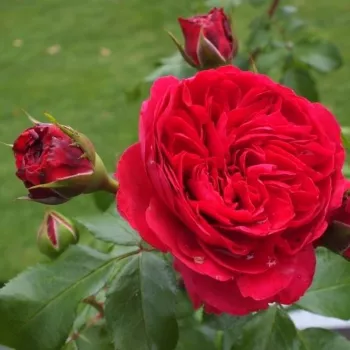
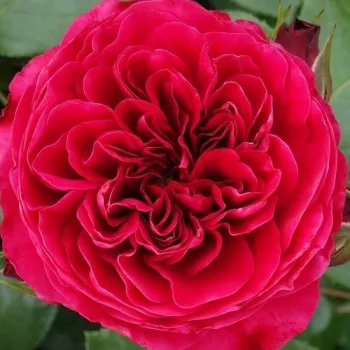
Large, very full rosette flowers over 40 petals, in clustered inflorescences, repeat-flowering with a particularly generous second flush, providing extended seasonal colour in suitable conditions. |
| Colour data and phenology |
Deep, uniform carmine red (RHS 46A outer, 53B inner), intense ruby buds, very good colour retention with only slight lightening in strong sun, maintaining a rich nostalgic effect over time. |
| Fragrance and aroma |
Delicate, classic rose-like scent of very weak intensity; fragrance is subtle and unobtrusive, supporting use near seating or windows where powerful perfume would be overwhelming. |
| Hip characteristics |
Occasional small, spherical red hips 10–14 mm in diameter, modestly ornamental in autumn without significantly detracting from repeat flowering or overall garden presentation. |
| Resistance and winter hardiness |
Hardy to about −21 to −18 °C (RHS H7, USDA 6b), with moderate resistance to black spot, mildew and rust; performs well in heat with moderate drought tolerance if watered in long dry spells. |
| Horticultural recommendations |
Best in sunny sites with well-prepared soil; plant 40–75 cm apart depending on use, maintain moderate feeding and occasional deadheading and health checks to support sustained flowering. |
RED LEONARDO DA VINCI offers compact, long-lived structure, generous repeat flowering and reliable coastal performance on its own roots, making it a thoughtful choice for understated, enduring garden colour.