RED RIBBONS – red groundcover rose - Kordes
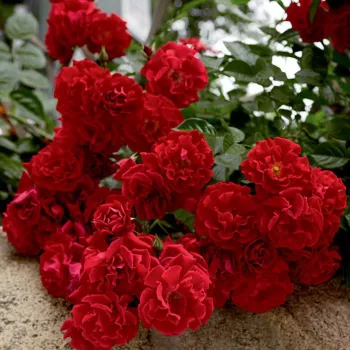
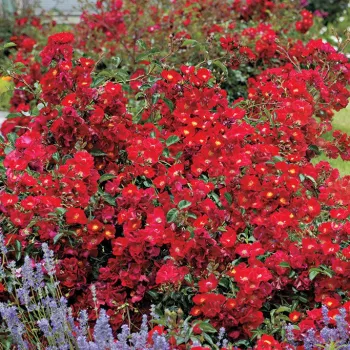
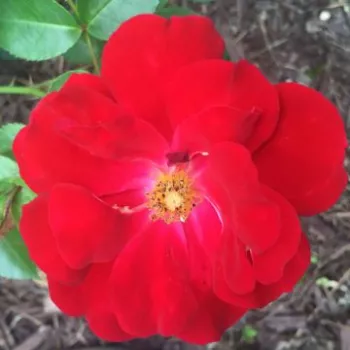
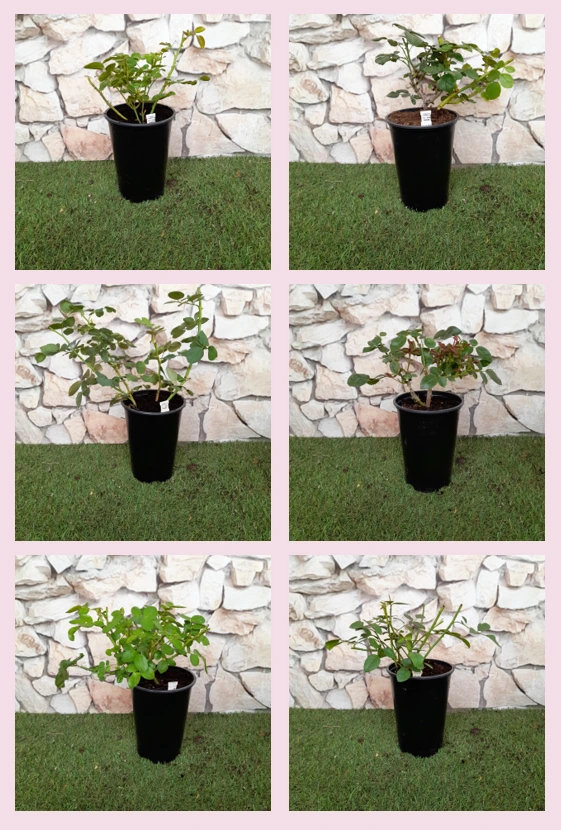
Imagine a low, shimmering carpet of red blooms softening the edge of a shingle path, quietly withstanding brisk coastal air and wind while tying your planting together like neat ribbons. RED RIBBONS forms a compact, spreading groundcover that naturally suppresses weeds, ideal for sloping beds, driveways or wrapping around a sunny veranda seating area. Its semi-double flowers appear in generous clusters from early summer and repeat reliably, with good self-cleaning that keeps the plant tidy with minimal effort. As an own-root rose in the pharmaROSA® ORIGINAL 2‑litre container, it settles in gradually – first building roots, then fuller shoots, and by the third year reaching its long-lasting ornamental peak that anchors the family garden through many seasons.
Usage options
| Target area |
Reasoning |
| Coastal veranda and shingle seating area |
The low, spreading habit creates a soft, colourful edge around outdoor seating, coping well with bright sun and blustery, salt-tinged conditions in exposed gardens along the Cornish or Devon coast, ideal for those wanting seaside charm with minimal fuss for the beginner. |
| Small front garden groundcover |
Its compact height but generous spread quickly fills awkward strips by drives or paths, reducing bare soil and suppressing weed growth, while self-cleaning flowers keep a neat look between occasional trims, suiting time-pressed homeowners seeking reliable colour as hobby-gardeners. |
| Sunny bank or slope stabilisation |
The dense, branching structure and good root system help knit into sloping ground, giving a living mulch that slows run-off and supports soil on banks, where mowing is tricky, particularly helpful for family gardens needing practical beauty on gradients for homeowners. |
| Mixed bed with sea kale and ornamental grasses |
Bright mid-red flowers stand out against glaucous foliage of sea kale and fine-textured Festuca, while the low, spreading form sits at the front of the border, giving a long season of colour without overshadowing taller perennials for coastal-style planting enthusiasts and design-lovers. |
| Low informal hedge along paths |
Planted at the recommended hedge spacing, plants grow together into a low, informal line that guides movement through the garden, combining glossy foliage with repeating colour and requiring only light shaping once or twice a year for those favouring relaxed structure as urban-owners. |
| Large container on balcony or terrace |
In a 40–50 litre pot with good drainage, its spreading habit spills attractively over the rim, giving months of red flower clusters and dark foliage, while own-root vigour supports recovery from any winter damage, ideal for compact spaces used by busy balcony-gardeners. |
| Family play garden edging |
The low height allows clear sight lines across lawns and play spaces, while moderate prickliness and dense growth subtly discourage shortcutting through borders; repeat flowering adds colour without constant deadheading, suiting practical layouts for families with children. |
| Low-maintenance public-facing frontage |
Medium care needs and good black spot resistance mean reduced spraying and simpler upkeep, while the durable spreading canopy offers season-long impact with fewer gaps and resilient performance in variable weather for those managing tidy yet undemanding frontages as beginners. |
Styling ideas
- Seaside-ribbon border – weave RED RIBBONS through shingle, driftwood and sea kale to echo surf-washed strands of colour – perfect for coastal-style lovers wanting easy seaside atmosphere.
- Veranda-cushion edge – plant a low band around a sunny deck with Festuca and dwarf lavender to frame outdoor chairs in soft texture and red blooms – ideal for tea-drinkers lingering outdoors.
- Storybook-path edging – line a winding garden path so children walk between ribbons of red, with stepping stones and shells tucked into gravel – for families creating playful, gentle structure.
- Crimson-slope tapestry – mass on a sunny bank, interplanted with drought-tolerant perennials, to stabilise soil and read as a bold red tapestry from the house – suited to practical, design-conscious owners.
- Urban-terrace spillover – in a generous container, let the plant drape over the edge beside bistro seating, paired with soft grasses for movement – appealing to busy balcony gardeners seeking impact.
Technical cultivar profile
| Parameter |
Data |
| Name and registration |
Groundcover shrub rose marketed as RED RIBBONS – red groundcover rose – Kordes; registered cultivar name KORtemma; American Rose Society exhibition name Red Ribbons. |
| Origin and breeding |
Bred by Wilhelm Kordes III in Germany from ‘Weisse Max Graf’ × ‘Walzertraum’; introduced and registered in 1990, with Jackson & Perkins as initial distributor. |
| Awards and recognition |
Gold Medal at Baden‑Baden rose trials in 1991 and RNRS Trial Ground Certificate in Great Britain the same year, confirming strong ornamental performance in varied conditions. |
| Growth and structural characteristics |
Low, spreading habit 45–75 cm high and 120–200 cm wide, with moderately thorny shoots, dense, glossy dark green foliage and good self-cleaning that keeps the plant visually tidy. |
| Flower morphology |
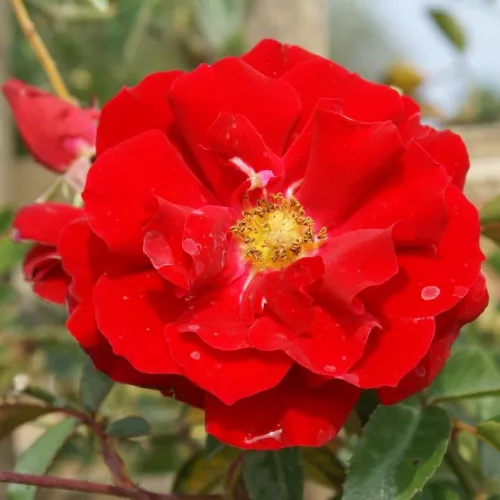
Semi-double, flat flowers with 13–25 petals, small in size yet carried in generous clusters; strongly remontant with abundant second flush, ensuring repeated colour through the main season. |
| Colour data and phenology |
Clear mid-red flowers with a slight scarlet tinge, ARS code MR, RHS 45A–45B; colour may deepen before fading and lighten in strong sun, with yellow stamens offering gentle contrast at full bloom. |
| Fragrance and aroma |
No noticeable scent; flowers are primarily ornamental, with semi-double form offering only limited pollen access, so it is chosen more for colour coverage than for fragrance or wildlife value. |
| Hip characteristics |
Sparse hip production; small globose red hips around 6–10 mm in diameter, RHS 46A, forming occasionally and generally not a dominant ornamental feature compared with the flowering display. |
| Resistance and winter hardiness |
Rated hardy to about −32 to −29 °C (USDA 4b; RHS H7), with good heat and moderate drought tolerance and strong black spot resistance; powdery mildew and rust may appear at medium levels. |
| Horticultural recommendations |
Best in full sun with well-drained soil; space 90–165 cm depending on use, 0.9–1.0 plants/m² for massing; maintenance is moderate, with occasional protection and watering in prolonged droughts. |
RED RIBBONS Groundcover KORtemma offers vivid groundcover colour, reliable repeat flowering and slope-friendly spread in an own-root form that matures steadily into long-lived structure; consider it where you want lasting impact with modest effort.