ROGER LAMBELIN – burgundy-red and white historic Hybrid Perpetual rose - Schwartz
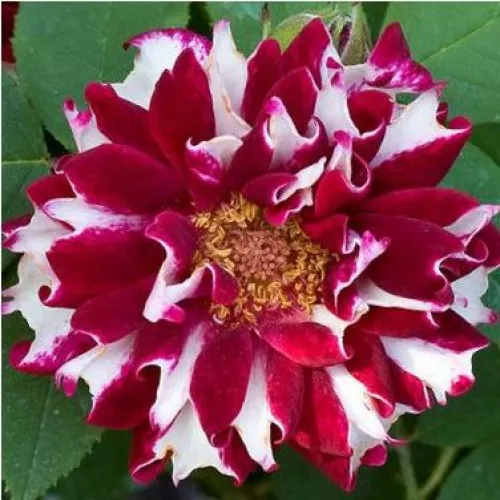
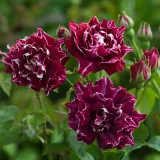
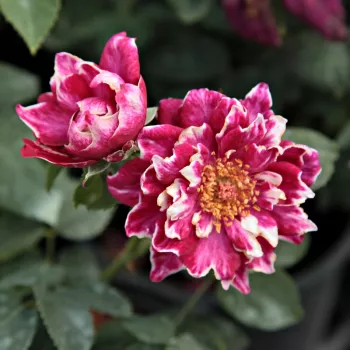
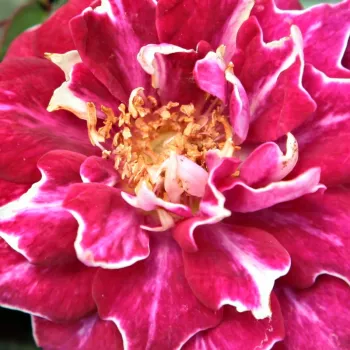
ROGER LAMBELIN brings a breeze of coastal romance to compact gardens, combining heritage charm with reassuringly modern resilience. Its velvety burgundy-red blooms, edged in irregular white, give a gently “girly” yet dramatic contrast that stands out against shingle, gravel or weathered decking, even in changeable seaside light. Bred in 1890, this bushy, mid-sized structure shrub settles well into typical UK family plots, coping calmly with cool, damp spells and brisk onshore winds in a way that suits coastal verandas and salt-influenced beds. Repeating flushes of flowers over a long season provide lasting colour and strong, lingering fragrance with very little fuss, while the own-root form supports a long-lived, steady performance that matures naturally over the first three years from roots to shoots to full ornamental value.
Usage options
| Target area |
Reasoning |
| Small coastal front garden bed |
Bushy, mid-height growth and stable branching make this rose ideal for giving definition to a modest front bed without overwhelming the space, while its calm reaction to cool, damp winds suits exposed Cornish or Devon drives – a reassuring choice for the beginner. |
| Feature shrub on a shingle terrace |
The dramatic burgundy-red and white bicolour flowers read clearly against pale stone, creating an instant focal point beside outdoor seating, especially where you enjoy tea sheltered from seaside gusts – a pleasure for the stylist. |
| Long-season flowering accent by a veranda |
Reliable rebloom ensures repeated waves of colour and scent from early summer into autumn, keeping a family veranda lively through weekend use without complex pruning or deadheading routines – perfect for the busy. |
| Low-maintenance historic rose corner |
Heritage character combines with modern disease resistance, so mildew, black spot and rust are rarely an issue, allowing you to enjoy an old-world look without regular spraying or specialist care – appealing to the time-poor. |
| Coastal-style container on decking |
In a large, well-drained pot of at least 40–50 litres, its bushy habit, good colour retention and strong scent create a compact “mini-hedge” effect that softens railings and windbreaks near the sea – ideal for the veranda-owner. |
| Mixed planting with grasses and perennials |
The clear flower contrast works beautifully with blue fescues, sea kale or Panicum, while its moderately dense, matt foliage supports a naturalistic look and offers a gentle backdrop to movement in breeze-driven grasses – inspiring for the designer. |
| Lightly wildlife-friendly family border |
Semi-double blooms and their strong, lasting scent provide some nectar access and seasonal interest for visiting insects without turning the area into a wild thicket, balancing family use with nature-friendly planting for the eco-conscious. |
| Long-term structural rose in a clay-based garden |
Once established on its own roots, the shrub anchors securely and copes well where improved drainage has been provided in heavier soils, giving a durable, easily managed framework that weathers typical British winters for the homeowner. |
Styling ideas
- Victorian-Veranda – pair with whitewashed furniture, terracotta pots and lavender in a large container to echo Victorian seaside villas – for heritage and coastal-style lovers.
- Shingle-Drift – plant through gravel with sea kale and blue Festuca to let the bold bicolour blooms sparkle against pale stone – for relaxed, low-maintenance gardeners.
- Sunset-Border – combine with Gaillardia and warm-toned Panicum for a glowing, wind-tousled bed that shines in late afternoon light – for colour-focused plant enthusiasts.
- Tea-Corner – position near a sheltered bench or screen where its repeated flowering and strong scent enrich quiet breaks after beach walks – for veranda and patio users.
- Heritage-Focus – use as a single specimen in a small lawn bay, letting its historic form and long lifespan anchor the planting scheme – for romantic, story-driven garden makers.
Technical cultivar profile
| Trait |
Data |
| Name and registration |
Roger Lambelin is a historical Hybrid Perpetual heritage rose, exhibited as a Victorian (old garden rose); an unregistered sport of ‘Prince Camille de Rohan’ with verified cultivar authenticity. |
| Origin and breeding |
Bred by Marie-Louise Schwartz at Pépinières Veuve Schwartz in Lyon, France, around 1890; introduced by E. Horton & Co. in Australia in 1900 and now offered as a garden heritage rose. |
| Awards and recognition |
Recognised in American Rose Society Victorian classes with awards from Columbus, Cleveland and Sacramento Rose Society Shows around 1999–2000, confirming value as a show-quality historic cultivar. |
| Growth and structural characteristics |
Forms a bushy shrub about 100–160 cm high and 100–150 cm wide, with moderately dense, matt, mid-green foliage, moderate thorniness and a solid framework suitable for specimen or grouped planting. |
| Flower morphology |
Semi-double blooms with 17–25 petals, medium-sized and mainly solitary on stems; the flowers are flat in form and rebloom freely, with a particularly abundant second flush after the main early-summer display. |
| Colour data and phenology |
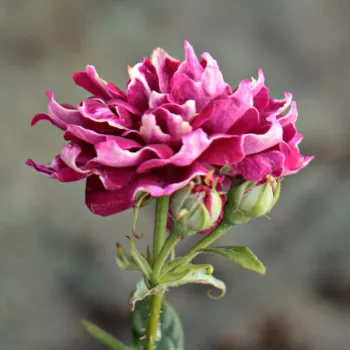
Burgundy-red petals with irregular white edges (RHS 187A outer, 61B inner); colour holds well in cooler weather, softening to lilac and pale pink tones under strong sun as the blooms gradually age. |
| Fragrance and aroma |
Strong, long-lasting scent typical of many historic Hybrid Perpetual roses; the exact note profile is undocumented, but the fragrance is pronounced enough to enjoy at a short distance near seating areas. |
| Hip characteristics |
Sets hips sparingly because of semi-double flowers and continuous blooming; when present, they are small spherical red fruits about 9–15 mm, adding discreet seasonal interest late in the year. |
| Resistance and winter hardiness |
Shows good resistance to powdery mildew, black spot and rust; hardy to about -21 to -18 °C (RHS H7, USDA 6b, Swedish zone 3), though it prefers regular watering and is sensitive to prolonged drought. |
| Horticultural recommendations |
Best in full sun with improved drainage on heavier soils; plant 110–180 cm apart depending on use, water consistently in dry spells, and deadhead spent blooms to support tidiness and repeat flowering. |
ROGER LAMBELIN offers dramatic bicolour blooms, a long flowering season and durable own-root growth that settles for years in coastal or family gardens, making it a thoughtful choice for those planning a quietly characterful outdoor space.