ROS'ODILE™ – yellow-pink flower-bed shrub rose - Dominique Massad
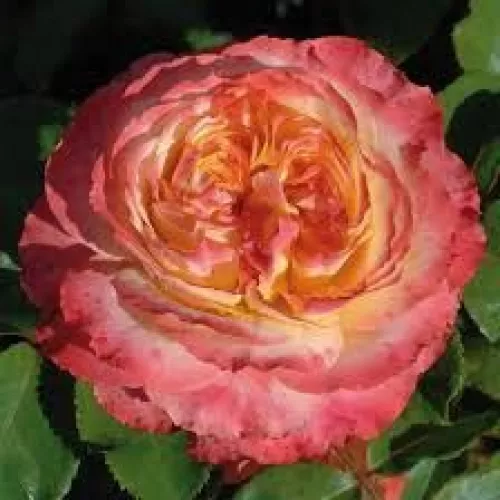
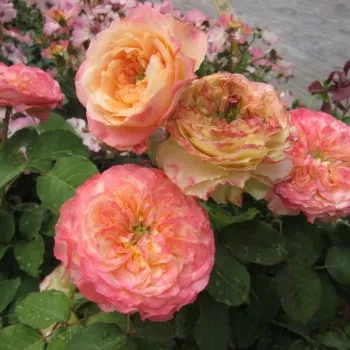
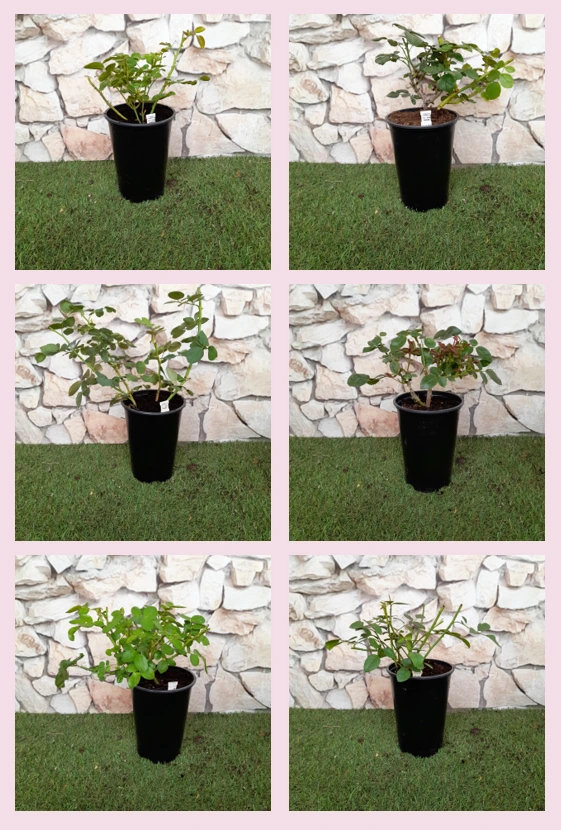
ROS'ODILE™ brings a sense of seaside calm to everyday gardens, wrapping its bushy, upright form in softly yellow‑pink blooms that feel as relaxed as tea in a breezy windbreak after a walk on the beach. Its medium height and dense habit make it ideal for framing a small shingle terrace or veranda, especially where you value plants that sit steady in coastal gusts and cope well with exposed, windy conditions near the house. The generous, repeat flowering keeps beds and containers lively for much of the season, even when you only have time for light pruning and basic feeding. Being an own‑root rose, ROS'ODILE™ is bred for long‑term stability, quietly building a resilient framework that will regrow reliably from its own base if ever cut back hard. In its first year it concentrates on strong roots, the second brings more confident shoots, and by the third it settles into full ornamental value with a mounded, well‑clothed structure that suits relaxed, family‑friendly coastal planting schemes. For a small to medium garden you gain lasting colour from one thoughtfully chosen shrub rather than a bed full of short‑lived plants.
Usage options
| Target area |
Reasoning |
| Coastal veranda in large containers |
Its compact, bushy habit and moderate height suit 40–50 litre tubs on a sheltered coastal veranda, where roots have room to anchor and moisture is easier to manage for hobby gardeners and beginners. |
| Small family flower bed near a seating area |
Repeated flushes of yellow‑pink, medium‑sized clusters keep a modest flower bed colourful over a long season, adding gentle structure and interest around everyday seating without demanding complex care, ideal for busy homeowners. |
| Shingle or gravel strip in a coastal-style front garden |
The upright, dense framework stands firm in exposed, breezy positions while its glossy foliage remains ornamental, giving reliable shape and colour along a drive or path with simple seasonal pruning, reassuring for coastal gardeners. |
| Low informal hedge by a terrace or lawn |
Planted at hedge spacing, the even, bushy growth knits into a softly flowering low barrier that marks boundaries without feeling rigid, offering gentle privacy and wind filtering for families who prefer relaxed, natural borders. |
| Mixed perennial bed with coastal-tolerant companions |
Its subtle colour shift from apricot yellow to pink blends easily with sea kale and ornamental grasses, giving a long‑view planting that looks composed across the years rather than relying on short‑term bedding, attractive for long‑term planners. |
| Urban courtyard or patio with reflective heat |
Good tolerance of warmth, provided it is watered during prolonged dry spells, allows it to handle the heat build‑up of paved spaces while still flowering steadily, a practical choice for compact, paved urban spaces. |
| Specimen rose in a 40–50 litre feature pot |
Grown as a single showpiece, its dense, erect habit and repeat blooms create a neat vertical accent that is easy to access for the little routine care required, well suited to those who want one dependable focal plant. |
| Family garden wildlife corner with light structure |
Although only moderately attractive to pollinators, its hips provide seasonal interest and light wildlife value, and its hardy framework weathers typical British winters in stride, suiting informal, low‑input family gardens. |
Styling ideas
- Coastal-veranda trio – Pair ROS'ODILE™ in a 50 litre pot with sea kale and blue Festuca for a breezy, wind‑firm composition – for veranda owners wanting relaxed seaside character with minimal fuss.
- Soft-hedge frame – Plant a loose line along a lawn edge, underplant with low lavender to echo the pastel blooms – for families seeking a gentle privacy edge that still feels open and welcoming.
- Sunset-flowerbed – Combine with pale sage and white obedient plant to highlight the yellow‑pink colour shifts – for colour lovers who enjoy long‑season, changing tones without replanting each year.
- Urban-feature pot – Use a single shrub in a tall container by the front door where its upright shape and repeat flowers give a tidy welcome – for busy urban residents wanting impact from one well‑chosen rose.
- Shingle-courtyard mix – Set into gravel with drought‑tolerant perennials, allowing its bushy form to anchor the space visually – for coastal‑style enthusiasts who prefer structured, low‑maintenance planting in small courtyards.
Technical cultivar profile
| Parameter |
Data |
| Name and registration |
Shrub rose from the Les Provençelles collection, registered as MASdile and marketed as ROS'ODILE™, classified as a flowerbed shrub within the broader bed rose commercial grouping. |
| Origin and breeding |
Bred in France in 2011 by Dominique Massad from ‘Monique Lestournelle’ × ‘Emilien Guillot’, introduced through Rose Petals with initial distribution by French specialist nurseries. |
| Growth and structural characteristics |
Bushy, erect shrub reaching around 100–140 cm in height with a 70–90 cm spread, forming a dense, well‑clothed framework with moderately thorny stems and glossy mid‑green foliage. |
| Flower morphology |
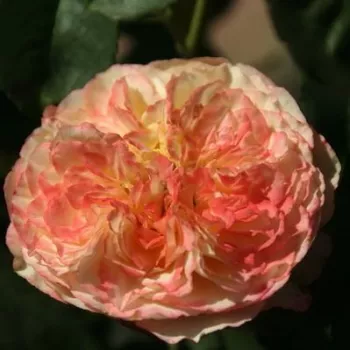
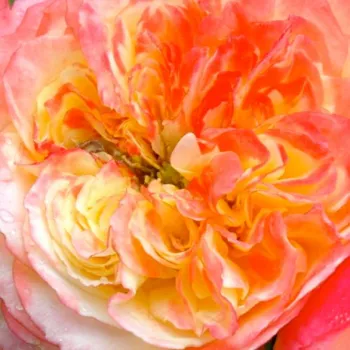
Very full, cluster‑flowered blooms with more than 40 petals, medium sized at roughly 4–7 cm across, cup‑shaped and remontant, delivering a generous second flush after the main summer display. |
| Colour data and phenology |
Warm apricot‑yellow buds open with a pale green eye and pink‑tinted outer petals, then soften as the yellow fades so that the whole flower reads as a delicate pastel pink in strong light. |
| Fragrance and aroma |
Fragrance is discreet and barely noticeable in the garden, with only a light fruity nuance when conditions are favourable, making it suitable for siting close to seating for those sensitive to strong scents. |
| Hip characteristics |
Produces moderate quantities of small, spherical red hips approximately 10–14 mm in diameter, adding late‑season visual interest and a subtle wildlife element in mixed plantings. |
| Resistance and winter hardiness |
Hardy to about −21 to −18 °C (RHS H7, USDA 6b), showing resistance to black spot with moderate susceptibility to powdery mildew and rust, requiring occasional protection in high‑pressure seasons. |
| Horticultural recommendations |
Performs best in full sun with well‑drained soil, at 55–100 cm spacing depending on use, needs moderate maintenance with regular watering in dry spells and simple pruning to renew flowering wood. |
ROS'ODILE™ offers compact structure, long-season colour and dependable hardiness in an own-root form that matures steadily year by year, making it a thoughtful choice when you want one rose to enjoy for the long term.