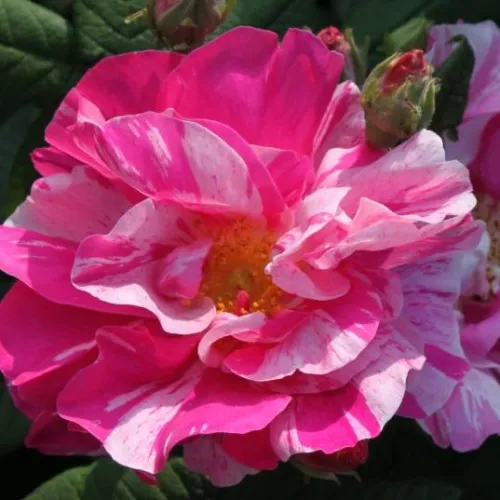
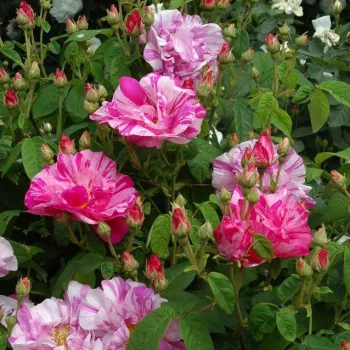
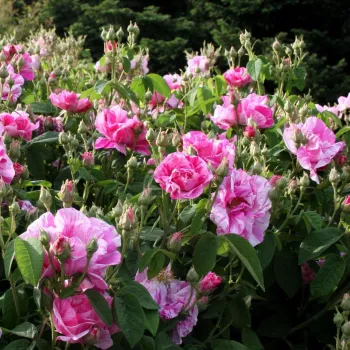
ROSA MUNDI – pink-and-white historic Gallica rose
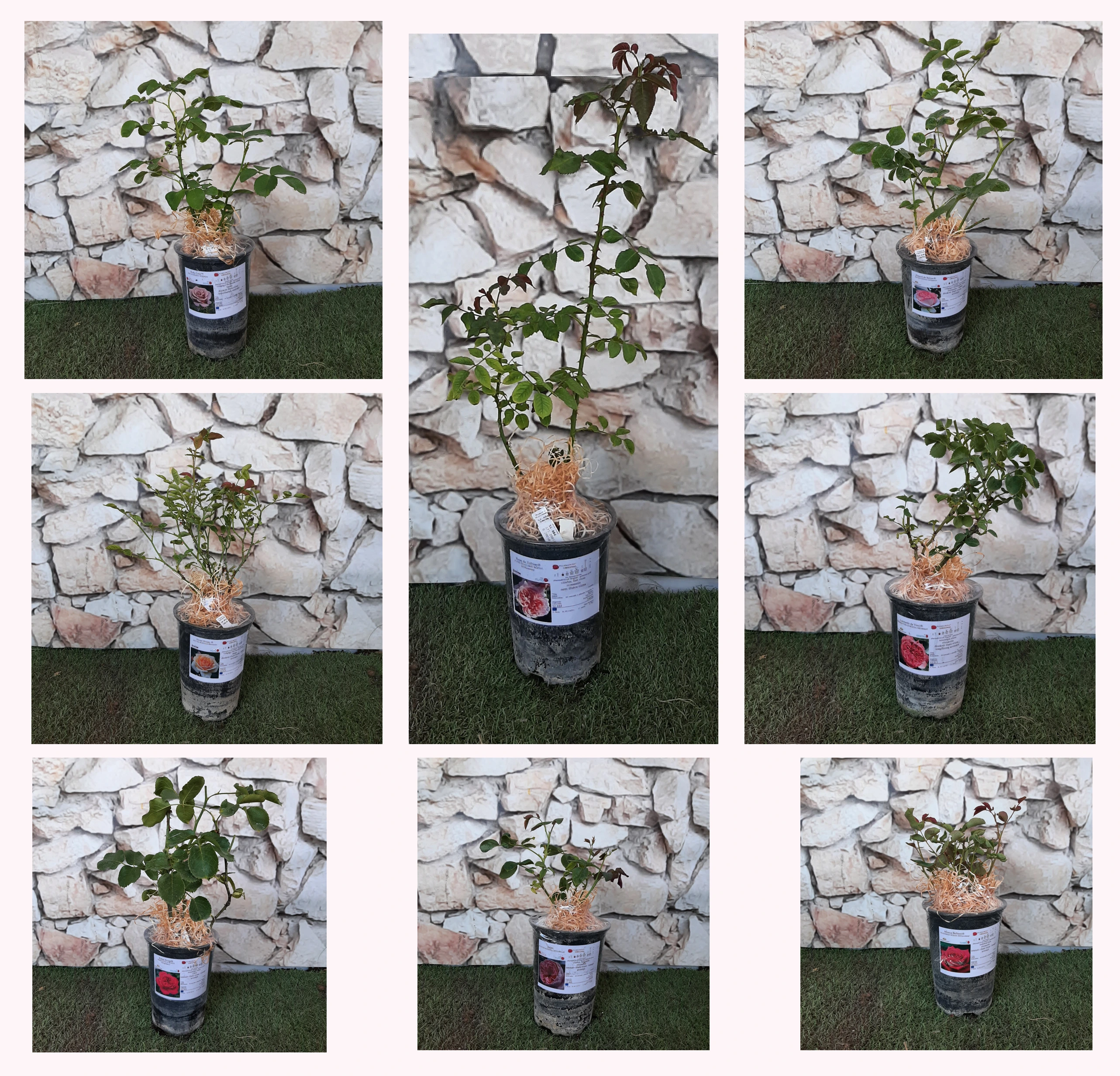
Imagine sipping tea in a sheltered corner after a windy coastal walk, as striped blooms of Rosa Mundi ripple above shingle and grasses, offering a refreshing splash of raspberry-pink against pale ivory. This compact, historic shrub settles reliably even where breezes whip around Cornish and Devon gardens, its roots anchoring steadily in well-prepared, free-draining soil that copes gracefully with winter wet and summer showers. In the pharmaROSA ORIGINAL 2‑litre format it arrives as an own-root plant, giving you a calm, gradual establishment: first it builds roots, then stronger shoots, and by the third year you enjoy its full ornamental season in beds, hedges or a generous 40–50 litre container on a veranda.
Usage options
| Target area |
Reasoning |
| Small coastal front garden |
Rosa Mundi’s compact height and tidy, bushy habit make it ideal for exposed but homely coastal front gardens, giving a structured, low shrub that is easy to keep in bounds and forgiving of brisk weather for the time-poor beginner. |
| Feature shrub in a shingle bed |
The striking pink-and-white striping draws the eye in gravel or shingle beds, echoing seashell tones and beach pebbles while its semi-double, cupped flowers give characterful texture with only moderate pruning needs for relaxed homeowners. |
| Informal flowering hedge |
Planted at 100–110 cm spacing, its dense, compact growth links into a low, informal hedge that offers seasonal privacy, soft boundaries and a showy early-summer flowering wall with minimal clipping for busy families. |
| Large container on a veranda or balcony |
In a 40–50 litre container with good drainage, it forms a neat, upright shrub that brings historic charm and fragrance to sheltered verandas, fitting especially well with coastal-style pots and light furniture for urban gardeners. |
| Partially shaded side garden |
Rosa Mundi tolerates partial shade, so it still flowers and colours well beside fences or in east- and north-east-facing plots where sun is limited, making use of awkward side paths and passages for practical owners. |
| Low-maintenance family bed with perennials |
Moderate maintenance needs and self-cleaning blooms suit mixed borders; combining it with drought-tolerant perennials helps balance our increasingly wet winters and drier summers in a way that stays manageable for casual gardeners. |
| Naturalistic, heritage-style planting |
As a historic Gallica with documented 16th‑century roots, it brings period character to cottage and heritage-inspired schemes, pairing beautifully with old-fashioned perennials and soft grasses for romantically minded collectors. |
| Clay soil family garden with improved drainage |
Once planted into clay that has been loosened and enriched with grit and compost, its own-root system establishes steadily and copes well with wind and rain, giving reliable structure and long life for coastal-style beginners. |
Styling ideas
- Shellwalk Border – Drift Rosa Mundi through a shingle strip with sea kale, Festuca and silver pebbles to echo beach walks – ideal for coastal veranda dreamers.
- Tea-Corner Hedge – Use as a low flowering hedge around a small seating nook, underplanted with sweet alyssum, for families wanting privacy and summer colour.
- Historic Accent – Plant as a single specimen in lawn or gravel with Scabiosa and Artemisia for a restrained, museum‑garden feel for heritage enthusiasts.
- Clay-Tamed Bed – In improved clay, group three plants with lavender and airy grasses to create a soft, wind‑friendly screen for practical homeowners.
- Veranda Feature – Grow one bush in a 50‑litre salt‑glazed pot with low trailing alyssum for a tidy, perfumed presence suited to busy balcony gardeners.
Technical cultivar profile
| Property |
Data |
| Name and registration |
Collection Historical rose; trade name Rosa Mundi Historical rose; ARS exhibition name R. gallica versicolor; historic Gallica shrub rose, unregistered but long established in gardens. |
| Origin and breeding |
Natural striped sport of Rosa gallica officinalis, known from at least 1581; breeder and first distributor unknown, preserved through traditional garden cultivation and vegetative propagation. |
| Growth and structural characteristics |
Compact, bushy shrub 85–130 cm high and 90–140 cm wide, with moderately dense, matt grey‑green foliage and relatively few prickles, forming a neat, rounded outline in most garden settings. |
| Flower morphology |
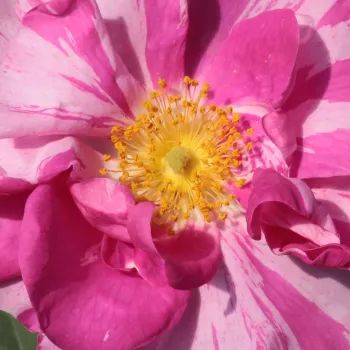
Semi-double, cupped flowers with 13–25 petals, usually in clusters; large bloom size around 7–10 cm; not remontant, giving a concentrated main flush once per season in early summer. |
| Colour data and phenology |
Pale ivory to creamy-white base with vivid raspberry-pink streaks and spots; colour lightens slightly in strong sun while striping intensifies in cooler weather; very good colour retention through the flowering period. |
| Fragrance and aroma |
Clean, classic Gallica-style rosy fragrance of medium strength, noticeable on warm, still days without being overpowering, adding a traditional scented-rose note to paths, seating areas and entrances. |
| Hip characteristics |
Hip formation is rare due to the mutated flower form; occasionally produces small ellipsoidal hips 10–16 mm across, orange-red (RHS 37A), offering modest late-season decorative interest. |
| Resistance and winter hardiness |
Hardy to approximately –29 to –32 °C (RHS H7, USDA 4b, Swedish zone 5); medium resistance to powdery mildew, black spot and rust, best supported by good air movement and sensible watering. |
| Horticultural recommendations |
Suited to beds, hedges, edging and naturalistic schemes; prefers full sun to partial shade in fertile, well-drained soil; plant 100–110 cm apart in groups or hedges, and stake young shrubs in windy positions. |
ROSA MUNDI – pink-and-white historic Gallica rose rewards you with compact growth, striking striped blooms and dependable hardiness, while its own-root form offers long-lived stability for those planning a lasting garden feature.