ROSE-MARIE VIAUD – lilac rambler climbing rose - Igoult
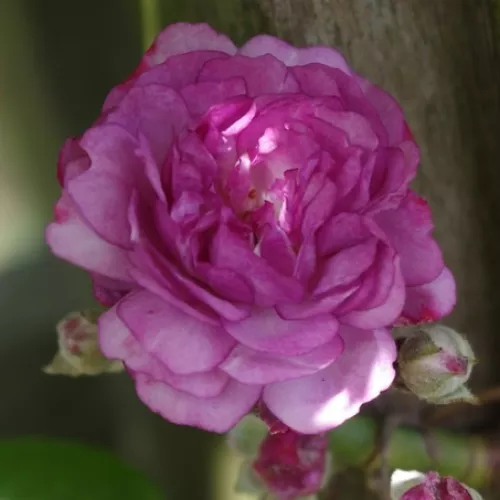
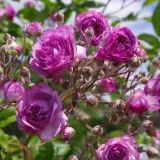
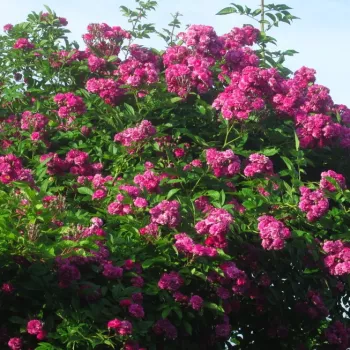
Along a breezy Cornish fence or Devon veranda, ROSE-MARIE VIAUD brings a cloud of lilac-violet blossom that softens coastal light and creates a gentle sense of seaside refuge. This vigorous rambler covers arches, pergolas and walls with an easy, billowing habit, helping to anchor structures even where strong winds and salty air are everyday companions, echoing the reassuring calm of a sheltered harbour. Once established, its own-root toughness underpins a long lifespan, quietly rebuilding from the base if winter or storms take their toll. In the first year it concentrates on roots, the second on framework, and by the third you begin to enjoy its full ornamental impact. Small, cupped clusters in shifting shades of purple and lilac-grey give a consistently romantic look, self-cleaning enough to stay presentable with only occasional tidy-ups. Trained thoughtfully and combined with well-drained planting on heavier soils, it offers a surprisingly manageable solution for creating height and privacy in compact family plots. On a balcony or veranda, one plant in a 40–50 litre container can serve as a soft floral backdrop to sunny weekend tea, while its limited scent keeps the atmosphere light and refreshing.
Usage options
| Target area | Reasoning |
|---|
| Pergola over seating in a coastal-style family garden |
Its vigorous climbing habit and moderate density of foliage allow it to veil a pergola within a few seasons, giving dappled light rather than deep shade for relaxed family seating. Own-root resilience supports a long-lived framework, suiting patient, time-poor beginners. |
| Romantic screen on a veranda or balcony |
Trained into a sturdy obelisk or trellis in a 40–50 litre container, this rambler forms a soft, lilac-toned screen that feels airy rather than heavy. Once the main structure is in place, only light tying-in and post-flowering pruning are needed for a consistently elegant view, ideal for busy homeowners. |
| Climbing accent on fences and windward boundaries |
The tall, flexible canes can be fanned along wires to clothe boundaries, helping filter onshore gusts while staying visually light. On exposed plots, the strong root system and climbing framework work together to steady the plant and its supports in blustery weather, reassuring for coastal garden owners. |
| Feature rose on a garden arch or entrance |
Its once-a-year flush creates a striking seasonal moment when covering an arch, with cascades of small cup-shaped flowers framing paths or gateways. After flowering, neat green foliage maintains structure without demanding constant deadheading, fitting those who favour low-intervention gardening. |
| Solitary specimen in a small to medium family garden |
Placed where the long canes can be trained up and out, a single plant can fill a vertical space that might otherwise feel bare, bringing height without taking much ground room. Own-root growth provides steady renewal from the base, supporting a dependable long-term focal point for family gardens. |
| Informal lilac-toned backdrop with grasses and shrubs |
Its muted purple–lilac colour harmonises easily with silver foliage and soft grasses, giving a cool, coastal palette. Planted with companions that appreciate the same well-drained yet moisture-retentive soil, it forms a textural background that needs only basic seasonal pruning, suiting relaxed stylists. |
| Lightly shaded side of a house or outbuilding |
Suitable for partial shade, it copes where walls receive only a few hours of sun, especially morning or late-afternoon light. The small flower size and clustered habit mean displays remain effective even where direct light is filtered, which helps those working with constrained, awkward spaces. |
| Park-style planting on sturdy structures |
In larger schemes, it can be used as a rambler on tall frames or mature trees, where its once-a-season show reads as a generous lilac mist from a distance. Routine plant protection and occasional structural pruning keep it presentable over many years, fitting dedicated but time-conscious rose enthusiasts. |
Styling ideas
- Seaside-Veranda Screen – Train ROSE-MARIE VIAUD up a slim trellis in a 40–50 litre pot, pairing with sea kale and blue Festuca for a breezy, coastal palette – for balcony and small-veranda rose appreciators.
- Lilac-Garden Arch – Cover a narrow arch at the garden entrance, underplanting with lavender and silvery foliage to echo the cool violet-lilac blooms – for romantically inclined family gardeners.
- Wind-Softening Fence – Fan the canes along horizontal wires on a boundary, interplanting with Caryopteris and ornamental grasses for movement and light screening – for owners of exposed coastal plots.
- Cottage-Pergola Retreat – Let it drape over a wooden pergola above a seating nook, with pots of herbs below to enjoy its soft shade during summer tea – for relaxed weekend gardeners.
- Shaded-Side Highlight – Use it on the brighter side of a north- or east-facing wall, adding pale perennials at the base to reflect light into the violet flowers – for those improving tricky, part-shaded corners.
Technical cultivar profile
| Property | Data |
|---|
| Name and registration |
Rose Group rambler–Polyantha climbing rose, trade name ROSE-MARIE VIAUD, exhibition name Rose-Marie Viaud; unregistered cultivar in the sense of formal registry listing. |
| Origin and breeding |
Open-pollinated seedling of ‘Veilchenblau’, bred by M. Igoult in France, 1924; introduced by Hazlewood Bros. Pty. Ltd. in Australia in 1926 for garden and landscape use. |
| Awards and recognition |
Certified cultivar in the Longwood Gardens 10-year Rose Trial, indicating sustained ornamental value and performance over an extended observation period in carefully monitored conditions. |
| Growth and structural characteristics |
Strong climbing habit with 3.6–5.5 m height and 1.5–2.2 m spread; flexible, barely prickly canes; moderately dense mid-green, slightly glossy foliage suitable for training on sturdy supports. |
| Flower morphology |
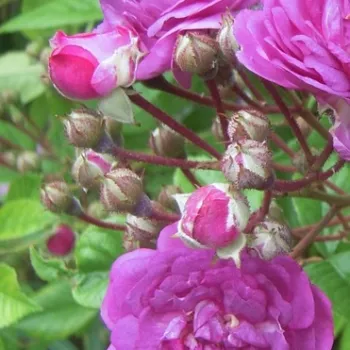
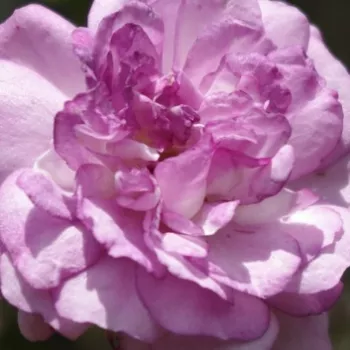
Semi-double, cup-shaped flowers with 13–25 petals, small size (approximately 0.5–1.5 in), borne in clusters; non-remontant, producing a single main flowering flush each season on mature framework. |
| Colour data and phenology |
Cool violet–lilac overall effect; buds dark violet-purple, opening crimson-purple outside with greyish-mauve tones inside, then fading through uniform purple to pastel lilac-grey; moderate colour retention. |
| Fragrance and aroma |
Fragrance strength very weak, with barely noticeable scent; no specific perfume character recorded, so the variety is chosen primarily for colour effect, habit and coverage rather than aromatic impact. |
| Hip characteristics |
Sparse red hips, egg-shaped, about 6–9 mm diameter, forming occasionally after flowering; of minor ornamental interest and not considered a primary feature of this climbing rambler cultivar. |
| Resistance and winter hardiness |
Hardy to approximately –21 to –18 °C (RHS H7, USDA 6b, Swedish zone 3); moderate heat and drought tolerance, with performance declining in hot, dry spells; disease resistance medium to poor. |
| Horticultural recommendations |
Best on pergolas, arches, fences and walls as a trained rambler; spacing 1.7–2.8 m depending on use; prefers moisture-retentive but well-drained soil and regular plant protection where disease pressure is high. |
ROSE-MARIE VIAUD gives tall, softly romantic lilac coverage with limited maintenance on sturdy supports, and as an own-root rambler it offers dependable long-term structure and renewal for gardeners seeking a quietly enduring investment.