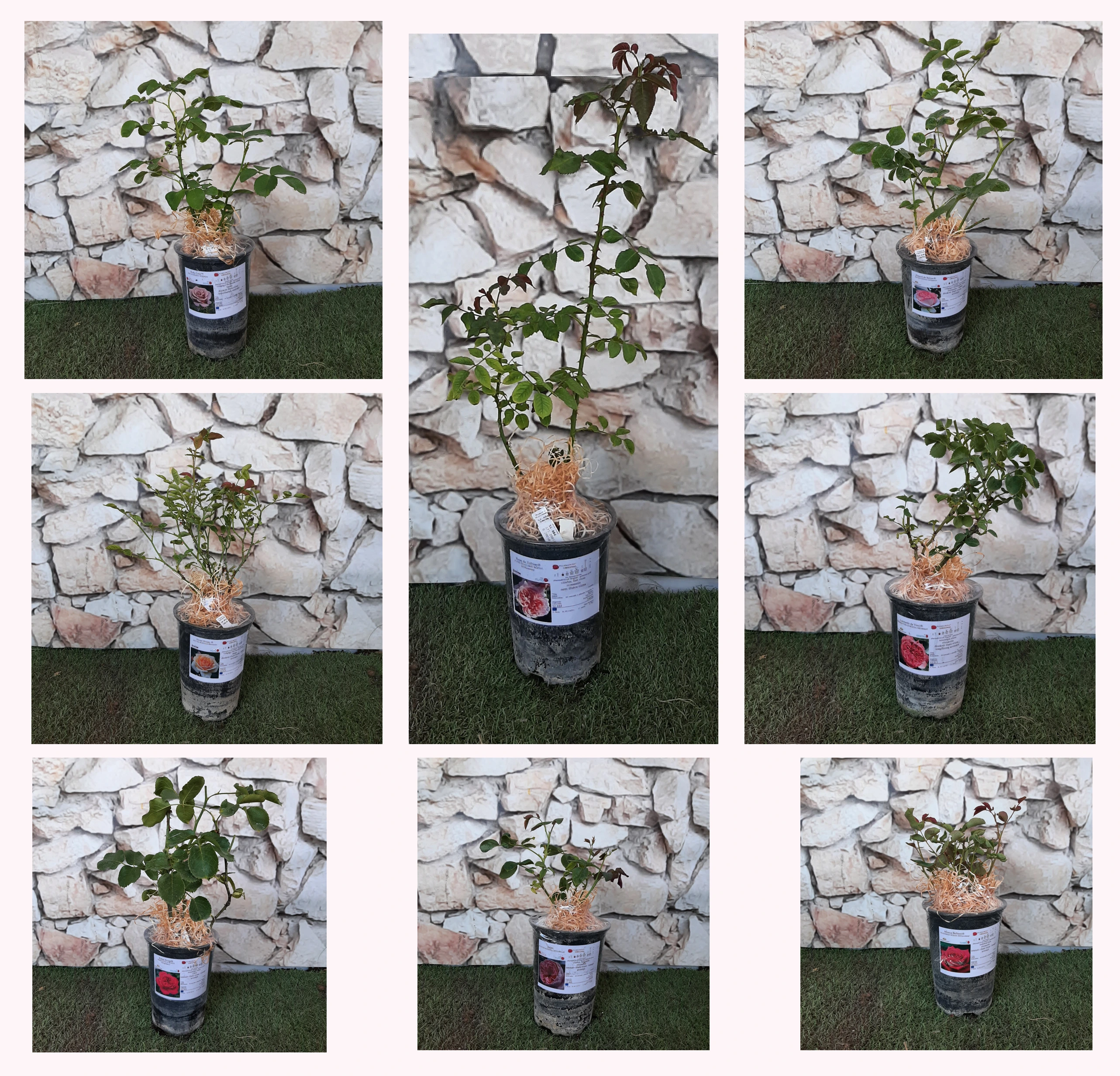
ROYAL OCCASION – red bedding Floribunda rose - Tantau
Imagine stepping onto your veranda after a blustery beach walk, where a low, bushy line of ROYAL OCCASION roses filters the breeze as it rolls in from the sea, offering a sheltered nook that feels instantly refreshing. This compact, glossy-foliaged Floribunda settles in steadily, building roots first, then shoots, before revealing its full garden character by around the third season. Its cluster-flowered, medium-sized, vivid red blooms repeat generously through summer, keeping borders and shingle beds lively without demanding complex care. Planted with good drainage it copes reassuringly well with blustery coastal weather and changeable showers, making it a practical choice for Cornwall and Devon-style plots. In a 40–50 litre or larger container it anchors a small family terrace beautifully, while the own-root form supports long-term vigour, recovery after pruning, and a consistently tidy, compact outline that suits busy, time-pressed gardeners.
Usage options
| Target area |
Reasoning |
| Small coastal front garden border |
The bushy, compact habit and dense, dark green foliage make a neat low hedge or ribbon of colour in exposed front gardens, especially where space is limited yet impact is important for kerb appeal; ideal for busy coastal-home owners. |
| Family terrace in a large container |
In a 40–50 litre or larger pot, its moderate height and rounded shape provide a controllable, non-intrusive structure, giving reliable red colour on a veranda or patio without overwhelming smaller sitting areas; perfect for balcony and terrace users. |
| Low-maintenance shingle or gravel bed |
Once established, the medium maintenance level and own-root resilience mean it copes well with the lighter, free-draining conditions of coastal-style shingle beds, forming a durable accent with simple seasonal tidying; suited to relaxed, informal-garden enthusiasts. |
| Formal bedding layout near a seating area |
Even, intense red clusters give strong visual rhythm in geometric beds, while the cluster-flowered habit ensures a continuous show that reads clearly from a distance, enhancing spaces where you enjoy tea or evening conversations; ideal for design-conscious garden planners. |
| Mixed border with late-perennial companions |
The vivid red flowers hold their colour well and repeat, contrasting attractively with softer tones from plants like Erigeron and dwarf Michaelmas daisies, extending interest deep into the season in typical family borders; perfect for colour-loving border builders. |
| Feature planting by a sheltered veranda |
The compact, glossy top growth creates a visually solid, wind-filtering presence close to seating, contributing to a comfortable, partly protected nook even where breezes are frequent and unpredictable in coastal regions; reassuring for weather-aware garden owners. |
| Small specimen rose in a lawn pocket |
As a solitary plant at the recommended wider spacing, its rounded form and reliable remontant flowering read as a clear focal point, giving structure without height that might block views across a modest family lawn; well suited to first-time rose growers. |
| Cutting patch for casual bouquets |
Medium-sized, semi-double blooms borne in clusters offer a steady supply of stems for informal arrangements, and the own-root longevity means the plant can be pruned harder to renew flowering wood over many seasons; ideal for home cut-flower collectors. |
Styling ideas
- Harbour-Edge Border – use Royal Occasion in a low ribbon along a path, underplanted with Erigeron karvinskianus to soften the edges – for coastal homeowners wanting relaxed, seaside character.
- Veranda Focus Pot – plant one rose in a 50 litre clay pot with fine gravel mulch, framing outdoor chairs without taking over the space – for small-terrace users seeking an easy focal point.
- Red-and-Silver Drift – combine with blue Festuca and a compact juniper to echo dunes and scrubby headlands – for gardeners chasing Cornish-style, wind-brushed planting.
- Family Lawn Accent – position a single plant in a circular bed cut into the grass, edged with low thyme to keep mowing simple – for busy families wanting impact with minimal upkeep.
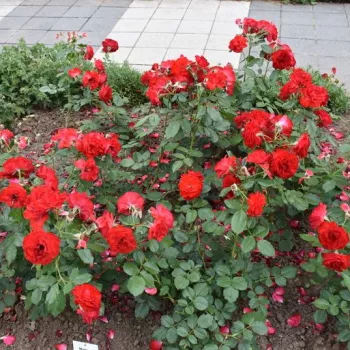
- Season-Long Bedding – mass-plant in a rectangular bed near the front door for a carpet of repeating red colour from early summer onwards – for beginners who prefer straightforward, reliable planting.
Technical cultivar profile
| Property |
Data |
| Name and registration |
Floribunda bedding rose registered as Royal Occasion, used commercially as Royal Occasion Bedding rose Royal Occasion; approved exhibition name Royal Occasion in the floribunda category. |
| Origin and breeding |
Bred by Mathias Tantau Jr. in Germany from ‘Walzertraum’ × ‘Europeana’; breeding completed 1974, registration 1976, introduced after 1976 by Rosen Tantau for global garden use. |
| Awards and recognition |
Holds a Certificate of Merit from the 1976 New Zealand Rose Trials, ADR distinction in 1974 later withdrawn, and successful showings such as Tri-State Rose Society Floribunda Spray 2000. |
| Growth and structural characteristics |
Bushy, compact shrub reaching around 70–95 cm in height and 50–75 cm spread, moderately thorny, with dense, glossy, dark green foliage that forms a solid, low visual structure in beds. |
| Flower morphology |
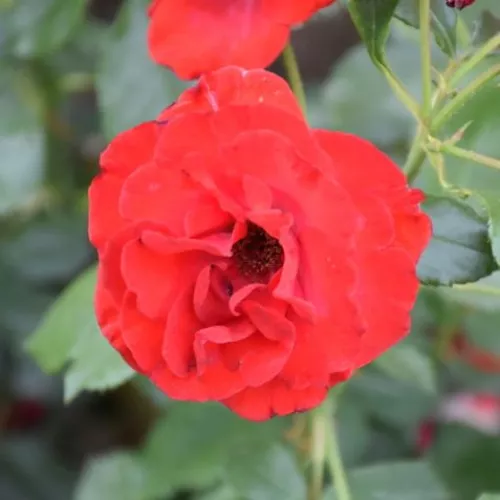
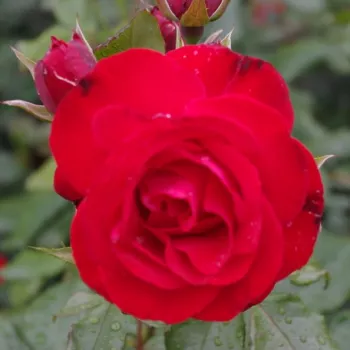
Semi-double, medium-sized cup-shaped blooms with 13–25 petals, carried in clusters on floribunda-style trusses, remontant with a generous second flowering flush for extended seasonal display. |
| Colour data and phenology |
Intense vivid red petals (RHS 46A outer, 45A inner) with very good colour retention, gradually fading to a medium red with slightly lighter edges but remaining visually strong throughout blooming. |
| Fragrance and aroma |
Fragrance is very weak and discreet, essentially a lightly scented rose where colour and form take precedence over perfume, suitable for sites where strong scent is not a priority or may be intrusive. |
| Hip characteristics |
Rose hip formation is generally low; when present, small ellipsoid red-orange hips 10–14 mm across may appear, adding modest late-season interest without significantly affecting flowering performance. |
| Resistance and winter hardiness |
Hardy to approximately −26 to −23 °C (RHS H7, Swedish Zon 4, USDA 5b); disease resistance is medium for black spot, mildew and rust, with moderate tolerance of heat given adequate watering. |
| Horticultural recommendations |
Best in full sun with well-drained soil; recommended spacings 45–90 cm depending on use, with 3.3–3.8 plants/m² for mass planting, and occasional deadheading plus pest and disease checks as needed. |
ROYAL OCCASION offers compact, vivid red clusters, good container suitability and long-lived own-root resilience, making it a refined, practical choice if you would like a quietly reliable coastal-style rose.