SAMMETGLUT® – dark red bedding Floribunda rose – Kordes
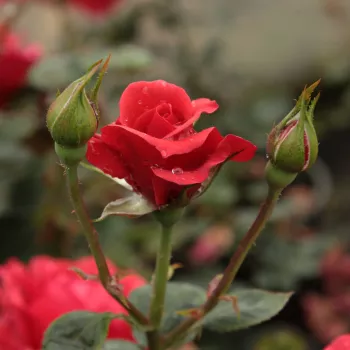
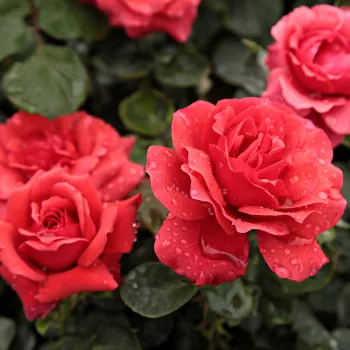
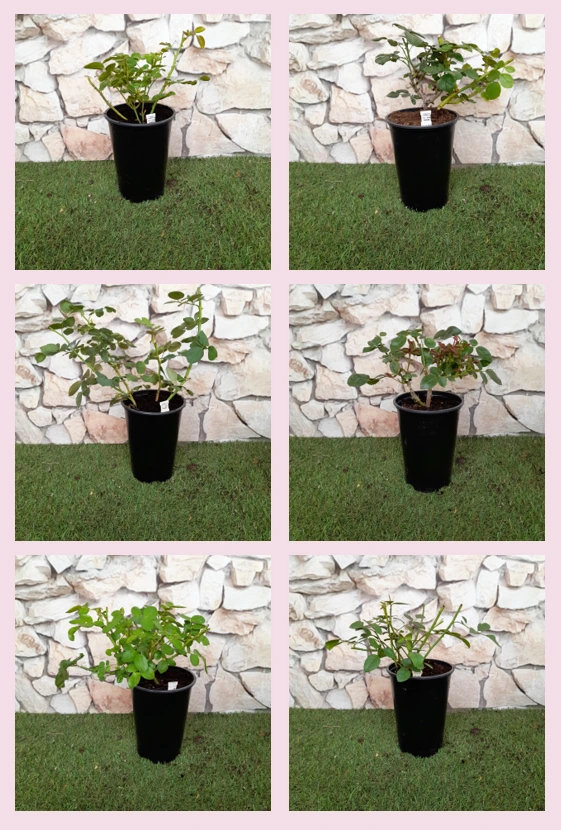
Imagine a sheltered seaside corner where you sip tea after walking the beach, the Sammetglut blooms glowing like embers against shingle and slate, their warm, spicy scent carried on the breeze. This bushy Floribunda is bred for dependable structure and generous flowering, giving wave after wave of velvety dark red clusters that change gradually to brick red, so the bed always looks full rather than bare. Own-root plants establish steadily and offer a long lifespan, regenerating well if ever cut back hard and keeping their shape without complicated pruning. In a British family garden it copes comfortably with exposed, breezy spots near the coast, offering reliable colour where many plants sulk in the wind. Choose a 40–50 litre container or a well-drained border and it quietly builds strong roots in the first year, then more confident shoots in the second, reaching full ornamental impact by year three. Use it as a richly coloured low hedge or a focal specimen by the veranda, where its medium maintenance needs remain perfectly manageable for busy, relaxed gardeners.
Usage options
| Target area | Reasoning |
|---|
| Coastal veranda containers |
Sammetglut suits sheltered Cornish or Devon verandas in large 40–50 litre pots, where its upright, bushy habit stays stable and tidy. The XL, double flowers provide a long, remontant display with only light deadheading for beginners. |
| Small shingle or gravel beds |
The compact spread and good self-cleaning mean faded blooms drop away, so a shingle or gravel bed never looks fussy. Its velvety dark red to brick-red colour shift adds depth without constant grooming for the busy homeowner. |
| Low flowering hedge along a path |
Planted at around 90 cm, Sammetglut forms a coherent, moderately thorny hedge that guides movement without feeling harsh. Repeating clusters of large flowers create a soft border edge that is easy to keep in shape for the family gardener. |
| Focal specimen near seating |
As a solitary rose spaced at about 170 cm, its changing scarlet to brick-red tones and warm, spicy fragrance become a clear focal point. The gradual year-on-year build-up of flowering wood rewards patient, relaxed tea-drinkers. |
| Mixed coastal-style planting |
In a mixed bed, it partners well with grasses and robust perennials, holding its upright structure and colour even when the weather turns blustery and salty, anchoring the scene in exposed, wind-prone gardens for the coastal-lover. |
| Urban front garden beds |
Its bushy, upright habit gives a tidy yet generous look in limited space, while medium disease resistance and straightforward pruning keep care practical. Own-root resilience supports long-term structure for the town gardener. |
| Ornamental hedge with autumn hips |
Though hips are modest, the small orange-red spheres add a subtle autumn note after the main flowering. Combined with dark foliage, they extend interest beyond summer for those who appreciate quiet seasonal shifts, especially the collector. |
| Lightly shaded side borders |
Sammetglut tolerates partial shade, so side paths or north–east aspects still gain strong colour. The steady root-first, shoot-second establishment pattern makes planning easy for gardeners wanting predictable progress, particularly the planner. |
Styling ideas
- Veranda Ember Pot – Large 50 litre clay pot on a sheltered coastal veranda, underplanted with silver Festuca and gravel mulch – ideal for the coastal-style enthusiast.
- Shingle Glow Ribbon – Single row through a shingle bed, edged with sea-worn pebbles and spaced for airy structure – perfect for low-maintenance front gardens.
- Brick-Red Hedge – Repeating plants at 90 cm, woven with lavender for scent contrast and softening foliage – suited to family pathways and driveways.
- Sunset Companion Bed – Combined with Crocosmia ‘Lucifer’ and Knautia ‘Red Knight’ for a fiery, textural colour scheme – exciting for adventurous beginners.
- Courtyard Centrepiece – Single specimen in a square raised bed with pale gravel and a simple bench – appealing to homeowners wanting a calm, structured focus.
Technical cultivar profile
| Parameter | Data |
|---|
| Name and registration |
Sammetglut, registered cultivar name Scharlachglut; Floribunda bed rose used as a shrub rose in gardens. Also known under American Rose Society exhibition name Scharlachglut. |
| Origin and breeding |
Bred by Wilhelm J. H. Kordes II in Germany from ‘Poinsettia’ × ‘Alika’. Developed 1943, introduced 1952 by W. Kordes’ Söhne, remaining a classic, robust garden Floribunda. |
| Growth and structural characteristics |
Bushy, upright shrub reaching about 110–150 cm high and 85–115 cm wide. Moderately dense, slightly glossy dark green foliage and moderate prickliness give clear, structural outlines. |
| Flower morphology |
Double, cup-shaped clusters with 26–39 petals and XL-sized blooms around 3.5 inches. Remontant flowering provides a profuse second flush, especially in well-sited, cared-for plants. |
| Colour data and phenology |
Velvety dark red flowers (RHS 53A outer, 60A inner) opening to warm scarlet, then dulling to brick red. Colour retention is medium, but colour stages give prolonged ornamental interest. |
| Fragrance and aroma |
Medium-strength, warm spicy fragrance clearly noticeable around the bush in still air. Primarily ornamental, with some contribution to scented seating areas or path-side plantings. |
| Hip characteristics |
Forms small, spherical rose hips 8–12 mm across, orange-red around RHS 40A, usually in modest quantities. Adds a discreet autumn accent after the main flowering has subsided. |
| Resistance and winter hardiness |
Hardy to around −26 to −23 °C (RHS H7; USDA 5b; Swedish Zone 4). Disease resistance is medium for black spot, mildew and rust, responding well to basic preventative care. |
| Horticultural recommendations |
Best at 100 cm spacing in beds or 90 cm as hedging; 170 cm as a specimen. Tolerates partial shade, heat and moderate drought, but benefits from watering during extended dry spells. |
SAMMETGLUT® offers glowing, season-long dark red flowering, a tidy structural habit and durable own-root resilience that rewards patient, low-effort care; consider it if you want lasting coastal-style colour without complexity.