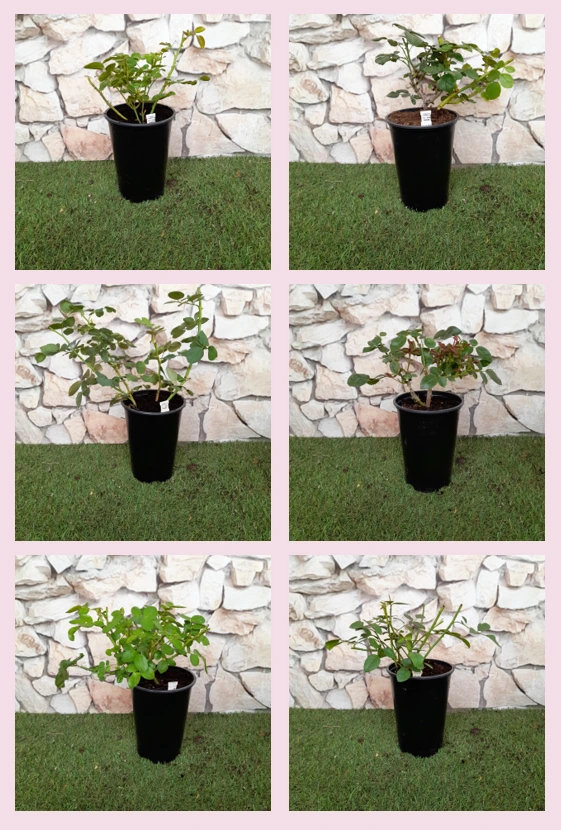
SATCHMO – orange-red bedding floribunda rose - McGredy
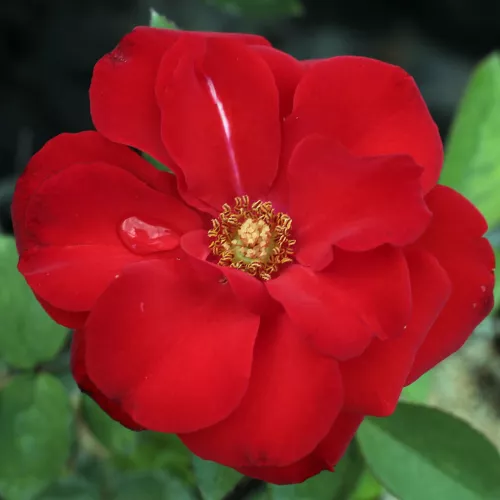
Fresh from the coast into your own garden, Satchmo brings glowing, orange-red clusters that keep returning through the season, while its bushy habit helps create gentle shelter in breezier spots, naturally softening the impact of strong coastal winds and weather. This compact floribunda settles easily into family gardens, coping well with typical British summers and only moderate maintenance. In containers of at least 40–50 litres or in small beds it offers reliable colour, thanks to good heat tolerance, glossy dark foliage and self-cleaning blooms that fall cleanly. Over time the own-root plant builds a solid framework, supporting its longevity and a graceful shape that suits relaxed, “girly” coastal-inspired spaces.
Usage options
| Target area | Reasoning |
|---|
| Front-of-border bedding strip in a small family garden |
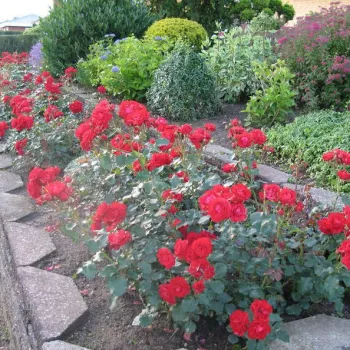
The compact, bushy floribunda growth remains within 60–90 cm, giving a defined yet unobtrusive edge to lawns or play areas, and the dense foliage helps anchor loose, shingly soils along paths for coastal-style families and beginners. |
| Coastal veranda or patio in large containers |
In a 40–50 litre pot, Satchmo’s upright, tidy form and repeat-flowering clusters provide season-long colour on balconies and verandas, staying stable and manageable without complicated pruning for time-pressed urban and coastal. |
| Mixed flowerbed with perennials |
The vibrant orange-red clusters sit well with grasses and perennials such as Miscanthus and Echinacea, while the good self-cleaning habit reduces deadheading, keeping borders smart with less effort for style-conscious home gardeners. |
| Low, colourful hedge or visual screen |
Planted at 35–40 cm intervals, the dense, leafy structure forms a low, semi-formal hedge that offers light wind filtering and privacy without becoming overbearing, ideal where space is limited for small-plot owners. |
| Sunny, heat-exposed corners |
This variety tolerates heat well and continues flowering with regular watering, holding its colour attractively, so you can brighten warm, sheltered corners that might stress fussier roses for relaxed weekend gardeners. |
| Pollinator-friendly focal point near seating |
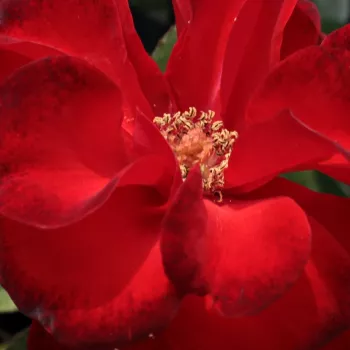
Semi-double, cup-shaped flowers leave stamens partially accessible, offering a modest resource for bees alongside a mild, fresh fragrance, adding life and gentle sensory interest around outdoor seating for nature-aware families. |
| Low-maintenance park-style planting at home |
Good self-cleaning, moderate disease resistance and a proven long-lived character allow you to recreate simple, municipal-style bedding with fewer routine tasks, especially where reliable structure matters for busy household gardeners. |
| Long-term structural rose in a compact design |
As an own-root rose it develops a durable framework that supports consistent flowering year after year with straightforward renewal pruning, helping small gardens keep their shape and impact for planning-conscious home owners. |
Styling ideas
- Jazz-Edge Border – run a low ribbon of Satchmo along a path, pairing its orange-red clusters with blue sea holly or Festuca for a rhythmic contrast – ideal for coastal-style enthusiasts.
- Veranda Trio – plant three Satchmo in a 50 litre trough with trailing sea thrift and silver Helichrysum for a breezy seaside feel – perfect for balcony and veranda owners.
- Sunset Patch – combine Satchmo with Geranium macrorrhizum and dwarf Miscanthus in a sunny bed for glowing colour and easy care – suited to beginners seeking reliable structure.
- Play-Corner Screen – line a low hedge of Satchmo beside a play lawn to soften boundaries while keeping sightlines clear – good for families wanting safe, tidy planting.
- Weekend Bed – use Satchmo as the main rose in a small mixed bed with lavender and sea kale, relying on its self-cleaning habit for low-maintenance summer colour – ideal for busy hobby gardeners.
Technical cultivar profile
| Parameter | Data |
|---|
| Name and registration |
Floribunda bed rose, registered as Satchmo, also used as an exhibition floribunda; current trade name Satchmo Bedding rose Satchmo; ARS exhibition name Satchmo. |
| Origin and breeding |
Bred by Samuel Darragh McGredy IV from ‘Evelyn Fison’ × ‘Diamant’; introduced 1972 via Jackson & Perkins and McGredy Roses International; breeding work completed around 1970. |
| Awards and recognition |
Le Roeulx Gold Medal 1970 and The Hague Golden Rose Award 1975, confirming proven garden performance and ornamental value across different European trial conditions. |
| Growth and structural characteristics |
Bushy, upright floribunda reaching about 60–90 cm in height and 50–70 cm spread, with dense, glossy dark green foliage and moderate prickliness, forming a compact, rounded shrub. |
| Flower morphology |
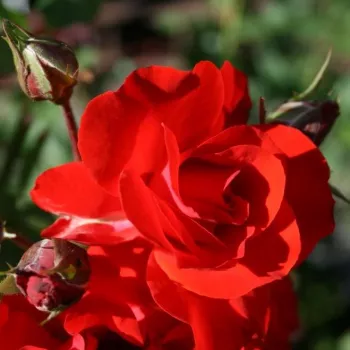
Semi-double, medium-sized clusters of cup-shaped, flat-opening blooms with roughly 13–25 petals; remontant with abundant second flush, carried freely on branching stems in loose clusters. |
| Colour data and phenology |
Vibrant orange-red flowers, RHS 40A outer and 41A inner; colour may lighten slightly in strong sun but remains vivid in cooler periods, offering a bright, even display throughout main flowering. |
| Fragrance and aroma |
Mild, fresh, fruity fragrance, noticeable at close range without dominating seating areas; semi-double form and accessible stamens are partially attractive to bees and other garden pollinators. |
| Hip characteristics |
Produces moderate numbers of small, spherical hips around 8–12 mm, coloured orange-red (RHS 40A); hips follow flowering if spent blooms are left, adding modest late-season interest. |
| Resistance and winter hardiness |
Rated to around −21 to −18 °C, RHS H7, USDA Zone 6b, Swedish Zone 3; medium resistance to powdery mildew, black spot and rust, with generally good tolerance of summer heat and sun. |
| Horticultural recommendations |
Best in sunny positions with reasonable drainage; suitable for beds, borders, hedging or urban spaces at 35–65 cm spacing, with moderate maintenance and regular watering during extended dry spells. |
Satchmo offers compact structure, vivid orange-red repeat flowering and a quietly reliable, long-lived own-root habit, making it a thoughtful choice for easy-going family gardens and coastal-inspired patios.