SCHÖNE BERLINERIN® – pink hybrid tea rose – Evers
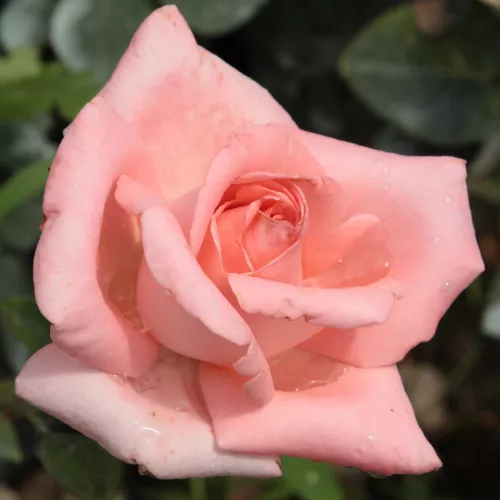
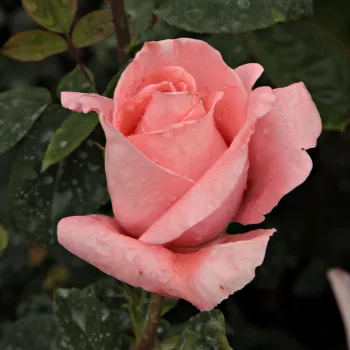
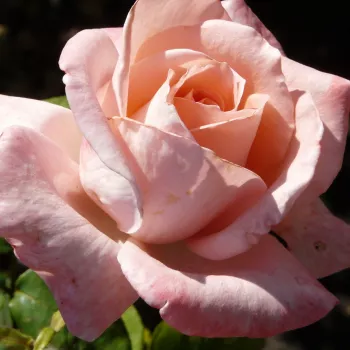
Imagine returning from a breezy walk on the Cornish coast to sit with afternoon tea, sheltered behind a low screen of roses whose soft pink blooms echo the sunlit shingle and weathered timber around you. SCHÖNE BERLINERIN® is a classic hybrid tea, grown in our practical 2‑litre own‑root format, so it settles in steadily and rewards you with elegant, long‑stemmed flowers from one summer to the next with reassuring continuity. In a small family garden or on a coastal veranda, it forms a neat, upright bush that fits where space is at a premium, while its dense foliage helps create a gentle barrier against prevailing breezes and occasional salt‑laden gusts. A large container of at least 40–50 litres on your terrace, or a short row in the border, will let the plant anchor itself well and cope more calmly with heavy rain and wind as it matures. As an own‑root rose it ages gracefully, regenerating from its base rather than weakening on a graft, so you see roots establishing in year one, height and flowering building in year two, and full ornamental value by year three as part of a long‑lived garden companion. With minimal deadheading and basic watering in dry spells, it repeats generously, offering refined blooms for cutting and quiet moments of reflection outdoors. The gently rosy fragrance is subtle rather than overpowering, complementing sea air and morning breezes instead of competing with them, while the warm pink colouring softens to a silvery veil that sits harmoniously beside pebbles, grasses and bleached decking in a relaxed coastal‑inspired setting. Whether you are just starting with roses or looking for a reliable, medium‑care variety that will still be there in years to come, this cultivar offers a reassuring balance of manageable maintenance, decorative structure and enduring charm in everyday family life.
Usage options
| Target area |
Reasoning |
| Small coastal veranda container (40–50 litres) |
A single plant in a large pot forms a tidy, upright presence that copes well with breezy, salty conditions when watered regularly and given a sunny spot, ideal where ground is limited for coastal-style lovers and beginners. |
| Front-of-border feature in family gardens |
Its moderate height and bushy habit make a clear yet not overwhelming focal point near paths or patios, providing repeat flowers without complex pruning for hobby gardeners and homeowners. |
| Cutting row for home arrangements |
The long, straight stems and large, warm pink hybrid tea blooms lend themselves to simple cutting for vases, giving dependable stems through the season for busy urban garden owners and beginners. |
| Mixed planting with drought-tolerant perennials |
Paired with sea kale, Festuca and thyme, this rose brings structured colour above textured foliage, needing only modest care once established for coastal-style lovers and homeowners. |
| Low, airy windbreak beside seating |
A short row along a bench or terrace subtly filters breezes while remaining visually light, enhancing comfort in spots occasionally exposed to wet, blustery weather for hobby gardeners and coastal owners. |
| Clay soil beds with improved drainage |
In heavier ground, a raised bed or grit-improved planting hole helps roots establish so the shrub stays stable and flower-filled even after heavy downpours for family gardeners and busy urban owners. |
| Long-term specimen in a sunny corner |
As an own-root plant it forms a durable, well-branched bush that can be refreshed by pruning over many years, maintaining its role in the garden scene for long-term planners and homeowners. |
| Rope-edged path or shingle strip |
Set along a shingle edge, its layered pink flowers echo seaside hues while the dark glossy foliage frames the walkway with minimal visual clutter for coastal-style lovers and relaxed hobby gardeners. |
Styling ideas
- Veranda Refuge – Position one rose in a 50-litre tub with pale pebbles as mulch, flanked by sea kale and low grasses to create a calm wind-filtering nook – ideal for coastal veranda owners seeking low-effort charm.
- Shingle Ribbon – Plant a short row through shingle with timber edging, interspersed with Festuca and thyme, to echo beach textures in a narrow strip – suitable for small-garden homeowners wanting a seaside feel.
- Tea-Corner Accent – Use a single specimen near a bistro set, underplanted with Carpathian bellflower and dwarf asters for gentle colour from late spring to autumn – perfect for hobby gardeners who enjoy simple relaxation.
- Cutting Border – Arrange several plants at the back of a slim bed with low lavender in front, giving accessible stems for vases while softening fence lines – practical for busy urban gardeners who like home-picked flowers.
- Structured Duo – Pair with a compact evergreen (such as a small bay in a pot) to contrast glossy foliage and pink blooms with strong green structure – appealing to beginners wanting easy, architectural planting.
Technical cultivar profile
| Parameter |
Data |
| Name and registration |
Hybrid tea rose, registered as TANrised, marketed as SCHÖNE BERLINERIN® hybrid tea rose TANrised; ARS exhibition name Schoene Berlinerin, own-root 2-litre garden form. |
| Origin and breeding |
Bred by Hans Jürgen Evers at Rosen Tantau, Uetersen, Germany; breeding year and registration 1985, introduced commercially by Rosen Tantau in 1986 for garden and cutting use. |
| Growth and structural characteristics |
Upright, bushy hybrid tea rose to around 80–110 cm high and 50–70 cm wide, with dense, dark glossy foliage and moderate thorns, forming a neat, medium-sized shrub in beds or containers. |
| Flower morphology |
Large, double, cup to chalice-shaped blooms with roughly 26–39 petals; mostly solitary hybrid tea flowers on stems, remontant with good repeat, second flush also abundant in suitable conditions. |
| Colour data and phenology |
Warm pink blooms with subtle peachy tone; outer petals RHS 55B, inner 55C; opens with stronger inner colour, then fades to a soft silvery-pink veil towards fall; colour retention moderate to weak. |
| Fragrance and aroma |
Very light, delicately rosy scent, generally barely perceptible outdoors; grown primarily for form and colour rather than fragrance, making it suitable where strong perfume is not desired. |
| Hip characteristics |
Hip set is usually minimal; any hips formed are small ellipsoid shapes about 12–18 mm across, turning orange-red as they mature, with limited ornamental or wildlife contribution in most seasons. |
| Resistance and winter hardiness |
Hardy to approximately −21 to −18 °C (RHS H7, USDA 6b, Swedish zone 3); medium resistance to powdery mildew and black spot, good rust resistance; needs watering in prolonged heat or drought. |
| Horticultural recommendations |
Best in sunny positions with well-drained soil; suited to flower beds, specimen use or cutting. Space 45–90 cm depending on role; deadhead regularly and apply standard rose care when disease pressure is high. |
SCHÖNE BERLINERIN® offers elegant, long-stemmed blooms, compact structure for smaller gardens and the long-term reliability of an own-root plant, making it a thoughtful choice if you favour steady beauty over many seasons.