Schöne Koblenzerin ® bedding floribunda rose – KORburox
Imagine rinsing shingle from your hands after a beach walk, then sitting down for tea behind a living windbreak of roses: Schöne Koblenzerin ® settles quickly into typical British family plots and coastal corners, coping calmly with breezy, wet weather and occasional salt‑laden air. Its compact, upright habit and naturally bushy structure make it ideal for edging small beds, low hedges and veranda planters, where the rounded shrubs remain neat with minimal shaping. A rhythm of raspberry‑cream clusters provides remontant colour from early summer well into autumn, while good self-cleaning keeps the display tidy after wind and rain. Barely any thorns make everyday deadheading or child-friendly paths more comfortable, and the own‑root form supports long, steady performance with easy recovery after harsh coastal winters. In the first year it focuses on roots, the second on leafy shoots, and by the third season you can expect full, mature ornamental presence from this durable, easy‑going bedder.
Usage options
| Target area | Reasoning |
|---|
| Low coastal windbreak along a shingle path |
The compact, upright framework knits into a continuous line that filters breezes without blocking light, well suited to breezy plots facing the Channel. Overlapping clusters create a soft raspberry‑cream ribbon with little shaping work for coastal veranda owners. |
| Colour-rich edging to family lawn or play area |
Its bushy but moderate height habit frames lawns cleanly without flopping onto play space, and the neat outline reduces the need for frequent clipping. The plants sit comfortably in average UK garden borders, giving structure without dominating for busy homeowners. |
| Season-long flowerbed focus in a small front garden |
Remontant flowering provides repeated flushes from early summer to autumn, ensuring the frontage never looks bare between blooms. The clusters read clearly even from the pavement, reinforcing kerb appeal with dependable colour for urban garden beginners. |
| Mixed border with silver and blue coastal perennials |
Good self-cleaning means faded flowers drop away after rain and wind, so raspberry‑cream clusters sit cleanly above fresh foliage. This keeps planting schemes with grasses and sea kale looking composed rather than fussy for design-conscious coastal stylists. |
| Large container on a sheltered veranda or balcony |
Its compact root system and moderate height adapt well to a 40–50 litre pot, where the own‑root plant establishes steadily without complicated pruning. Regular watering and drainage are the main tasks, keeping care simple for time-poor veranda owners. |
| Informal low hedge beside a seating nook |
The barely thorny stems make brushing past the plants more comfortable in narrow spaces, with less snagging on clothing or children’s sleeves. This suits paths to benches or tea corners where relaxed access matters for family garden users. |
| Reliable structure in exposed, rain-swept borders |
The sturdy framework and dense foliage help the shrub stay upright and cohesive in unsettled weather, coping well with the kind of strong rain and wind often faced in coastal counties, reassuring for Cornwall and Devon gardeners. |
| Long-term planting in a low-maintenance family scheme |
Own-root growth supports a long-lived shrub that regenerates well from the base after harsh winters or heavy pruning, keeping the planting stable over years with simple yearly trimming and feeding for low-maintenance enthusiasts. |
Styling ideas
- Harbour-terrace – Plant in a 40–50 litre tub with sea kale and blue Festuca to echo Cornish harbourside tones – ideal for coastal-style balcony owners.
- Shell-border – Edge a shingle path with repeating clusters at 40 cm, weaving in low lavender for fragrance – suited to relaxed family gardens.
- Raspberry-ridge – Create a low hedge behind a lawn bench, with Gypsophila ‘Festival Pink Lady’ softening the line – perfect for afternoon tea corners.
- Storm-bright – Mix with silvery foliage and Liatris ‘Kobold’ in exposed beds, using the compact form as a calm anchor – good for windy coastal plots.
- Veranda-duo – Pair one large pot of Schöne Koblenzerin with a pot of Calamintha for airy purple contrast – designed for beginners who want easy, reliable colour.
Technical cultivar profile
| Parameter | Data |
|---|
| Name and registration |
Floribunda bed rose, registered as KORburox, marketed as Schöne Koblenzerin ® bedding rose; ARS exhibition name Schöne Koblenzerin, premium silver quality rating. |
| Origin and breeding |
Bred by Tim-Hermann Kordes at W. Kordes' Söhne, Germany; breeding completed 1999, registered 2009, introduced 2011, with parentage recorded as unknown × unknown. |
| Awards and recognition |
Holds the ADR (Allgemeine Deutsche Rosenneuheitenprüfung) 2009 award, indicating reliable garden performance under Central European trial conditions without intensive chemical protection. |
| Growth and structural characteristics |
Compact, upright, bushy shrub reaching about 60–85 cm in height and 50–75 cm spread, with dense, glossy medium-green foliage and very few thorns along the shoots. |
| Flower morphology |
Semi-double clusters with around 13–25 petals, small cup-shaped blooms typically 0.5–1.5 inches across, borne freely in trusses and repeating with a particularly generous second flush. |
| Colour data and phenology |
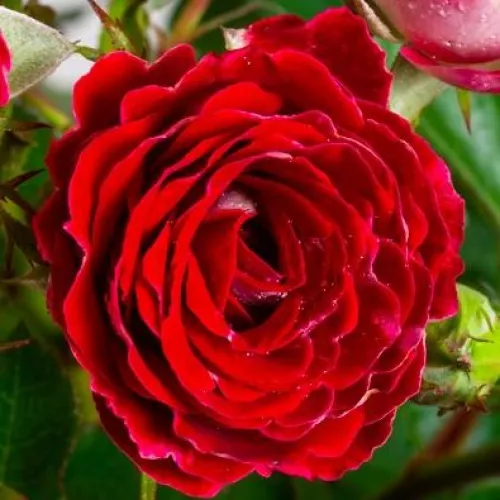
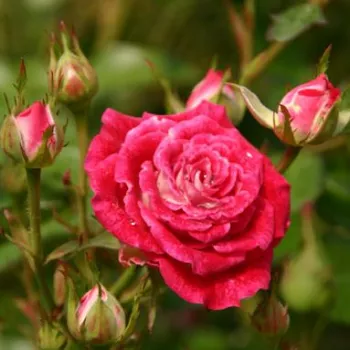
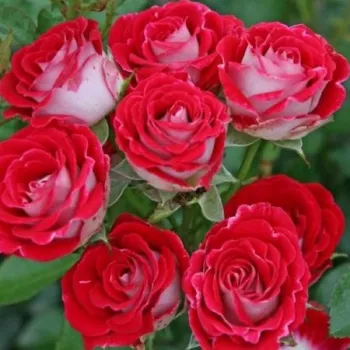
Raspberry cream-white blend; buds deep raspberry with silvery edges, opening to velvety raspberry-pink centres and silvery cream outer petals, gradually fading through pale pink to cream as blooms age. |
| Fragrance and aroma |
Delicate, sweet, rose-like scent that is generally very weak and barely noticeable in most garden situations, adding a light background perfume rather than a dominant fragrance note. |
| Hip characteristics |
Occasional small hips may form, spherical and orange-red, around 5–8 mm in diameter, adding a discreet autumn accent without significantly affecting flowering performance or overall display. |
| Resistance and winter hardiness |
Rated H7 and USDA zone 6b, tolerating approximately −21 to −18 °C; medium resistance to powdery mildew, black spot and rust, with good heat tolerance but a need for watering in extended drought. |
| Horticultural recommendations |
Best in sunny sites; plant 40 cm apart in mass, 35 cm for hedging, 65 cm as specimens, around 5–6 plants/m², suitable for beds, edging, groups, larger containers and occasional cutting. |
Schöne Koblenzerin ® offers compact structure, remontant raspberry-cream colour and a long-lived own-root habit that suits real family gardens, making it a thoughtful choice if you seek lasting coastal charm with modest upkeep.