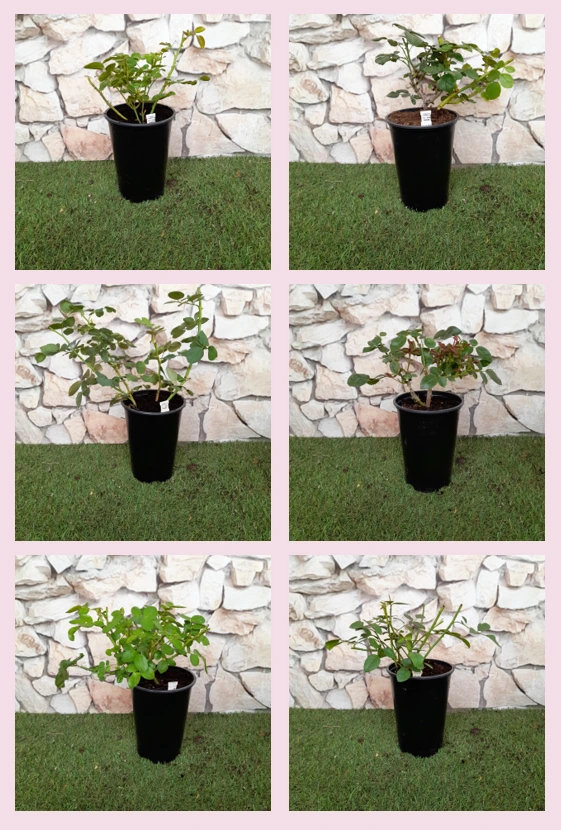
PROSPERITY – white park rose – Pemberton
Imagine returning from a breezy shoreline walk, sitting down with tea behind a living windbreak of roses: Prosperity surrounds you with creamy-white corymbs and a muscat-like perfume while coping confidently with brisk coastal breezes and changeable weather, offering reassuring stability where gardens face salt-laced rain and shifting skies. This Hybrid Musk shrub settles steadily into clay or loam with basic drainage, forming a dense, leafy framework that matures into a long-lived, own-root planting, so if you simply water, mulch and lightly shape, it will reward you for decades. Year by year it strengthens – first building roots, then extending shoots, then revealing its full ornamental character – until glossy dark foliage and generous clusters create an elegant, low-fuss backdrop for seaside-style planting or a sheltered veranda where you can enjoy its dependable, remontant flowering from early summer well into autumn.
Usage options
| Target area | Reasoning |
|---|
| Small coastal front garden hedge |
Forms a dense, bushy screen that filters wind without feeling heavy, with ivory clusters softening front boundaries and requiring only seasonal trimming; ideal for exposed plots where gardens face salt-laced showers and gusty days for a relaxed coastal look for beginners. |
| Specimen by a veranda or seating area |
The strong, long-lasting muscat-like fragrance and repeat flowering make a single shrub an atmospheric focal point near chairs or a bench, giving you scented evenings without intricate pruning, simply light shaping after main flushes for homeowners. |
| Mixed border in a family back garden |
Its upright, slightly arching habit fits easily into average-sized borders, weaving cream blooms through perennials while remaining manageable in height; own-root vigour means it copes well with everyday family use and basic care from busy owners. |
| Low-maintenance park-style planting strip |
Reliable remontant flowering, medium maintenance needs and moderate disease resistance suit informal park-style beds along drives or paths, where simple annual pruning and occasional pest checks keep an attractive display practical for urbanites. |
| Living backdrop for coastal-style gravel beds |
Pairs well with drought-aware schemes on free-draining gravel, its glossy foliage and soft white blooms contrasting with grasses and sea kale; once established, its own-root framework anchors planting with steady structure valued by coast-lovers. |
| Loose flowering screen by pergola or arch |
The bushy growth and slightly nodding, corymbose clusters drape attractively over light supports, creating a semi-transparent green and white veil; modest training and tying in shoots are all that is needed for hobbyists. |
| Traditional cottage-style bed in partial shade |
Tolerates partial shade, so it still flowers well against north-east or north-west facing walls where sun is limited; ivory clusters brighten cooler corners, reducing pressure to secure the sunniest spot for gardeners. |
| Large container on a sheltered balcony or patio |
In a 40–50 litre container with good drainage, its upright habit and repeated flushes deliver a long season of colour at eye level, while own-root resilience makes recovery from any winter dieback more dependable for new planters. |
Styling ideas
- Seaside-Hedge – line a shingle path with Prosperity and blue Festuca, letting creamy clusters and silver-grey grasses echo sand and surf – ideal for coastal-style lovers.
- Tea-Corner – place one shrub in a large pot by a bistro set, underplant with lavender for extra scent and soft colour – perfect for veranda owners.
- Cottage-Ribbon – weave Prosperity through pink lupins and airy Coreopsis in a loose border, creating a frothy ivory-and-pastel band – suited to romantic beginners.
- Green-Backstage – use two or three shrubs as a leafy, flowering backdrop behind lower perennials, giving structure that simplifies the whole bed – good for time-poor families.
- Pergola-Veil – guide a small group along a light pergola, mixing with climbers for layered texture and nodding flower clusters – for creative hobby gardeners.
Technical cultivar profile
| Parameter | Data |
|---|
| Name and registration |
Hybrid Musk shrub rose ‘Prosperity’, a park rose type with ARS exhibition name Prosperity; introduced to gardens under several trade designations but recognised consistently for its ivory and cream display. |
| Origin and breeding |
Bred in the United Kingdom in 1919 by Rev. Joseph Hardwick Pemberton from ‘Marie-Jeanne’ × ‘Perle des Jardins’; first distributed by Hazlewood Bros. Pty. Ltd. in Australia from 1921 onward. |
| Awards and recognition |
Holds the RHS Award of Garden Merit, indicating reliable performance, sound garden value and stable ornamental qualities under typical UK conditions when provided with standard rose care. |
| Growth and structural characteristics |
Bushy shrub with upright shoots nodding slightly under flower weight, reaching about 130–200 cm high and 100–160 cm wide, with dense, dark green, glossy foliage and a moderately thorny framework. |
| Flower morphology |
Semi-double, cup-shaped blooms borne in corymbose clusters, with approximately 13–25 petals and small flower size; repeats strongly, producing a generous second flush after the main early summer display. |
| Colour data and phenology |
Delicate ivory to creamy-white flowers with a fine buttery tint, sometimes edged pink in cooler weather; colour holds well in sun, with subtle fading to snow-white as blooms age on the shrub. |
| Fragrance and aroma |
Strong, long-lasting scent with a muscat-like character, noticeable around the plant in still air; semi-double form offers some access to pollen, though overall pollinator attraction is only moderate. |
| Hip characteristics |
Produces only a few small hips, about 0–5 mm in diameter, so fruit effect is minor and the shrub remains focused on foliage and flowers rather than ornamental autumn hip displays. |
| Resistance and winter hardiness |
Rated to around −21 to −18 °C (RHS H7, USDA 6b, Swedish zone 3); tolerates heat and moderate drought with watering in dry spells, showing resistance to powdery mildew and moderate sensitivity to black spot and rust. |
| Horticultural recommendations |
Suited to beds, hedges, specimen use, pergolas and cut flowers; plant 110–200 cm apart depending on purpose, allow 0.7–0.8 plants/m² in mass plantings, and provide occasional pest control and light pruning. |
Prosperity offers strongly scented, repeat ivory flowering, a durable own-root framework and adaptable shrub form, making it a thoughtful choice for long-lived, low-fuss garden structure you can enjoy for years.