SIBELIUS – violet-purple park rose - Lens
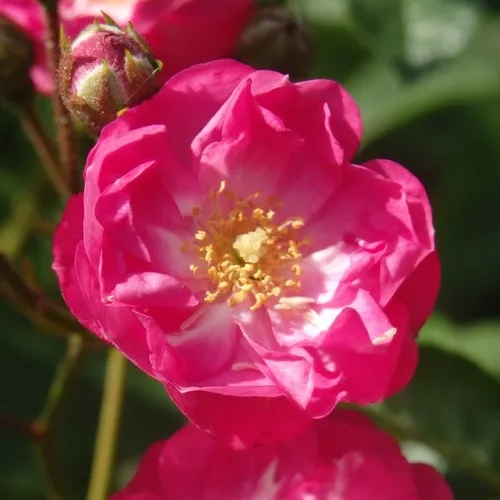
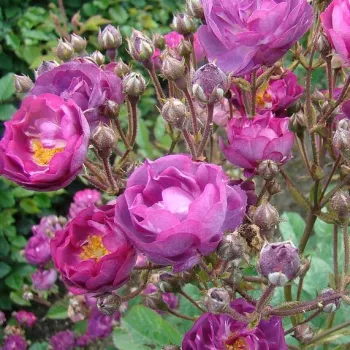
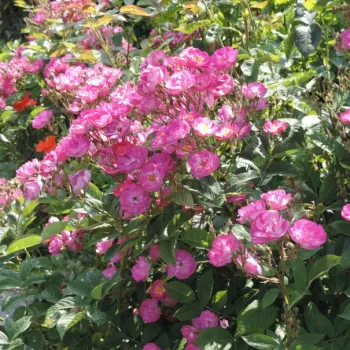
With its shimmering violet blooms and gently bushy habit, SIBELIUS settles beautifully into small coastal gardens where good drainage and secure anchoring in breezy, exposed spots really matter. This own-root shrub rose brings reassuring stability, building a deep, resilient root system that supports long-term health and steady growth. Over time, its branching structure fills out into a natural screen, ideal beside a veranda or along a shingle path, while clusters of small, semi-double flowers deliver relaxed, informal colour for months on end. The open centres invite visiting bees, adding quiet life and movement, and the plant’s calm, mild fragrance never overwhelms your seating area. Compact dimensions suit family gardens where space is at a premium, and its measured, medium-care needs keep maintenance realistic for busy weeks. In the first three years it knuckles down, first building roots, then extending shoots, and by the third summer it reveals its full ornamental character as a dependable coastal companion.
Usage options
| Target area |
Reasoning |
| Coastal veranda wind-filter |
The bushy, branching habit forms a light, living wind-filter around chairs and tables without feeling heavy or overbearing, making it ideal for breezy Cornish or Devon verandas where you want shelter and views to coexist for the relaxed coastal-style gardener |
| Compact flowering hedge |
Planted at 40 cm intervals, SIBELIUS creates a low, informal hedge that stays within 85–130 cm, giving definition to paths and driveways while remaining easy to trim and rejuvenate from its own roots when needed for the practical family-home owner |
| Feature shrub in small beds |
As a solitary specimen at 75 cm spacing, its violet clusters and dark foliage deliver a clear focal point without dominating, suiting modest front gardens where one well-chosen shrub must provide colour, structure and interest from spring to autumn for the space-conscious town gardener |
| Pollinator-friendly corner |
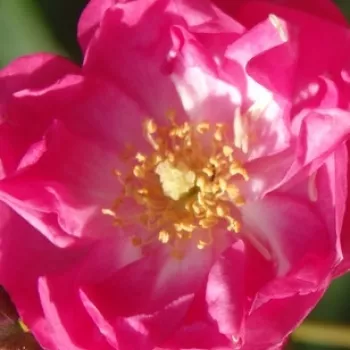
The semi-double, open flowers showcase golden stamens that bees can reach easily, encouraging gentle pollinator activity near seating areas or children’s play spaces without dense thorns or towering growth that might feel intrusive for the nature-aware beginner |
| Long-season colour strip |
Its remontant flowering produces repeat flushes from early summer into autumn, so even a short border beside steps or along a shingle path gains reliable, rolling colour without frequent replanting or fuss for the time-poor urban homeowner |
| Own-root, long-lived framework |
Being grown on its own roots, SIBELIUS can regrow strongly from the base after hard pruning or weather damage, offering a long service life and steady ornamental value once it has settled in as roots, then shoots, then full top growth for the forward-thinking planner |
| Large container on sheltered terrace |
In a generously sized container of at least 40–50 litres, with free-draining compost, it forms a manageable shrub that copes with coastal wind and intermittent watering, giving colour where borders are limited and hard landscaping dominates for the balcony or veranda owner |
| Low-maintenance mixed planting |
Moderate disease resistance and medium care needs suit mixed borders where you cannot constantly spray or deadhead; combined with attentive watering in prolonged dry spells, it remains reliable even in exposed, maritime conditions for the realistic hobby-gardener |
Styling ideas
- Shingle-Romantic – Underplant SIBELIUS with sea kale and Festuca for a soft violet-and-silver drift along a shingle path – ideal for coastal-style lovers seeking relaxed romance.
- Veranda-Nook – Place one plant in a 50-litre tub by a sheltered chair, pairing with lavender in smaller pots for scent and calm colour – perfect for tea drinkers on breezy decks.
- Girly-Ribbon – Line a short path with SIBELIUS and airy Gypsophila for a light, “tutu” effect that feels playful yet tidy – suited to families wanting a gentle, feminine touch.
- Urban-Edge – Combine with Alchemilla and low grasses beside a driveway for a compact, easy-care strip that softens hard paving – good for busy homeowners with limited time.
- Wildlife-Pocket – Let SIBELIUS mingle with bee-friendly perennials in a sunny corner, leaving some hips for autumn interest – attractive to gardeners who value subtle wildlife support.
Technical cultivar profile
| Parameter |
Data |
| Name and registration |
SIBELIUS – violet-purple park rose; shrub, Hybrid Musk group; registered as LENbar, exhibition name Sibelius; park–shrub commercial group, suitable for use as a versatile garden shrub. |
| Origin and breeding |
Bred by Louis Lens in Belgium, 1981, from ‘Mr. Bluebird’ × ‘Violet Hood’; introduced by Lens Roses in 1984, continuing their tradition of elegant, garden-focused shrub roses. |
| Growth and structural characteristics |
Bushy shrub 85–130 cm high, 60–90 cm spread; dense, slightly glossy dark green foliage, moderately thorny shoots, forming a natural, somewhat informal framework over several seasons. |
| Flower morphology |
Semi-double, small flowers in large clusters; 13–25 petals with a cup-shaped form; repeat-flowering with particularly prolific second flush, providing an extended and lively flowering period. |
| Colour data and phenology |
Predominantly violet-purple, ARS M, RHS 75A/75C; buds deep crimson-purple, opening to vivid purple-lilac then fading through mauve-grey with silvery pink edges, retaining colour well across the season. |
| Fragrance and aroma |
Mild, soft rose fragrance that reads as restrained and unobtrusive around seating; detectable at close range rather than at distance, allowing neighbouring plant scents to share the stage. |
| Hip characteristics |
Produces a moderate crop of small, spherical red hips, about 5–8 mm across, contributing a discreet touch of autumn interest without weighing the shrub down or demanding extra care. |
| Resistance and winter hardiness |
Hardy to approximately –21 to –18 °C (RHS H7, USDA 6b, Swedish zone 3); moderate disease resistance, with occasional black spot, mildew or rust in high pressure seasons needing standard care. |
| Horticultural recommendations |
Suited to beds, edging, hedges, pots and urban spaces; plant 50 cm apart in beds, 40 cm in hedges, 75 cm as specimens; prefers sun or light shade with reasonable drainage and regular watering. |
SIBELIUS – violet-purple park rose - Lens offers compact, repeat flowering, a naturally bushy shape and the regenerative security of an own-root shrub, making it a thoughtful choice if you value lasting structure and colour.