SKEETER – lemon-yellow flowerbed shrub rose - Millington
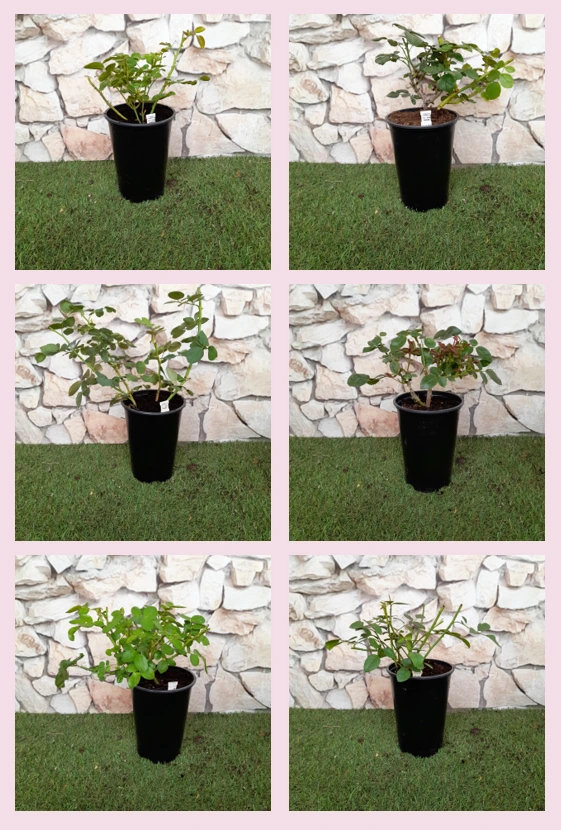
Imagine stepping onto your veranda after a blustery walk on the beach, sheltered behind a low hedge of Skeeter where clusters of soft lemon blooms glow against dark foliage and the air carries a gentle, citrusy fragrance. This compact, upright shrub sits comfortably in small coastal family gardens, coping calmly with strong breezes and managing water around its roots so it feels secure in exposed beds or roomy containers. As an own-root rose it offers reassuring longevity, quietly rebuilding itself if stems are damaged and holding its shape year after year with stability. In a 40–50 litre pot on a sunny, sheltered terrace, its medium-height, bushy habit and abundant, repeatedly opening clusters of double blooms bring reliable colour from early summer well into autumn, while its development from rooting in the first year through leafy extension in the second to full ornamental presence in the third ensures a steadily increasing sense of seaside comfort.
Usage options
| Target area |
Reasoning |
| Small coastal front garden bed |
The compact, upright habit and moderate height make this rose ideal for tight front gardens where you want structure without blocking windows. Uniform growth allows you to repeat plants confidently for a balanced look, suiting beginners. |
| Sunny veranda in large containers |
Planted singly in 40–50 litre pots, its bushy framework fills the container without becoming leggy, while the own-root system anchors well and copes with seasonal re‑wetting, ideal for exposed balconies used by busy-owners. |
| Low, wind-filtering hedge |
At around 75–105 cm high with a bushy outline, this rose can be planted in a row at 55–60 cm spacing to form a light windbreak that softens coastal gusts without feeling solid, perfect for family-gardens. |
| Lemon-yellow feature in mixed border |
The clear lemon-yellow clusters show up beautifully against sea kale, blue globe thistle or silvery fescues, offering a long season of colour without complicated pruning, appealing to colour-lovers. |
| Season-long flowering focus point |
Remontant flowering means the first flush is followed by a second equally generous display, giving months of interest in family gardens where you want impact from mid-summer to autumn for time-poor. |
| Easy-care own-root investment plant |
Supplied on its own roots, this rose can regenerate from the base if individual stems are lost, supporting a long lifespan and stable shape with straightforward pruning, reassuring for long-term. |
| Coastal-style shingle planting |
This variety settles well into free-draining, improved coastal beds where good drainage and stable moisture help its roots feel secure despite wind and salt-tinged air, making it suitable for seaside. |
| Lightly scented seating area |
The medium-strength, fresh citrus scent is noticeable at close range without overwhelming, ideal beside a seating area where you enjoy morning tea or evening rest, especially appreciated by scent-seekers. |
Styling ideas
- Shingle Drift – Plant in an irregular group among sea kale and Stipa tenuissima on shingle or gravel for a bright, lemon-yellow accent – for coastal-style enthusiasts.
- Veranda Trio – Arrange three 40–50 litre pots in a loose triangle near seating, underplanting with low lavender for colour and scent continuity – for small-terrace homeowners.
- Lemon Ribbon – Create a low hedge along a path at 55–60 cm spacing to form a gentle wind-filter and sunny welcome – for family gardens with children and pets.
- Pastel Contrast – Combine with Campanula glomerata and blue globe thistle in a mixed border for soft yellow, blue and purple harmony – for informal cottage-border fans.
- Year-Round Anchor – Use as a central specimen in a compact bed, surrounding it with Festuca and seasonal annuals so the rose provides permanent structure – for beginners wanting an easy focal point.
Technical cultivar profile
| Parameter |
Data |
| Name and registration |
Rose group shrub, bed rose type; registered as MILske, marketed as Skeeter Bedding rose MILske; bush rose for garden use, ARS exhibition name Skeeter. |
| Origin and breeding |
Australian-bred by Warren Millington in 2012 from ‘Charles Austin’ × ‘Bamako’; introduced 2014 via Daniel Schmitz Roses and Hannemann Nurseries into wider garden use. |
| Growth and structural characteristics |
Upright, bushy shrub 75–105 cm tall, 55–85 cm spread, moderately thorny, with moderately dense, slightly glossy dark green foliage providing good coverage and neat bed or hedge lines. |
| Flower morphology |
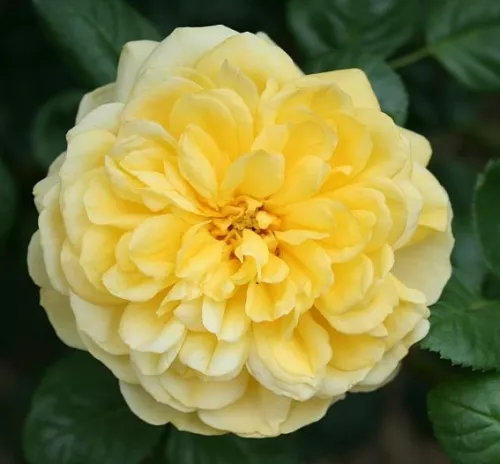
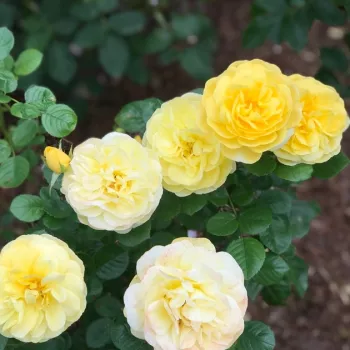
Medium-sized, very double, cup-shaped blooms with 40+ petals, carried in clusters; remontant with a second flush that is also abundant, giving a long ornamental flowering window. |
| Colour data and phenology |
Lemon-yellow flowers (ARS MY, RHS 8A–8B); fresh vivid buds open to pure lemon, deepening warmly, then outer petals pale toward cream or near-white in strong sun, yet overall colour retention is good. |
| Fragrance and aroma |
Fresh, citrus-scented fragrance of medium strength, clearly noticeable at close quarters around seating or paths; double form means the variety is primarily ornamental rather than nectar-focused. |
| Hip characteristics |
Produces small, spherical orange-red hips 8–12 mm across only occasionally; hips add a light seasonal accent without significantly affecting the plant’s flowering performance. |
| Resistance and winter hardiness |
Medium resistance to powdery mildew, black spot and rust; hardy to about −21 to −18 °C (RHS H7, Swedish zone 3, USDA 6b) with standard rose care and hygiene recommended. |
| Horticultural recommendations |
Best in full sun with improved drainage; medium maintenance, occasional pest and disease checks; recommended spacing 55–60 cm in rows, about 2.8–3.2 plants per m² for bedding or edging. |
SKEETER – lemon-yellow flowerbed shrub rose - Millington offers compact habit, repeat lemon-yellow flowering and a gentle citrus scent on a long-lived own-root framework, making it a thoughtful choice for relaxed coastal-inspired gardens.