LOLIT – pink-lilac climbing rose – pharmaROSA®
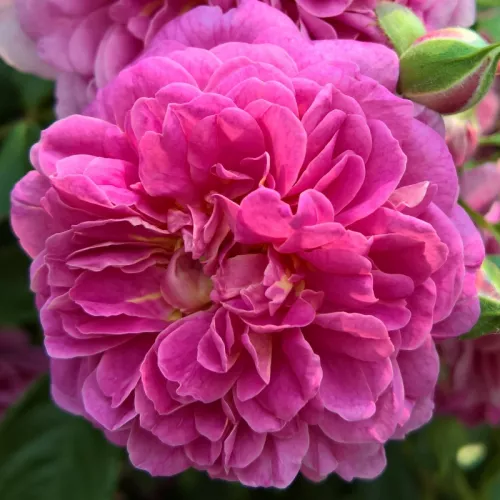
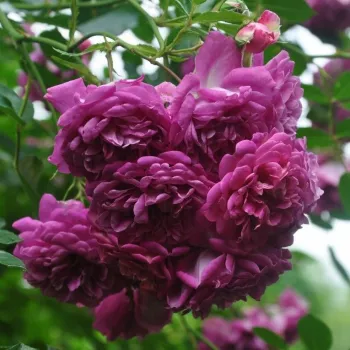
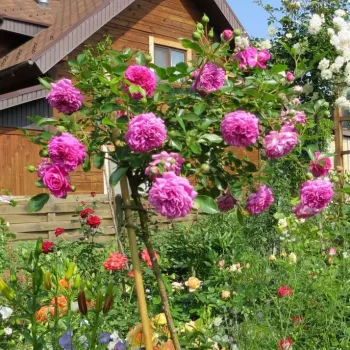
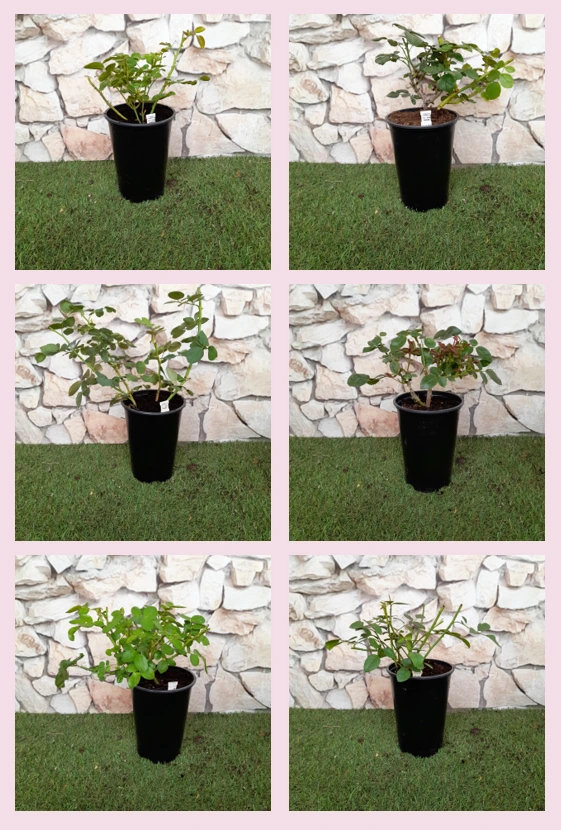
LOLIT brings a gently romantic, pink-lilac veil of colour to compact coastal and town gardens, rising neatly over arches and verandas while staying manageable in height. Its double rosette blooms open in raspberry pink and soften to mauve, giving a soft seaside charm that works beautifully with shingle, driftwood and pale gravel. Own-root plants build strength steadily, giving reliable renewal and a long working life with only medium upkeep. Over time, the structure anchors well in breezier plots, quietly coping with coastal air and managing moisture in typical UK weather. You can train LOLIT with simple ties along a fence or pergola, creating a sheltered nook for afternoon tea without complex pruning. Medium fragrance with a sweet, peachy note adds a subtle perfume around doors, gates and sitting areas, while glossy, dark foliage stays attractive between flushes. In the first year the roots settle, in the second the framework fills out, and by the third year the rose reaches its full ornamental impact for a lasting, easy-care garden feature in everyday family spaces.
Usage options
| Target area |
Reasoning |
| Small family pergola beside a seating area |
LOLIT’s moderate height and upright, trainable habit make it ideal for dressing a compact pergola without overwhelming nearby seating. Own-root vigour supports a long-lived framework that responds well to occasional shaping, suiting those who want gentle structure with relaxed upkeep for the beginner. |
| Coastal veranda or balcony in Cornwall/Devon |
On exposed but homely coastal plots, LOLIT forms a neat wind-filtering curtain when tied to railings or a light trellis, quietly coping with breezy, salt-laden air while managing rainfall and run-off on tight sites. A large container from 40–50 litres gives roots space to anchor and remain stable for the coast-lover. |
| Front-garden rose arch over a path |
The rose’s upright growth and 120–200 cm height make it straightforward to guide over a low arch, giving a welcoming, pink-lilac tunnel that repeats its flowering. Own-root plants rebuild after pruning or accidental damage, extending the arch’s life with modest intervention for the homeowner. |
| Fence or boundary screen in a family garden |
Dense foliage and clustered rosette blooms form a soft visual screen along fences without the bulk of very vigorous ramblers. Medium maintenance and steady, own-root regrowth make it a dependable, long-term boundary choice that tolerates typical suburban conditions for the busy-gardener. |
| Romantic “girly” corner with shingle and grasses |
The raspberry-pink to mauve-lilac colour shift pairs well with pale shingle, sea kale and soft grasses, creating a feminine yet unfussy corner. Repeat flushes through summer keep this area engaging with little more than tying in new shoots and light tidying for the stylish-beginner. |
| Companion planting with perennials under a wall or trellis |
LOLIT’s medium-sized, clustered blooms sit nicely above Geranium ‘Rozanne’ or low honeysuckle, filling vertical space while groundcovers soften the base and help with moisture use. This layered effect extends seasonal interest without needing intensive maintenance for the planner. |
| Small-town garden feature near doors or patios |
Medium-strength, sweet peachy fragrance and frequent clusters of rosette flowers make LOLIT a charming choice by entrances or patios where you pass close by. Its manageable height and own-root resilience keep the display attractive over many years with simple, annual care for the patio-owner. |
| Family play-garden backdrop with seasonal interest |
The rose’s repeat flowering and gradual colour change from raspberry-pink to mauve-lilac create a soft, storybook backdrop that children notice without creating dense thickets. Moderate thorniness and a clear, upright framework make it easier to position safely along fences for the family-gardener. |
Styling ideas
- Coastal-Veranda Screen – Train LOLIT along a slim trellis in a 50–60 litre container with pale shingle mulch, pairing with sea kale and blue Festuca for a breezy seaside feel – ideal for coastal veranda owners.
- RomanticGate – Clothe a low gate or arch with its pink-lilac blooms, underplanting with Geranium ‘Rozanne’ to echo mauve tones and extend colour through summer – perfect for those who like gentle, feminine gardens.
- PatioPerfume – Place LOLIT near a sunny patio edge, guiding stems along a railing so its medium, peachy fragrance drifts over seating at tea-time – suited to homeowners who relax outdoors after work.
- FamilyBackdrop – Use LOLIT on a fence behind a lawn, combining with dwarf weigela and low groundcovers to form a soft, layered backdrop that looks good without constant pruning – for families wanting low-fuss structure.
- TownhouseFeature – In a narrow front garden, tie LOLIT to a slim obelisk in a 45–50 litre pot, letting its repeat rosette blooms give vertical interest without taking floor space – great for urban gardeners with limited room.
Technical cultivar profile
| Parameter |
Data |
| Name and registration |
LOLIT is marketed as Lolit Climbing rose pharmaROSA®, a climber within the climbing rose collection; exhibition registration data are not available and no earlier trade names are recorded. |
| Origin and breeding |
Discovered and selected by PharmaRosa®, bred in Germany in 2006, with parentage not recorded; introduced to the market by PharmaRosa® Ltd. (Hungary) at a later, undocumented year. |
| Growth and structural characteristics |
Medium climber with upright framework, around 120–200 cm high and 90–160 cm spread; dense, dark green glossy foliage, moderately thorny stems and a habit well suited to arches, fences and compact pergolas. |
| Flower morphology |
Medium-sized, double, rosette-shaped clusters, around 1.5–2.75 inches across with 26–39 petals; remontant, providing repeat flushes with a particularly abundant second flowering after the main early-summer display. |
| Colour data and phenology |
Raspberry pink with lilac tinge (RHS 24A, 23A); buds open deep fuchsia-raspberry, then soften from bright raspberry to mauve-lilac and finally a powdery rose-grey as blooms age in clusters on the plant. |
| Fragrance and aroma |
Sweet, peachy fragrance of medium strength, readily noticeable at close range around seating or paths; primarily ornamental, adding a gentle scented layer without becoming overpowering in confined garden spaces. |
| Hip characteristics |
Forms small numbers of ovoid hips, about 8–12 mm in diameter, orange-red (RHS 34A); decorative interest is modest and hips are usually secondary to the plant’s repeat-flowering ornamental display. |
| Resistance and winter hardiness |
Hardy to approximately −21 to −18 °C (RHS H7, Swedish zone 3, USDA 6b); disease resistance is medium, with average tolerance of black spot, powdery mildew and rust under typical garden conditions. |
| Horticultural recommendations |
Best on pergolas, arches, gates, fences and walls; plant 140–150 cm apart for hedging or massing, 250 cm as a solitary; medium maintenance, occasionally requiring pest and disease control and basic tying-in of new shoots. |
LOLIT – pink-lilac climbing rose – pharmaROSA® offers repeat rosette blooms, compact, trainable growth and long-lived own-root resilience, making it a refined choice for relaxed, easy-care arches and verandas you can enjoy for years.