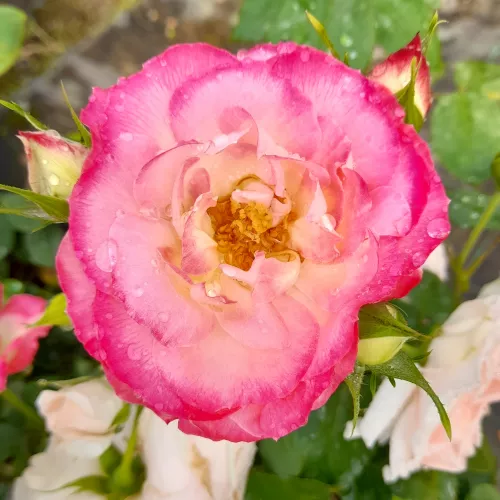
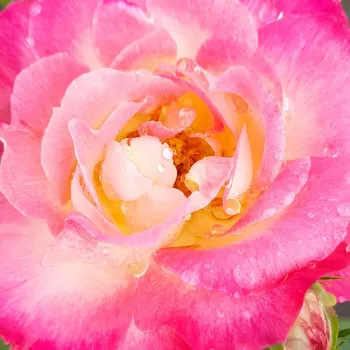
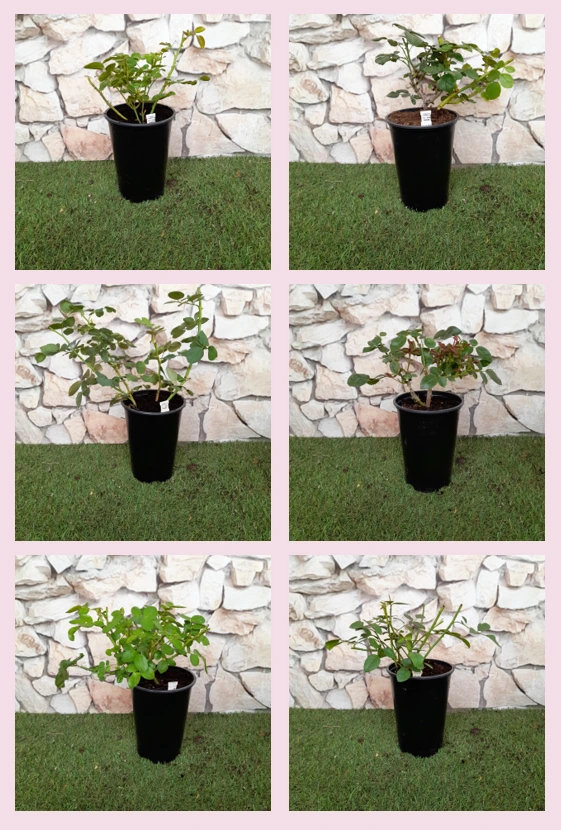
SUNI® – cream-white-carmine bedding floribunda rose – Barni
On a breezy Cornish afternoon, SUNI® settles calmly into coastal borders, its compact form creating a low windbreak that suits small, family-sized plots without dominating the view. The neat, glossy foliage holds up well in exposed gardens, while its remontant flowering sends up wave after wave of creamy white and carmine pink clusters from early summer into autumn. In a large pot on a veranda, it brings soft colour rather than awkward pruning demands, needing only light shaping and dead-heading. Own-root planting means reliable longevity, steady recovery after rough weather and a strong framework that copes with blustery, salt-tinged air near the sea, providing extra anchoring and stability over time. Give SUNI® a free-draining spot where you can manage watering in heavy soil, and you will see it build quietly from root establishment to fuller branching and finally rich ornamental impact over three seasons. Its medium-height, compact habit layers gently with sea kale, fine grasses and lavender for an easy, feminine coastal mood.
Usage options
| Target area |
Reasoning |
| Coastal veranda in a large container |
SUNI® stays compact and bushy, so it is easy to enjoy at eye level in a 40–50 litre tub, where you can control watering and drainage while still benefiting from steady, repeat-blooming colour – ideal for beginners. |
| Small front garden bed by the path |
The moderate height and dense foliage form a neat, welcoming edge that flowers repeatedly without blocking windows, creating a soft, “girly” look in even the narrowest frontage – reassuring for busy-owners. |
| Low, informal flowering hedge |
Planted at the suggested hedge spacing, the compact habit knits into a low line of pink-and-cream clusters that gently mark boundaries while still remaining easy to trim and renew – suitable for family-gardens. |
| Mixed coastal-style border with sea kale and grasses |
The bi-coloured blooms contrast attractively with silver sea kale and blue fescues, while own-root toughness gives long-term structure in breezy, salt-tinged gardens that need stable planting – helpful for coastal-lovers. |
| Clay-prone garden with improved drainage strip |
Where heavy clay has been loosened with grit or compost, SUNI® responds with strong, fibrous roots and reliable flowering, rewarding a one-off soil improvement with years of ornamental value – practical for busy-gardeners. |
| Cutting patch for small arrangements |
Clustered, medium-sized blooms and medium stems give pretty, informal bunches without needing a specialist cutting garden, so you can pick a few stems for the table while the plant quickly re-blooms – perfect for home-stylists. |
| Family seating area wind-filter |
In a short row or block near a terrace, the dense foliage and branching act as a soft filter to the breeze, adding colour and scent without creating a solid barrier, offering gentle shelter to tea-drinkers. |
| Long-term low-maintenance planting scheme |
Own-root growth gives good regeneration after pruning, so over the years you can rejuvenate plants without replanting, counting on stable form, repeat flowering and moderate care for relaxed non-specialists. |
Styling ideas
- Veranda Calm – position SUNI® in a 50 litre clay pot with pale gravel mulch and a low chair beside it for sheltered afternoon tea – for coastal veranda owners wanting soft, feminine colour.
- Shell-Edge Bed – line a path with SUNI® at recommended spacing, underplanting with sea kale and small Sedum spurium to echo shingle and shells – for families refreshing a small front garden.
- Soft Breeze Hedge – create a loose, low hedge that filters wind around a seating area, punctuated with taller Phormium ‘Tom Thumb’ – for homeowners seeking gentle structure without hard fencing.
- Pastel Mix – combine SUNI® with lavender and blue Festuca for a cool, coastal palette that flowers for months with straightforward care – for beginners wanting harmony from a simple planting plan.
- Cottage Cut Corner – group several plants in a sunny square, leaving room to step in and cut clusters for vases, framed by cotton lavender – for hobby gardeners who enjoy small home-picked bouquets.
Technical cultivar profile
| Trait |
Data |
| Name and registration |
Floribunda bed rose registered as BARsus, marketed as SUNI® bedding rose BARsus; exhibition floribunda category with American Rose Society approved exhibition name Suni for show and listing purposes. |
| Origin and breeding |
Bred by Anna Medici Barni at Rose Barni, Pistoia, Italy; introduced and registered in 1993, with breeding completed in Italy that same year; parentage not recorded in available documentation. |
| Awards and recognition |
Gold Rose Award at the 1993 Geneva International Rose Competition and Special Prize for Continuous Flowering at the 1994 Genoa International Rose Competition, confirming ornamental and repeat-blooming quality. |
| Growth and structural characteristics |
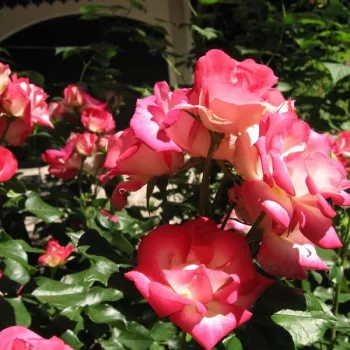
Compact, bushy floribunda with dense, glossy dark green foliage; height about 50–70 cm and spread 40–60 cm; moderately thorny stems; forms a tidy, low mound suited to beds, edging and low hedging. |
| Flower morphology |
Medium-sized, double, cup-shaped blooms with 26–39 petals, carried in clusters; remontant with a particularly abundant second flush when spent blooms are removed; primarily for bedding and garden display. |
| Colour data and phenology |
Bi-coloured cream-white and carmine pink blooms; vivid carmine buds open to deep carmine outer petals and creamy inner surfaces, later softening to light pink with slightly yellowed cream while retaining two-tone effect. |
| Fragrance and aroma |
Medium-strength, clearly perceptible fresh fragrance of classic rose character; sufficient scent for close seating areas and cut stems indoors without becoming overpowering in smaller, enclosed garden spaces. |
| Hip characteristics |
Due to double flowers, hip set is generally low; where formed, small spherical red hips around 6–10 mm in diameter may appear, adding occasional seasonal interest without significant self-seeding concerns. |
| Resistance and winter hardiness |
Hardy to approximately –21 to –18 °C (RHS H7; Swedish Zone 3; USDA 6b); disease resistance rated moderate to powdery mildew, black spot and rust, with routine monitoring and timely protection recommended. |
| Horticultural recommendations |
Best in a sunny site with well-drained soil; suitable for beds, edging, parks and cut flowers; medium maintenance with benefits from dead-heading and occasional pest and disease control to maximise flowering. |
SUNI® brings compact habit, repeat flowering and gentle wind-filtering to small gardens, while its own-root form offers dependable longevity and easy rejuvenation; consider it if you value quietly reliable colour by the sea.