SUPER EXCELSA – crimson-red climbing rambler rose - Hetzel
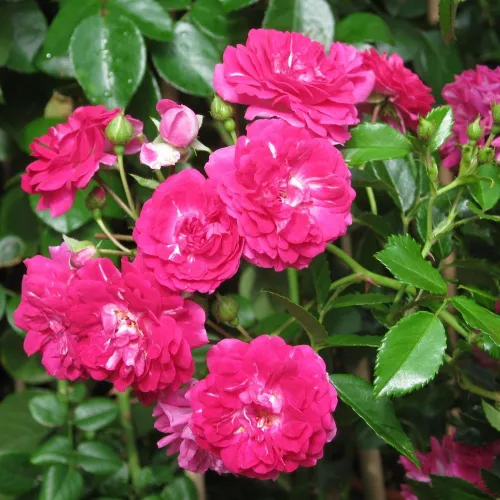
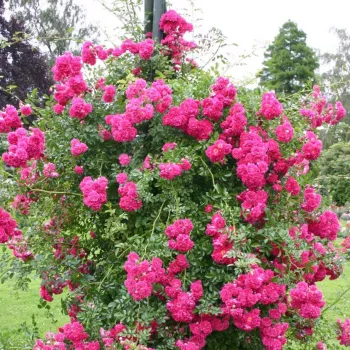
Along a breezy Cornish wall or Devon veranda, SUPER EXCELSA creates a living curtain of small, vivid crimson-red blooms that feel at home in salty, windy air and bright coastal light. This reliable climber is easy to guide over fences, arches or pergolas, helping you form sheltered nooks where you can pause with tea and watch the garden settle after a day on the beach. Its dense dark green foliage acts as a natural windbreak, while own-root construction quietly supports longevity, resilience and steady performance over many seasons. Given a well-drained spot and basic watering care, it will root in, shoot upwards and by the third year deliver its full ornamental impact with a single, spectacular early-summer flush of colour.
Usage options
| Target area |
Reasoning |
| Coastal veranda windbreak |
Trained along a rail or screen, SUPER EXCELSA’s dense leaves and cane network form a living barrier that softens onshore breezes while still feeling light and summery, ideal for protecting outdoor seating for coastal-style lovers. |
| Fence and boundary cover |
Its vigorous climbing habit and massed clusters of crimson-red blooms quickly transform bare fences into colourful garden backdrops, giving long-term structure with minimal intervention for busy family gardeners. |
| Pergola or arch feature |
Once established, this rambler can be directed over arches or simple wooden pergolas, creating a seasonal tunnel of colour that frames paths and play areas beautifully for homeowners seeking a statement feature. |
| Small garden vertical gardening |
By growing upwards rather than outwards, SUPER EXCELSA uses fences and posts to add height and drama without occupying precious ground space, making it particularly suitable for compact urban plots and patios. |
| Seasonal early-summer highlight |
The once-a-year flush provides a concentrated wave of colour that marks the start of high summer, pairing well with other shrubs and perennials to create a planned, memorable show for hobby gardeners who enjoy seasonal rhythm. |
| Medium-maintenance family rose border |
Medium care needs and moderate disease resistance mean basic checks, occasional deadheading and simple watering are usually sufficient, fitting comfortably into family routines without demanding expert attention from beginners. |
| Own-root long-term planting |
Delivered on its own roots, the plant matures steadily into a stable, enduring climber that can be rejuvenated from the base if pruned hard, supporting long-lived plantings for those planning gardens for the long term. |
| Clay soil sites with careful drainage |
In heavier soils, improved drainage and considered watering allow the roots to anchor securely while coping with breezy conditions along exposed boundaries, offering reliable structure for coastal and suburban gardeners alike. |
Styling ideas
- Beach-House Arch – Train SUPER EXCELSA over a simple timber arch with sea kale and blue Festuca at its feet for a relaxed coastal entrance – ideal for coastal veranda owners.
- Cottage Fence Run – Let it scramble along a sunny fence with lavender and woodland sage for a soft, country look – suited to hobby gardeners wanting easy charm.
- Shingle Corner Screen – Use posts and wires to form a sheltered nook on a shingle terrace, underplanted with low grasses – perfect for small gardens needing privacy.
- Mixed Shrub Backdrop – Combine with Cornus ‘Midwinter Fire’ and dark lilacs so its summer flowers and their winter stems share one structural line – for planners of four-season family gardens.
- Compact Courtyard Height – In a large 50–70 litre container with a trellis, it adds vertical colour without claiming floor space – ideal for busy urban homeowners.
Technical cultivar profile
| Property |
Data |
| Name and registration |
Rambler and large-flowered climbing rose registered as HELexa, marketed as SUPER EXCELSA climbing rose HELexa; exhibition name Super Excelsa within the Climbing rose collection. |
| Origin and breeding |
Bred by Karl Hetzel, Rosenschule (Germany) from ‘Excelsa’ × unknown pollen donor; German introduction in 1986, with breeding aim of enhanced performance over the classic Excelsa type. |
| Awards and recognition |
Holds the Royal Horticultural Society Award of Garden Merit, confirming reliable garden performance, sound health and ornamental value under typical UK growing conditions and maintenance standards. |
| Growth and structural characteristics |
Climbing habit with dense, glossy dark green foliage and moderate thorns; reaches about 220–340 cm high and 190–310 cm spread when supported on arches, walls, fences or free-standing structures. |
| Flower morphology |
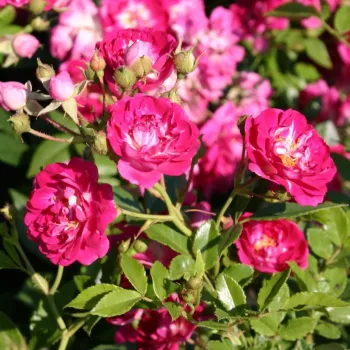
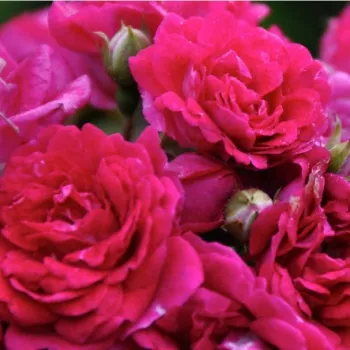
Semi-double, cup-shaped, small flowers (around 0.5–1.5 inches), typically borne in generous clusters; 13–25 petals per bloom, with one strong early-season flowering flush rather than repeat blooming. |
| Colour data and phenology |
Crimson-red petals with a narrow white centre at the throat; ARS MR, RHS 53A and 155D; colour may lighten towards reddish or purplish tones in strong sun as the flowers age on the plant. |
| Fragrance and aroma |
Very weakly scented rose with only a delicate, soft fragrance; grown primarily for colour effect and massed display rather than perfume, while semi-double blooms still offer moderate pollinator interest. |
| Hip characteristics |
Occasional spherical orange-red hips, around 6–10 mm in diameter; may add a light decorative effect in late season but are usually secondary to the main flowering display in early summer. |
| Resistance and winter hardiness |
Medium resistance to powdery mildew, black spot and rust; hardy to about −32 to −29 °C (RHS H7, USDA 4b, Swedish zone 5), coping well with typical UK winters when properly sited. |
| Horticultural recommendations |
Best on walls, fences, pergolas, arches or obelisks; allow 230–400 cm between plants; tolerates partial shade and moderate drought but benefits from irrigation in extended dry spells and basic pest control. |
SUPER EXCELSA offers vibrant early-summer colour, space-saving vertical cover and dependable long-term performance from its own-root form; consider it if you would like a lasting, low-fuss climbing accent for your garden.