SUTTER'S GOLD – yellow climbing rose - Weeks
Imagine returning from the beach to a sheltered veranda, where a golden curtain of blooms filters the salty breeze and gently scents your tea break. This compact climbing hybrid tea offers fragrance, reliable flowering and low-effort maintenance, ideal for small coastal gardens and windy corners that need a calm, well-rooted presence against gusty Atlantic weather. Its strong framework builds steadily, rewarding patient gardeners as roots establish, stems lengthen and, by the third season, the rose settles into full ornamental maturity. In modest town plots or shingle beds it brings colour from early summer, while the own-root form supports long-term resilience, recovery and stable shape after pruning, giving you dependable structure without demanding expert care.
Usage options
| Target area |
Reasoning |
| Coastal veranda windbreak |
Trained along a balustrade or pergola, this climber forms a bushy, upright screen that filters wind without overwhelming small spaces. Deep roots and woody canes anchor it securely, useful where gusts funnel between houses, for those seeking a calm, low-fuss retreat for coastal-style lovers. |
| Compact garden arch or doorway |
Moderate height and spread make it well suited to smaller arches, gates and side entrances where giant climbers would dominate. With careful tying-in, it creates a neat frame of colour around paths and doors, for homeowners who want a welcoming feature without complicated pruning for beginners. |
| Fragrant seating corner |
The strong, sweet-spicy scent and large, double blooms lend themselves to positioning beside a bench or bistro set. In a partly shaded corner it will still bloom well, giving you an intimate, perfumed nook for evening tea, ideal for hobby gardeners who value atmosphere over hard work for fragrance-lovers. |
| Cut-flower row in a family garden |
Hybrid-tea style stems with sizeable, cup-shaped flowers make excellent home-cut blooms. Planted along a fence, it offers a steady supply of golden-yellow roses for vases, allowing you to enjoy the garden indoors as well, appealing to busy families who like practical beauty in everyday life for home decorators. |
| Low-maintenance boundary or screen |
Its good resistance to black spot, mildew and rust translates into less spraying and fewer worries in typical British weather. Once established, basic pruning and occasional deadheading are usually sufficient, suiting those who prefer reliable structure over constant attention for low-maintenance gardeners. |
| Long-term feature in a small family garden |
As an own-root climber it regenerates well from the base, maintaining form and flowering even after harder pruning or storm damage. This underpins a long lifespan and stable display, helpful where you want a once-planted, lasting feature, for planners thinking several seasons ahead. |
| Container-grown rose on a balcony |
In a 40–50 litre container with good drainage, its upright habit and controlled spread fit compact terraces or balconies. Regular watering and feeding keep flowers coming over summer, opening from deep gold to softer yellow, for flat dwellers who want a real rose without garden space for container-owners. |
| Coastal shingle bed with perennials |
Planted into improved soil pockets among shingle, it pairs well with sea thrift, creeping thyme and sweet alyssum, echoing seaside colours and textures while tolerating exposed, breezy spots and managing strong winds and salt‑tinged air sensibly, for designers of informal, seaside-inspired family spaces for coastal gardeners. |
Styling ideas
- Veranda-Frame – Train Sutter’s Gold along a slim pergola over a deck, underplanted with lavender in large tubs to echo its scent – for relaxed tea-drinkers who like easy structure.
- Golden-Gate – Arch it over a narrow garden path with Festuca and sea thrift at the base for a soft, dune-like feel – for coastal-style enthusiasts wanting a tidy entrance focal point.
- Cornish-Corner – Place it by a corner bench, mixing containers of sea kale and thyme nearby to mirror shingle planting – for veranda users who enjoy evening fragrance with minimal upkeep.
- Balcony-Glow – Grow in a 50-litre pot against a railing, with trailing alyssum spilling over the rim to catch falling petals – for balcony owners seeking a real rose within a small footprint.
- Family-Cut-Garden – Line a short fence with Sutter’s Gold and edge with low thyme to create a pick-and-enjoy corridor – for families who like children to gather fragrant stems for the table.
Technical cultivar profile
| Parameter |
Data |
| Name and registration |
Climbing rose version of hybrid tea sport; registered cultivar name Sutter’s Gold, trade name Sutter's Gold Climbing rose. American Rose Society approved exhibition name: Sutter’s Gold, Cl. |
| Origin and breeding |
Sport of ‘Sutter’s Gold’ hybrid tea raised by O. L. “Ollie” Weeks for Armstrong Nursery, California, United States, introduced around 1950 and distributed by Armstrong Nurseries. |
| Awards and recognition |
Highly decorated cultivar: Portland Gold Medal 1946, Bagatelle Gold Medal 1948, Genova Gold Medal 1949, All-America Rose Selection 1950, and James Alexander Gamble Fragrance Medal 1966. |
| Growth and structural characteristics |
Bushy, upright climbing habit with moderately dense, dark green, slightly glossy foliage; height about 100–180 cm, spread 80–140 cm, moderately thorny canes forming a compact, trainable framework. |
| Flower morphology |
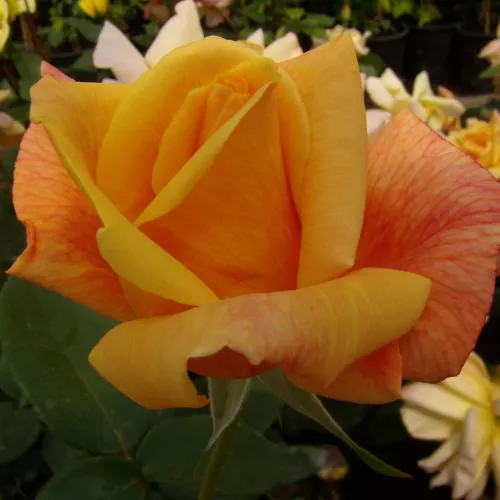
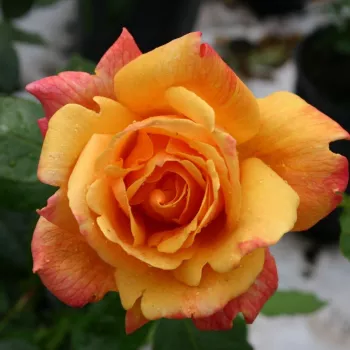
Large, double, cup-shaped blooms with 26–39 petals, mostly solitary on stems. Remontant, with an abundant second flush after the main early-summer flowering, good for cutting and display. |
| Colour data and phenology |
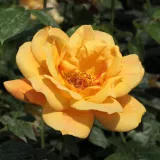
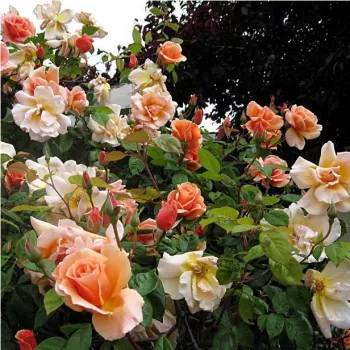
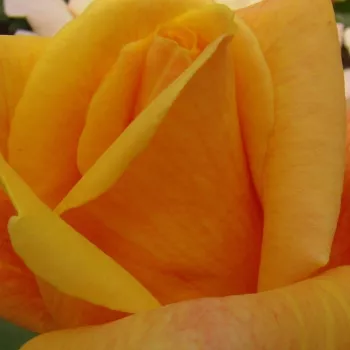
Rich golden yellow with orange undertone; buds copper-gold, opening deep gold with orange edges, ageing to lighter lemon-yellow with peach tones; colour fades somewhat in strong sun over time. |
| Fragrance and aroma |
Strong, distinctive rose scent with sweet-spicy character; valued historically for its perfume quality, making it particularly suitable for planting where the fragrance can be appreciated at close quarters. |
| Hip characteristics |
Rose-hip production generally sparse due to double blooms; occasional ovoid, orange-red hips around 12–18 mm diameter may form, adding discreet late-season interest without dominating the plant. |
| Resistance and winter hardiness |
Good resistance to powdery mildew, black spot and rust. Winter hardy to approximately −32 to −29 °C (RHS H7, USDA 4b, Swedish zone 5), coping well with most typical UK winter conditions. |
| Horticultural recommendations |
Suited to cut flowers, beds, specimens and containers. Prefers well-drained soil and regular watering in drought; plant 140–230 cm apart depending on use, in sun or light partial shade with support. |
SUTTER'S GOLD offers richly scented golden flowers, compact climbing growth and long-lived own-root reliability, making it a thoughtful choice for relaxed, low-effort structure in coastal and family gardens.