RAVENSTEINER MÜHLENROSE – red climbing rose - Márk
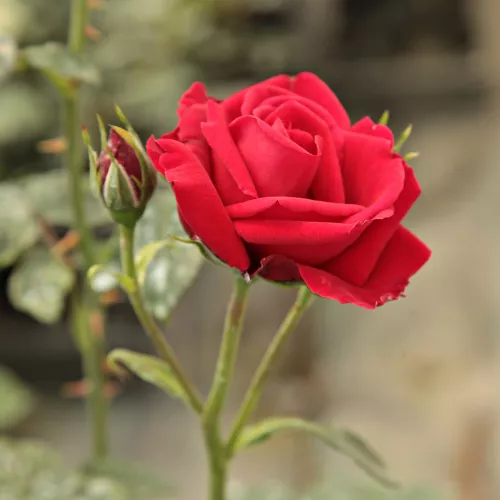
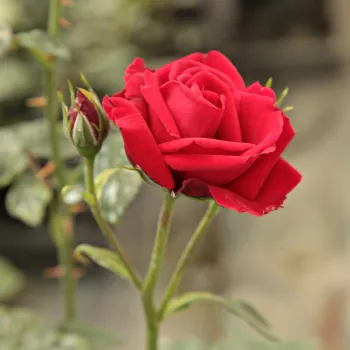
Let the deep cherry-red blooms of Ravensteiner Mühlenrose bring a sense of coastal refreshment to your family garden veranda, even where breezes are brisk and soils demand drainage and sturdiness against blustery, salt-tinged air. This large-flowered climbing rose offers reliable remontancy, sending up flush after flush of double, cupped flowers that age from bright cherry to velvety dark burgundy, creating a living backdrop for afternoon tea after a day collecting seashells. Grown on its own roots, it is designed for a long garden life with stable ornamental value, able to regenerate from the base if weather or pruning are less than perfect, and settling in steadily as roots establish first, shoots build up in the second season and full garden presence follows in the third. With moderately dense, glossy mid-green foliage and a natural climbing habit that fits arches, fences and walls without elaborate training, it is a practical choice for busy gardeners who want vertical colour rather than constant tasks, especially in smaller coastal plots where good anchoring and water-wise soil preparation really matter. For a sheltered Cornish or Devon-style seating corner, it can be combined with silvery grasses and pale perennials to highlight the velvety blooms, giving you a richly coloured, easy-care feature that feels both romantic and reassuringly robust across the seasons in a typical British garden.
Usage options
| Target area | Reasoning |
|---|
| Coastal veranda windbreak |
Trained along a railing or screen, this climber creates a flowered windbreak that softens sea breezes while coping with exposed, breezy conditions where soils need good drainage and roots anchor securely; well suited to coastal-style lovers. |
| Rose arch or pergola |
Its climbing habit and 180–300 cm height make it ideal for arches and pergolas, producing romantic curtains of dark red blooms with only moderate pruning and tying-in, appealing to homeowners. |
| Family garden fence cover |
On an average garden fence, its natural, moderately dense growth provides vertical colour and a sense of privacy without needing constant shaping, which is reassuring for busy gardeners. |
| Compact front garden feature |
With a 90–150 cm spread, it fits smaller front gardens, giving strong colour on minimal ground space and avoiding the clutter of many small shrubs, ideal for urban garden owners. |
| Large container on balcony or terrace |
In a 40–50 litre or larger container with a sturdy support, it becomes a movable vertical accent, letting you enjoy roses even where planting into the ground is impossible, attractive to flat-dwellers. |
| Long-season colour focus |
Good remontancy ensures repeat waves of cherry-red to burgundy blooms from early summer onwards, so a single plant can carry a sitting area visually through much of the season for hobby gardeners. |
| Low-intervention climber for beginners |
Own-root vigour and moderate maintenance needs mean that, once established, it generally requires only basic feeding, watering and occasional protection, comforting for beginners. |
| Durable long-term planting |
As an own-root climber bred for hardiness down to about -23 °C, it can build a lasting framework that rebounds if cut back by weather or mistakes, a sound investment for long-term planners. |
Styling ideas
- Harbour-Veranda Arch – Train Ravensteiner Mühlenrose over a simple metal arch beside shingle and tubs of sea kale and Festuca to frame a sheltered tea nook – for coastal-style lovers wanting low-fuss romance.
- Red-and-Silver Fence – Let the velvety red flowers climb a timber fence, underplanted with blue-grey Lavandula and compact Festuca for a cool seaside palette – for homeowners seeking easy, tidy boundaries.
- Cornish Courtyard Pot – Grow it in a 50-litre terracotta container with a slim obelisk, accented by white Alyssum at the base – for balcony and terrace gardeners who need movable vertical colour.
- Family Pergola Retreat – Cover a garden pergola post with this climber, pairing it with soft ornamental grasses and a simple bench beneath – for families wanting a shaded, low-maintenance retreat.
- Winter-Bone Structure – Use two or three plants along a wall to build a permanent framework that carries the garden even when not in flower – for long-term planners who value lasting structure.
Technical cultivar profile
| Parameter | Data |
|---|
| Name and registration |
Ravensteiner Mühlenrose, a large-flowered climbing rose from the Márk collection; commercial type climbing rose, rambling rose; registered cultivar name and ARS exhibition name not recorded. |
| Origin and breeding |
Bred by Gergely Márk in Hungary around 2000 at Magyar Rózsák Kertje, Törökbálint; initially distributed by PharmaRosa Ltd. with introduction and formal registration years not documented. |
| Growth and structural characteristics |
Climbing habit reaching about 180–300 cm high with 90–150 cm spread; moderately dense, glossy mid-green foliage and moderate prickliness; suitable for training on arches, pergolas, fences and walls. |
| Flower morphology |
Large, double, cupped flowers with 26–39 petals, mostly produced singly; good remontancy with an abundant second flush, giving reliable repeat flowering through the main garden season. |
| Colour data and phenology |
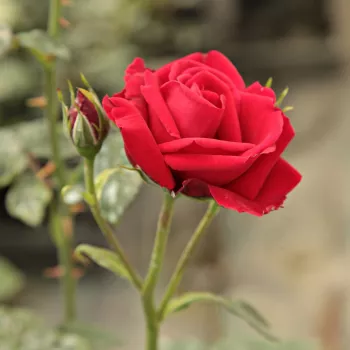
Deep cherry-red blooms, ARS code DR, RHS 60A outer, 60B inner; colour deepens from bright cherry to rich velvety dark burgundy, with only slight softening as flowers age yet primary tone remains. |
| Fragrance and aroma |
Mild but noticeable fragrance with a fruity character and delicate notes; primarily ornamental rather than for cutting for room scent, yet close-up the perfume adds refinement to seating areas. |
| Hip characteristics |
Rose hip set generally limited by the double flower form; where formed, ovoid orange-red hips about 12–18 mm in diameter may appear, adding modest late-season interest in some years. |
| Resistance and winter hardiness |
Hardy to approximately -23 to -21 °C (RHS H7, Swedish zone 3, USDA 6a); disease resistance moderate, with average susceptibility to powdery mildew, black spot and rust under typical garden conditions. |
| Horticultural recommendations |
Best on well-drained soil with structural support; suggested spacings 130–230 cm depending on use; medium maintenance with occasional plant protection; own-root plants suit long-term, resilient plantings. |
Ravensteiner Mühlenrose offers romantic repeat-flowering vertical colour in compact spaces, long-lived own-root resilience and moderate-care climbing performance, so you can confidently choose it as a lasting feature for your garden.