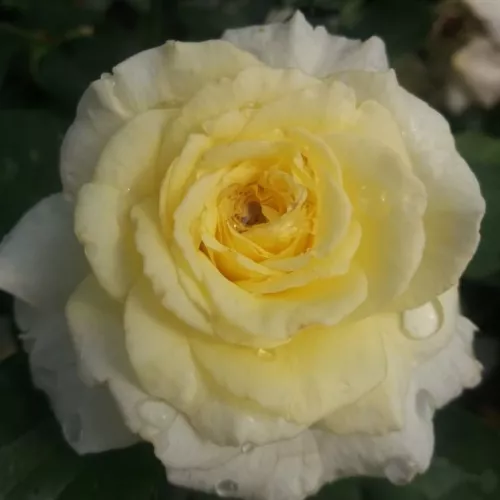
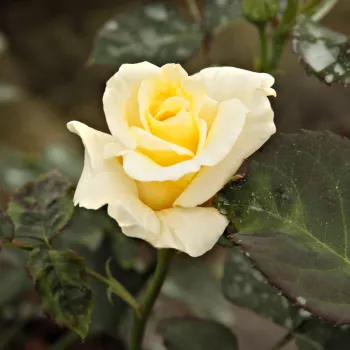
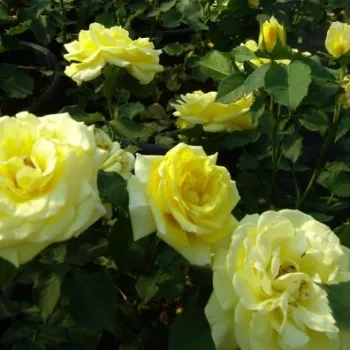
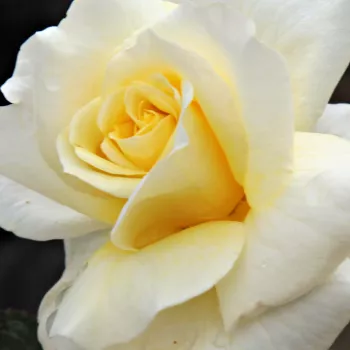
TANDINADI – yellow bedding floribunda rose - Tantau
Imagine sitting with afternoon tea on a sheltered Cornish veranda, protected by a low rose windbreak while bright clusters of sunlit blooms sway in the breeze; TANDINADI’s compact habit suits family gardens where space is precious yet colour is welcome for months on end, its medium-height hedging potential helping to soften boundaries and guide views. The clean mid-yellow flowers open in generous clusters, then gently fade to buttery cream for a relaxed coastal palette that pairs beautifully with sea kale, dwarf lavender and grasses. As an own-root rose, it establishes steadily and can regenerate from the base, supporting a reassuringly long garden life with less replacement worry; think of year one quietly building roots, year two gaining confident shoots, and year three delivering its full ornamental presence. Moderately disease-resistant foliage and a mild, gentle fragrance make it easy to live with near seating areas, while its semi-double form offers moderate interest to visiting pollinators, particularly in gardens where naturalistic planting meets practical wind-filtering structure and good drainage helps the soil cope with blustery coastal weather.
Usage options
| Target area | Reasoning |
|---|
| Bedding rose in small front gardens |
Compact, upright growth and mid-height stature allow you to create bright yellow flower carpets without overwhelming a modest British front garden, giving reliable colour along paths and driveways for much of the season; ideal for the busy homeowner. |
| Low, informal hedge or wind-filter |
Planted in a loose line, its 70–100 cm height and good branching form a soft, view-friendly hedge that breaks wind rather than blocking it, well suited to coastal plots needing shelter with a light touch; especially useful for the coastal gardener. |
| Feature container on veranda or patio |
In a 40–50 litre or larger container, it anchors well against breezes and offers a long display of yellow clusters close to seating, with own-root resilience supporting long-term pot culture if watering and drainage are managed carefully; perfect for the veranda owner. |
| Mixed coastal-style border |
The soft yellow flowers and mid-green glossy foliage blend naturally with sea kale, dwarf lavender and ornamental grasses, echoing a shingle beach palette while coping with breezy, salt-tinged air where good soil drainage helps roots stay healthy; appealing to the coastal-style lover. |
| Long-season family flower bed |
Remontant flowering brings repeated flushes from early summer onwards, so beds stay lively even when other shrubs pause, providing a dependable backdrop for children’s play areas and outdoor dining spaces over several months; reassuring for the family gardener. |
| Pollinator-accent planting |
Semi-double blooms with accessible stamens offer moderate pollen access, making this variety a useful accent among more intensely wildlife-focused perennials and herbs, adding structure and colour without dominating ecological planting; well suited to the wildlife-aware beginner. |
| Low-maintenance rose scheme for beginners |
Moderate disease resistance and an own-root constitution reduce long-term fuss: if stems are winter-damaged, new shoots arise from the base, helping the plant recover and maintain its role in the design over years; ideal for the time-poor gardener. |
| Standard (tree-form) focal point |
Grafted as a standard, its upright branching and cluster-flowering habit create a rounded crown of soft yellow blooms at eye level, giving a gentle focal point near seating or front doors with manageable pruning demands; attractive for the decor-focused homeowner. |
Styling ideas
- Shingle-border calm – Plant TANDINADI in a gravel or shingle strip with sea kale and blue fescues for a soft beach-inspired edging that sways in wind yet stays compact – for coastal-style lovers.
- Veranda-companion pot – Grow one plant in a 50 litre clay pot with trailing Erigeron and dwarf lavender to enjoy layered yellow, white and lilac tones around outdoor seating – for veranda owners and balcony gardeners.
- Sunny-family bed – Combine TANDINADI with hardy geraniums and dwarf sedges in a simple rectangle bed, giving long, easy-care colour beside a lawn or play area – for busy family gardeners.
- Soft-hedge welcome – Use a loose row along a front path, underplanting with low thyme and gravel mulch for drainage, to create a friendly, semi-formal entrance that flowers all summer – for homeowners who like subtle structure.
- Pollinator-patch accent – Place a small group behind a drift of herbs and daisies; the semi-double roses add height and gentle fragrance without overpowering more wildlife-rich plants – for wildlife-aware beginners.
Technical cultivar profile
| Aspect | Data |
|---|
| Name and registration |
Floribunda bedding rose; registered as TANdinadi, marketed as Tandinadi Bedding rose TANdinadi, exhibition name Diana®, in the floribunda bed rose group for garden and show use. |
| Origin and breeding |
Bred by Mathias Tantau Jr. for Rosen Tantau, Uetersen, Germany; breeding year and registration 1977, introduced 1978, with parentage not recorded but selected for reliable bedding performance. |
| Growth and structural characteristics |
Upright, moderately dense bush, 70–100 cm tall and 55–85 cm wide, with mid-green, glossy foliage and moderate thorns, forming a well-branched, medium-height shrub suitable for beds and hedging. |
| Flower morphology |
Semi-double blooms, 13–25 petals, medium-sized (about 4–7 cm), ball to pompon shaped, borne in clusters, with remontant flowering that produces a generous second flush after the initial main bloom. |
| Colour data and phenology |
Clean sun-yellow petals (RHS 12A, 9B) open lemon-yellow, then mid-yellow, gradually fading to buttery pale cream tones, retaining moderate colour strength under typical UK light before softening towards the petal edges. |
| Fragrance and aroma |
Mild, restrained scent with a soft character, best appreciated at close range in still conditions, making it suitable near seating or paths where strong perfume is not desired yet a gentle rose aroma is welcome. |
| Hip characteristics |
Occasional spherical hips, around 10–14 mm in diameter, ripening to orange-red and adding a small amount of late-season ornamental interest if spent blooms are not removed after flowering. |
| Resistance and winter hardiness |
Hardy to about −21 to −18 °C (RHS H7, Swedish zone 3, USDA 6b) with moderate resistance to black spot, powdery mildew and rust, benefiting from standard UK rose care and good air circulation. |
| Horticultural recommendations |
Best in sunny sites with well-drained soil; recommended spacings: 50–60 cm for hedges and bedding, up to 100 cm as a specimen, suitable for beds, parks, containers and standard forms with medium maintenance needs. |
TANDINADI offers compact hedging structure, long-season yellow clusters and steady own-root resilience, making it a thoughtful choice for relaxed coastal-style and family gardens where you prefer beauty with minimal complication.