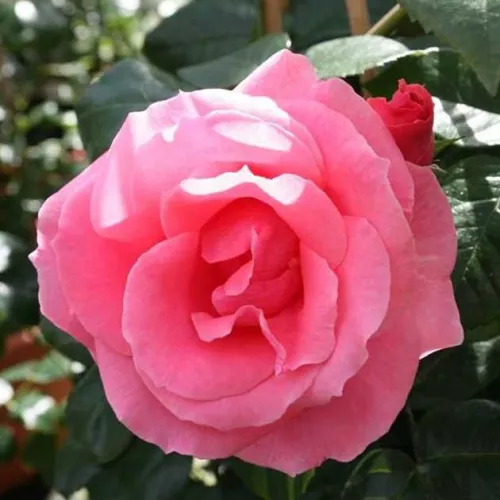
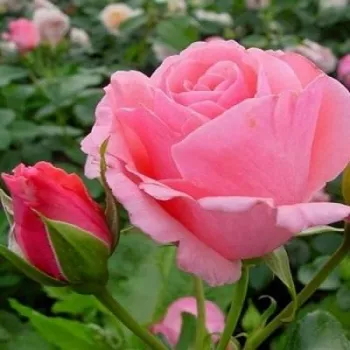
TANKLEWI® – pink climber (rambling rose) – Tantau
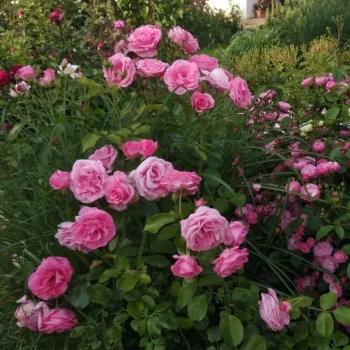
Imagine a sheltered coastal corner where mid-pink clusters of roses frame your seaside veranda, giving gentle privacy and soft shade while coping calmly with brisk, salt-touched breezes. TANKLEWI® grows into a tall, leafy screen, its dark green foliage and elegant, cup-shaped blooms quickly clothing arches, fences and walls in a romantic, “girly” blush that suits shingle gardens and small courtyards alike. As an own‑root rose it settles in steadily, promising a long, reliable lifespan with good regeneration and stable flowering year after year. You can simply water, tie in the new shoots and enjoy waves of repeat flowering from early summer onwards, watching it move from first roots to full ornamental presence over its first three seasons.
Usage options
| Target area | Reasoning |
|---|
| Coastal veranda windbreak |
A vigorous height of up to 4 metres allows TANKLEWI® to form a leafy, flowered screen that softens onshore gusts and frames sea views, making tea on the veranda calmer and more private for the coastal garden beginner. |
| Family garden rose arch |
Dense foliage and cluster-flowered heads create a tunnel of mid-pink blooms over paths or play areas, giving a romantic feel without demanding expert pruning, ideal for relaxed family gardens and time-pressed homeowners. |
| House wall or sunny fence |
The climbing habit, medium maintenance needs and good heat tolerance make it suitable for training against a south or west-facing wall, where it anchors well and thrives with sensible watering for practical UK coastal-style gardeners. |
| Partially shaded side passage |
Its suitability for partial shade means you can brighten a side return or narrow passage where light is limited, bringing colour and fragrance to overlooked spaces for urban terrace and small-courtyard owners. |
| Cut-flower corner by the patio |
Large, double, cup-shaped blooms on well-branched stems provide scented, mid-pink flowers for vases, so you can enjoy their strong fruity perfume indoors as well as outside, appealing to casual florists and creative garden enthusiasts. |
| Low-input, long-term feature |
Medium maintenance needs, own-root resilience and repeat flowering mean that once established it offers reliable cover and colour with modest intervention, suiting those planning a durable, low-fuss structure in their coastal or suburban plots. |
| Container-grown starter on veranda |
In a 40–50 litre pot with good drainage, this own-root climber can be grown as a manageable starter plant, then later transferred to the ground, ideal for renters, balcony users and cautious first-time rose keepers. |
| Clay-soil coastal boundary |
Once rooted into improved, free-draining clay, its height, foliage density and tolerance of exposed conditions help steady breezy boundaries and manage wet spells typical of British seaside gardens, reassuring new coastal garden owners. |
Styling ideas
- Shellwalk Arch – Train TANKLEWI® over a narrow arch flanked by sea kale and Festuca, echoing shingle tones while its pink clusters frame a shell-decorated path – perfect for coastal-style romantics.
- Veranda Veil – Use it along a balustrade with potted lavender in 50-litre tubs, the rose rising behind to create a scented, airy screen – ideal for tea-sipping veranda users.
- Cornish Courtyard – Plant against a warm wall with Iris germanica and creeping Gypsophila at the base, letting soft pink blooms contrast with silvery foliage – appealing to cottage-garden lovers.
- Family Picture-Frame – Cover a pergola by the seating area so clusters hang at eye level, giving a rosy backdrop for family gatherings and outdoor photos – suited to busy young families.
- Easy Intro Climber – Start one plant in a large container with a simple obelisk, then move it to a boundary fence once confident in training and tying-in – reassuring for first-time rose growers.
Technical cultivar profile
| Property | Data |
|---|
| Name and registration |
Climbing rose, large-flowered climber; registered as TANklewi, sold as Tanklewi® Climbing rose TANklewi, ARS exhibition name ‘Lawinia’, premium gold quality selection. |
| Origin and breeding |
Bred by Mathias Tantau Jr., Rosen Tantau, Germany; bred 1980, introduced 1980, with parentage not recorded; represents classic German climbing rose breeding of the late twentieth century. |
| Growth and structural characteristics |
Climbing habit, 250–400 cm high and 150–260 cm spread, with dense, glossy dark green foliage and moderate prickliness; self-cleaning is only moderate, so some dead-heading of spent clusters is recommended. |
| Flower morphology |
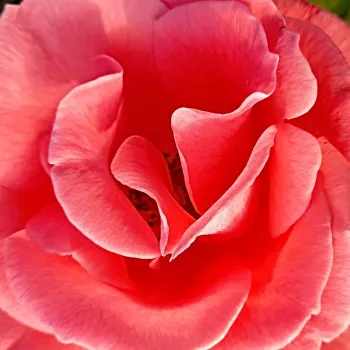
Large, double, cup-shaped blooms with 26–39 petals, carried mainly in clusters; remontant with an especially abundant second flush, providing repeated flowering impact through the main summer season. |
| Colour data and phenology |
Medium-deep pink buds (RHS 57C outer) open to baby pink with a coral-toned centre, then soften to pastel pink; overall effect is an even mid-pink with lightly brightened petal edges at full bloom. |
| Fragrance and aroma |
Strong, sweet, fruity rose fragrance with pronounced scent levels around nose height; primarily ornamental rather than for cosmetic use, but offers notable sensory value near seating or frequently used paths. |
| Hip characteristics |
Occasional spherical hips, 10–15 mm diameter, orange-red (RHS 42A); usually incidental to the display but adding a discreet seasonal accent if some spent flowers are left uncut in late summer. |
| Resistance and winter hardiness |
Hardy to around −21 to −18 °C (RHS H7, USDA 6b, Swedish Zone 3); good heat tolerance with watering during prolonged drought; disease resistance medium, with good black spot resistance but some mildew and rust sensitivity. |
| Horticultural recommendations |
Best on rose arches, pergolas, walls, fences or as a specimen; spacing 190–320 cm, planting density about 0.3 plants/m²; suitable for partial shade and needs occasional plant protection and regular tie-in of new growth. |
TANKLEWI® offers tall, fragrant pink coverage, repeat flowering and dependable, long-lived performance in own-root form, making it a thoughtful choice for relaxed coastal and family gardens you intend to enjoy for years.