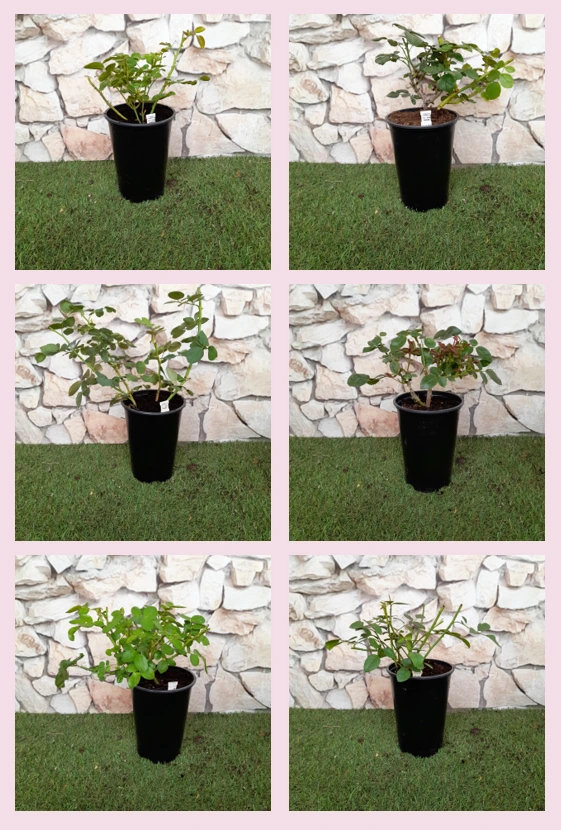
THE DARK LADY – crimson English rose - Austin
Imagine late afternoon sunlight on a sheltered Cornish veranda, this deep crimson English shrub rose forming a gentle windbreak while you rinse sand from buckets and arrange seashells. ‘The Dark Lady’ settles happily into coastal-style beds and large containers, provided the soil offers good drainage and roots can anchor well against blustery weather. In its first year it quietly builds roots, in the second it pushes stronger shoots, and by the third it reveals its full ornamental character with generous, repeat-flowering rosettes. The own-root form favours long-term stability, so if a stem is damaged it can regenerate cleanly without losing its true identity, rewarding steady but undemanding care in a busy family garden.
Usage options
| Target area | Reasoning |
|---|
| Coastal veranda in a large container |
Performs well in a roomy 40–50 litre container, giving you rich crimson blooms at eye level while you sit sheltered with tea after a windy beach walk; own-root vigour supports long, reliable container life for beginners. |
| Feature rose in a small family garden |
Bushy, upright growth to around 100–150 cm makes it easy to place as a focal point without overpowering a modest plot, offering classic English rose character and repeat flowering for homeowners. |
| Romantic mixed border with perennials |
The full, rosette blooms and dark foliage pair beautifully with lavender, salvias or echinacea, adding depth and fragrance while the own-root form quietly matures into a long-lived, dependable accent for garden-lovers. |
| Low, informal flowering hedge |
Planted at about 110 cm apart, its bushy habit and dense leaves help create a soft screen that tempers sea breezes and frames paths, with repeat flowering adding colour rhythm across summer for families. |
| Cutting corner near the veranda |
Large, very full, crimson rosettes on sturdy stems lend themselves to cutting, bringing an old-rose scent indoors without stripping the plant, as it remonts and replaces blooms steadily for hosts. |
| Coastal-style shingle or gravel bed |
Enjoys a sunny, well-drained spot where its own-root system can anchor securely and cope with exposed, breezy conditions that often accompany British coastal gardens, remaining an attractive long-term feature for coast-dwellers. |
| Deep, clay-based soil with improved drainage |
On heavier clay, a raised planting with added grit helps water management so its roots can establish gradually, rewarding that one-off preparation with years of stable growth and flowering for planners. |
| Park-style planting in a larger plot |
At wider spacings it forms substantial, repeat-flowering shrubs that read clearly from a distance, with medium maintenance needs and steady own-root regeneration giving a durable, long-term display for collectors. |
Styling ideas
- Coastal-Veranda Nook – place in a 50 litre container by a sheltered seating area with pale decking and shingle mulch, ideal for those wanting a seaside feel on a compact veranda – coastal-style lovers
- Romantic-Border Drift – combine with lavender, meadow sage and soft grasses for a fragrant, cottage-style border that still feels tidy and manageable – relaxed family gardeners
- Shingle-Front Garden – set among sea kale and low blue fescues in gravel for a low-mow frontage that gives instant character without intensive upkeep – busy urban owners
- Evening-Tea Corner – underplant with silver-leaved herbs and place near a bench so its old-rose fragrance and deep crimson blooms frame your evening cup of tea – veranda sitters
- Pathside-Hedge Line – plant in a loose row beside a path, allowing space for each shrub to develop a billowing, flower-laden outline – homeowners seeking gentle screening
Technical cultivar profile
| Parameter | Data |
|---|
| Name and registration |
English shrub rose from the English Rose Collection, registered as AUSbloom, marketed as ‘The Dark Lady’ English Rose, with exhibition category shrub rose and commercial group Romantic rose. |
| Origin and breeding |
Bred by David C. H. Austin in the United Kingdom from ‘Mary Rose’ × ‘Prospero’, introduced and registered in 1991, reflecting classic English Rose breeding aims and styling. |
| Growth and structural characteristics |
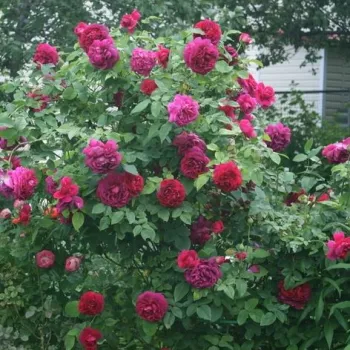
Bushy, upright shrub to around 100–150 cm in height and spread, with dense, slightly glossy dark green foliage and moderate prickliness, forming a solid, shapely presence in borders. |
| Flower morphology |
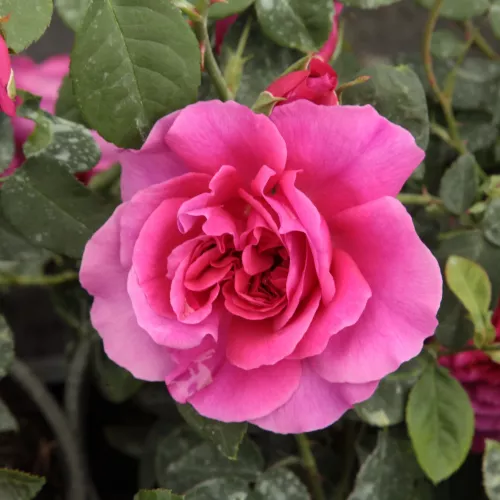
Large, very full rosette blooms with 40+ petals, mostly borne singly, remonting well with an abundant second flush, providing generous, traditional English rose flowers in season. |
| Colour data and phenology |
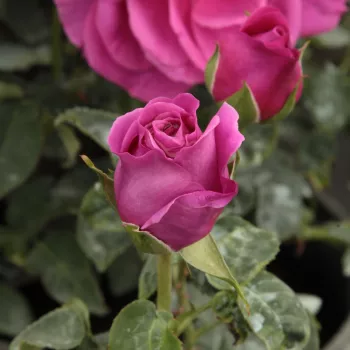
Closed buds are dark carmine red, opening rich crimson with deeper centres, fading towards raspberry red with paler coral edges, colour lightening notably in heat and strong sunlight. |
| Fragrance and aroma |
Medium-strength, full old-rose fragrance typical of English roses, perceptible at close range and around seating areas, adding a nostalgic, perfumed note without being overpowering. |
| Hip characteristics |
Forms small quantities of spherical red hips, about 9–15 mm across, adding a light ornamental accent in late season but not a major feature of the cultivar’s garden value. |
| Resistance and winter hardiness |
Hardy to approximately −26 to −23 °C (RHS H7, USDA 5b) with good resistance to powdery mildew and black spot, medium susceptibility to rust, and moderate tolerance of heat and drought. |
| Horticultural recommendations |
Preferably planted in full sun with spacing adjusted to use, medium maintenance with occasional deadheading and plant protection, suitable for beds, hedging, specimen use and cutting. |
‘The Dark Lady’ offers romantic crimson rosettes, a steady old-rose fragrance and durable, own-root reliability for years of enjoyment; consider it if you want a long-lived, characterful English rose to grow with your garden.