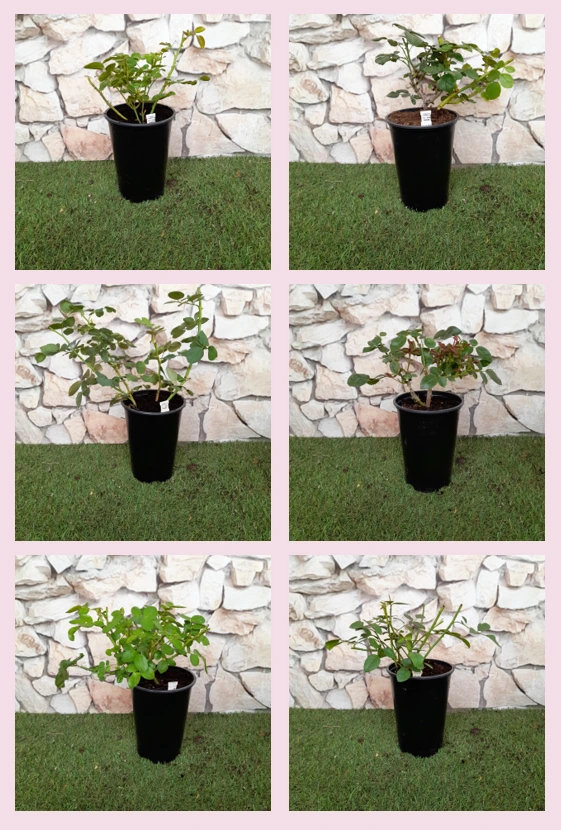
MARIA TERESA – light pink flowerbed floribunda rose - Lens
Imagine sitting with afternoon tea on a sheltered Cornish veranda as Maria Teresa’s soft blooms filter the light: a compact, easy-going floribunda that brings a sense of refreshment and calm to small, wind-buffeted family gardens. Its porcelain-pink flowers appear in generous clusters over a long season, with a medium, fruity-honey scent that drifts pleasantly without overwhelming your space. Own-root vigour gives reassuring stability and a long ornamental life, helping the plant bounce back after rough weather and routine pruning. In coastal beds and large containers, the shrub’s compact habit and tidy outline suit shingle gardens and verandas where you want beauty without fuss, while good heat tolerance keeps the display going through warm, dry spells. Over the first three years the roots establish, the framework fills out, and the rose reaches its full impact, letting you enjoy consistent colour and gentle fragrance with simple, regular care that respects demanding, weather-exposed plots.
Usage options
| Target area |
Reasoning |
| Coastal family flowerbed near a seating area |
The compact shrub form and moderate height create a soft, wind-filtering edge that pairs well with shingle, low grasses and sea kale, giving a calm backdrop for tea or playtime. Some regular spraying is needed, but the long-lived own-root base rewards patient beginners. |
| Large container on a sunny or lightly sheltered veranda |
In a 40–50 litre pot with good drainage, this variety builds a stable root system and dense top growth, offering reliable clusters of light-pink blooms from a contained footprint. The own-root form copes well if pruning is hesitant, suiting busy homeowners. |
| Feature rose in a small front garden |
The rounded, compact habit and tidy foliage make it easy to integrate among perennials, giving welcoming, porcelain-pink colour with only occasional deadheading. Own-root resilience supports long-term structure, ideal for low-fuss kerb appeal for time-pressed gardeners. |
| Lightly shaded town garden border |
Tolerance of partial shade allows good flowering where sun is limited by walls or neighbouring houses, while the moderate height avoids blocking windows. Regular protection against rust is needed, but the dependable blooming pattern satisfies urban balcony and courtyard owners. |
| Mixed planting with grasses and Mediterranean herbs |
The pastel flowers and mid-green foliage sit beautifully with Festuca, rosemary and sea kale, echoing a relaxed coastal palette. Good heat and moderate drought tolerance support these companions during warm spells, appealing to lovers of informal, seaside-inspired planting. |
| Low informal hedge along a path or terrace |
Planting at closer spacing forms a soft, flowering line that subtly screens movement and frames views without dominating the garden. The own-root system creates a durable base that can be rejuvenated by harder pruning over time, which suits forward-planning owners. |
| Mass planting in a family back garden bed |
Group planting at recommended density creates a sea of pale pink that reads as one generous shrub, ideal for simple layouts with high impact. The development from root establishment to full effect over several seasons matches the expectations of patient family-garden users. |
| Specimen rose near doors, gates or frequently used paths |
The medium-strength fruity-honey fragrance and repeat flushes make this a welcoming focal point where you pass daily, while double blooms keep their delicate hue well in changeable British weather and brisk coastal breezes, pleasing scent-loving visitors. |
Styling ideas
- Coastal-veranda duo – Place MARIA TERESA in a large container with sea kale and blue Festuca to echo shingle and sea tones – ideal for relaxed coastal-style seekers.
- Front-garden welcome – Use a single shrub by the gate with soft perennials for continuous colour and an inviting scent – perfect for homeowners wanting easy charm.
- Pastel drift bed – Mass-plant several bushes in a low, flowing bed to read as one cloud of pale pink – good for families wanting impact from simple layouts.
- Herb-and-rose mix – Combine with rosemary and lavender in free-draining soil for a sunny, aromatic corner – suited to cooks and hosts who enjoy scented terraces.
- Soft path edging – Line a path at closer spacing for a low flowering boundary that guides the eye – appealing to those shaping compact but structured gardens.
Technical cultivar profile
| Parameter |
Data |
| Name and registration |
Floribunda bedding rose, shrub type; registered as LENmacra, traded as Maria Teresa Bedding rose LENmacra; exhibition name Maria Teresa in floribunda group classifications. |
| Origin and breeding |
Bred by Louis Lens in Belgium, 1982; introduced and initially distributed by Lens Roses in 1984, with breeder code LENmacra registered the same year. |
| Awards and recognition |
Recognised at Baden bei Wien Austrian Rose Trial in 1991, achieving fifth prize, indicating solid ornamental performance under central European trial conditions. |
| Growth and structural characteristics |
Compact, moderately dense shrub, 60–85 cm high and 50–70 cm wide, moderately thorny, with slightly glossy, mid-green foliage and corymbose flowering habit for bed use. |
| Flower morphology |
Large, double flowers with 26–39 petals, cup-shaped and borne in clusters; remontant, giving a good second flush, with moderate self-cleaning yet some deadheading beneficial. |
| Colour data and phenology |
Light pink with porcelain, pearlescent effect; RHS 65D–65C; buds pastel, opening to evenly pale blooms that gradually fade to almost white with a silvery veil yet retain elegance. |
| Fragrance and aroma |
Medium-strength scent noticeable at close range; fragrance is delicately fruity with honeyed notes, adding a gentle, refined perfume to paths, terraces and compact seating areas. |
| Hip characteristics |
Hip set is limited by the strongly double bloom form; occasional small spherical red hips, approximately 6–10 mm across, may appear late in the season in favourable years. |
| Resistance and winter hardiness |
Hardy to approximately −21 to −18 °C (RHS H7, USDA 6b, Sweden zone 3); heat and moderate drought tolerant, but prone to rust and needs attentive disease management. |
| Horticultural recommendations |
Best in well-drained soil with regular watering during dry spells; needs consistent plant protection against fungal diseases; suitable for beds, hedging, parks and specimen use. |
MARIA TERESA offers compact habit, long-season pastel flowering and a gentle fragrance on a durable own-root framework, making it a thoughtful choice for enduring, easygoing planting schemes.