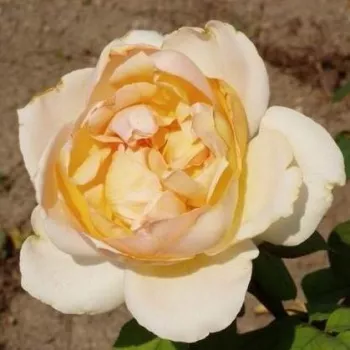
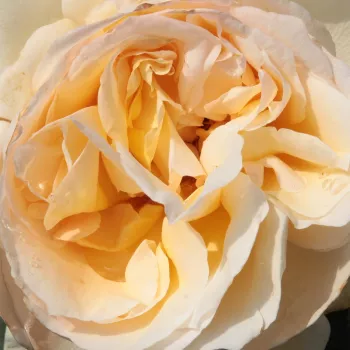
TOPAZE ORIENTALE™ – cream‑yellow hybrid tea rose – Delbard‑Chabert
Imagine coming home from a blustery coastal walk, sitting down with your afternoon tea and looking out over a sheltered veranda framed with cream blooms that hold their colour beautifully in sun and salt‑tinged air, giving you a sense of refreshment rather than more work. TOPAZE ORIENTALE™ brings classic hybrid tea elegance in a practical 2‑litre own‑root form, designed to establish steadily and offer a long, reliable lifespan in typical UK family gardens. In its first season it concentrates on roots, the second on stronger shoots, and by the third year it settles into full ornamental rhythm, delivering refined, medium‑sized, very full flowers that are ideal for cutting. Its upright growth and mid‑green, matt foliage give good natural structure in small borders and coastal shingle beds, while moderate height and spread allow confident planting in larger 40–50 litre containers on breezy decks. A medium, noticeable fragrance completes the experience, so you can simply enjoy the salty, windy, sunny mood without complicated maintenance.
Usage options
| Target area |
Reasoning |
| Coastal veranda in large containers |
Best in 40–50 litre pots where its upright habit stays stable and elegant, while good colour retention copes well with bright coastal light and moving air on decks or balconies, suiting busy urban garden owners |
| Small front garden focal point |
Ideal as a single specimen by the front door or path, its structured height and dense foliage give a tidy, welcoming accent with classic hybrid tea form without demanding intricate pruning, perfect for homeowners |
| Cutting patch near the patio |
Medium, very full, ball‑shaped blooms on upright stems are easy to reach and cut for vases, offering a steady supply of scented indoor flowers from a compact area, attractive to hobby gardeners |
| Mixed coastal-style shingle bed |
Planted into free‑draining pockets in shingle, its firm root system anchors the plant reliably while the creamy yellow flowers stand out among silvers and grasses, well suited to coastal-style lovers |
| Family seating area windbreak strip |
A short, upright row defines the edge of a terrace or seating area, giving a light visual screen and repeated flowering close to where you sit for tea after walks, appreciated by family gardeners |
| Roses-and-perennials feature border |
Combines well with low perennials such as sea kale, Festuca and lavender, where its structured form and long flowering season provide a steady vertical accent for beginners |
| Lawn island bed specimen |
Planted on its own in the centre of a small island bed, its predictable height and rounded spread create an easy-to-maintain focal point that looks balanced from all sides, attractive for owners of average-sized gardens |
| Sunny, sheltered townhouse garden |
In a modest plot with warm walls, it offers reliable flowering and fragrance when given regular watering and basic protection, matching the needs of busy but style-conscious city dwellers |
Styling ideas
- Shingle Chic – nestle TOPAZE ORIENTALE™ among pale gravel, sea kale and blue Festuca for a soft, beach‑house look – ideal for coastal-style lovers
- Veranda Focus – plant one rose in a 50‑litre clay pot beside a bistro table to frame evening tea with scented blooms – perfect for busy urban garden owners
- Pastel Border – mix with lavender and soft pink perennials so its cream‑yellow flowers read as calm highlights rather than loud accents – suited to beginners wanting harmony
- Classic Island – place a single plant in a small circular lawn bed, underplant with low grey foliage plants to emphasise its upright, elegant shape – good for family gardeners
- Cutting Corner – dedicate a sunny border section to TOPAZE ORIENTALE™ with airy companions like Gypsophila, making it easy to cut armfuls of flowers – appealing to hobby gardeners
Technical cultivar profile
| Parameter |
Data |
| Name and registration |
Hybrid tea rose Topaze Orientale™, registered as ‘Topaze Orientale’; exhibition hybrid tea in the Hybrid Tea group, with ARS approved exhibition name Topaze Orientale. |
| Origin and breeding |
Bred by André Delbard-Chabert in France from ‘Sultane’ × ‘Queen Elizabeth’; introduced and registered in 1965 by Delbard / Georges Delbard SA as a garden and exhibition rose. |
| Growth and structural characteristics |
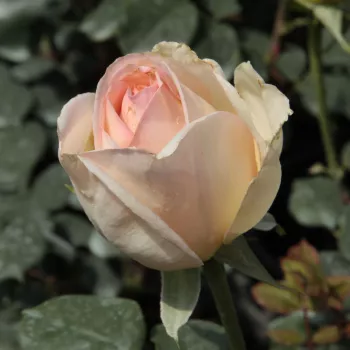
Upright shrub 130–170 cm high and 70–90 cm wide, with dense mid-green matt foliage and moderate thorns; weak self-cleaning so spent blooms usually need deadheading by hand. |
| Flower morphology |
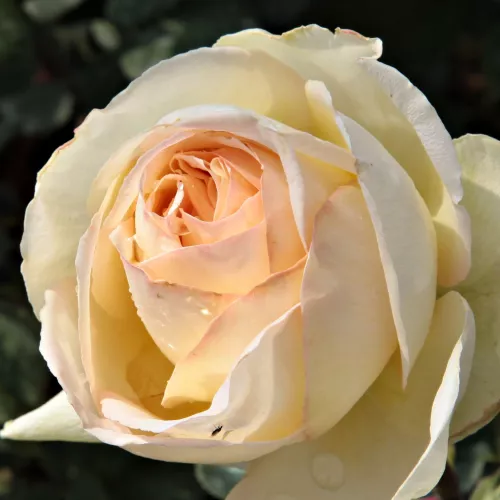
Medium-sized, very full, ball to pompon-shaped blooms with 40+ petals, borne mainly singly; remontant habit with a plentiful second flush, well suited to cutting for indoor display. |
| Colour data and phenology |
Cream-yellow base enriched with vivid yellow and a delicate pink veil; ARS YB, RHS 11D outer and 36C inner; tones fade to soft pastels in strong sun but overall colour retention is good. |
| Fragrance and aroma |
Medium-strength fragrance, distinctly noticeable at close range; character description not fully documented, but sufficiently scented to enjoy by paths, seating areas and cutting gardens. |
| Hip characteristics |
Produces moderately abundant ovoid hips, 12–18 mm in diameter, orange-red RHS 40A; hips are of ornamental value in late season if some spent flowers are left uncut on the plant. |
| Resistance and winter hardiness |
Hardy to about −21 to −18 °C (USDA 6b, RHS H7, Swedish zone 3); moderate heat and drought tolerance but needs water in dry spells; disease resistance moderate, very sensitive to rust. |
| Horticultural recommendations |
Best in full sun with fertile, well-drained soil; plant 50–55 cm apart in groups or 90 cm as specimens; needs regular watering, feeding and disease protection, plus deadheading for best effect. |
TOPAZE ORIENTALE™ offers elegant cream-yellow blooms, reliable cutting stems and good container performance in a long-lived own-root form, making it a considered choice for relaxed, coastal-influenced family gardens.