TOPOLINA® – pink groundcover rose – Kordes
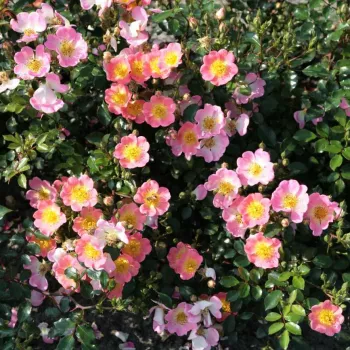
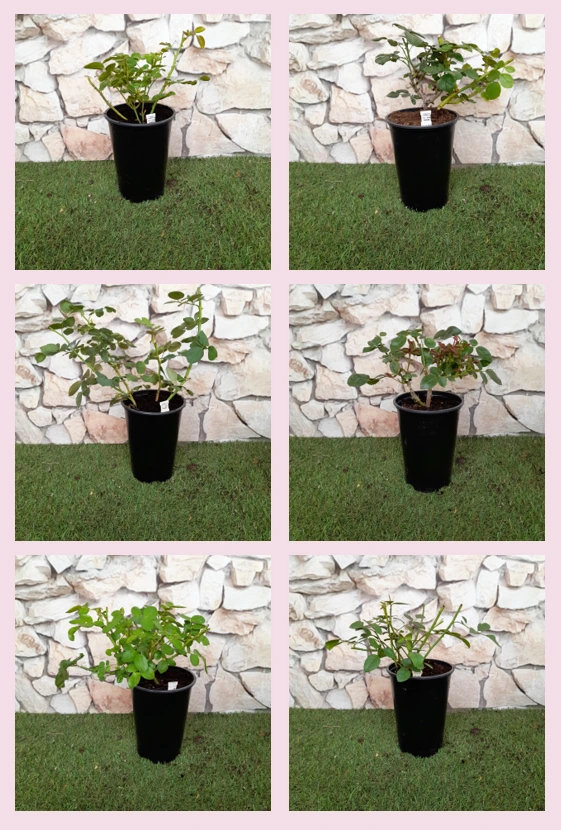
Designed for relaxed coastal-style gardens, Topolina® brings low, spreading colour that shrugs off breeze and showers while remaining firmly rooted in place, giving you a calm, reliable backdrop after days spent beachcombing. Its single, open blooms glow with a golden eye that draws in bees and other pollinators, carpeting the ground in soft pink from early summer well into autumn with very little intervention. As an own-root shrub, it establishes steadily for a long, stable life, regenerating well if the weather or pruning are less than perfect, and rewards simple preparation of heavier soils with dependable, compact growth. In its first years it quietly focuses on roots, then builds strong new shoots, before settling into full ornamental value by around the third summer, making it an easy, patient choice for small family plots and breezy verandas where you want lasting colour, minimal maintenance, gentle structure, good coverage, improved stability, natural regeneration and easy-going pairings.
Usage options
| Target area | Reasoning |
|---|
| Low groundcover in family gardens |
Forms a dense, spreading mat that covers bare soil and suppresses low weeds without becoming overwhelming, ideal around paths, play spaces and seating areas in average-sized gardens, especially for beginners. |
| Coastal-style beds and shingle strips |
Compact height and firm anchoring habit cope well with exposed, breezy sites and light salt spray along driveways or in front gardens, echoing a Cornish or Devon beach feel for relaxed homeowners. |
| Low-maintenance edging for borders |
Neat, self-cleaning flowers save you deadheading time, while the glossy foliage creates a soft yet defined border edge that keeps its line through the season, suiting busy urbanites. |
| Pollinator-friendly wildlife corners |
Single blooms with a bright yellow eye offer easy access to pollen for bees and hoverflies, so you gain both colour and movement when planting simple wildlife patches, perfect for nature-minded families. |
| Containers and large patio pots |
Performs well in a roomy 40–50 litre container with good drainage, staying low and spreading to spill gently over the rim, providing months of flower beside seating on sheltered terraces for relaxed balcony-owners. |
| Slopes, banks and awkward corners |
Spreading growth and own-root resilience mean it knits into sloping or uneven ground, helping reduce soil movement while keeping maintenance light, an asset for practical, time-poor gardeners. |
| Clay-improved mixed planting schemes |
Once drainage is improved, its strong root system settles securely even in heavier soils, offering stable, low growth that copes with typical British wet spells, reassuring cautious starters. |
| Soft pink schemes with silver and blue accents |
Mid-pink, airy flowers pair easily with grasses and low perennials, so you can build coastal-style plantings with sea kale, Festuca or lavender that stay harmonious and unfussy for style-conscious owners. |
Styling ideas
- Beachfront-border – Combine Topolina® with sea kale, Festuca and driftwood edging for a relaxed shingle look – ideal for coastal-style enthusiasts.
- Veranda-ribbon – Plant in a low strip along a decking edge to spill gently over gravel, softening hard lines – suitable for compact terrace owners.
- Pink-carpet – Mass-plant several shrubs on a gentle bank to create a continuous flowering groundcover – good for those taming awkward slopes.
- Patio-companion – Grow one plant in a 50 litre clay pot with lavender and a small grass for a simple yet elegant seating-area feature – appealing to busy beginners.
- Wildlife-corner – Underplant a small ornamental tree with Topolina® and spring bulbs to offer nectar and long colour – perfect for child-friendly family spaces.
Technical cultivar profile
| Parameter | Data |
|---|
| Name and registration |
Topolina® NektarGarten® KORpifleu, groundcover shrub rose, ARS exhibition name Topolina; registered cultivar name KORpifleu within the commercial NektarGarten® collection. |
| Origin and breeding |
Bred in Germany in 1998 by Tim-Hermann Kordes from unnamed seedlings; introduced after 2014 by W. Kordes’ Söhne, with registration completed in 2014 for garden and landscape use. |
| Awards and recognition |
Holds the ADR award (2010), indicating strong garden performance, health and ornamental value under independent trials without chemical protection across diverse Central European sites. |
| Growth and structural characteristics |
Low, spreading groundcover shrub, 30–55 cm tall and 40–70 cm wide, with dense, glossy dark green foliage and good natural self-cleaning; moderately thorny shoots give durable structure. |
| Flower morphology |
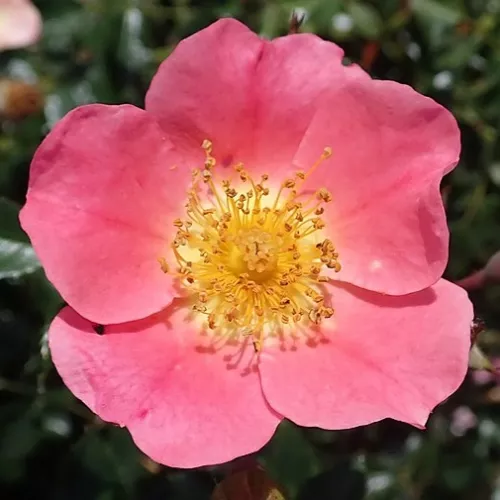
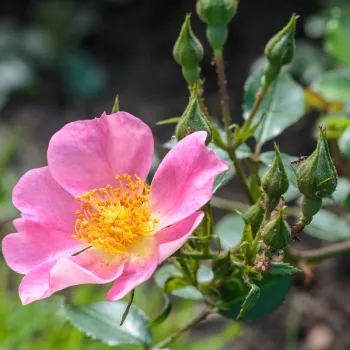
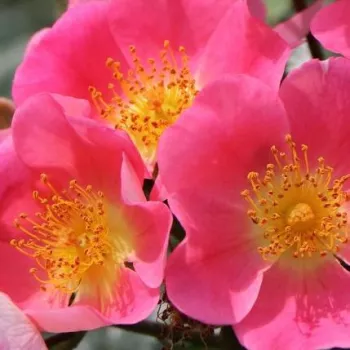
Bears small, flat, single blooms with 5–12 petals in clusters, repeating freely; first and second flower flushes are abundant, giving a long, intermittent show throughout the main season. |
| Colour data and phenology |
Mid-pink outer petals, softer pastel inner tones and a pale yellow base, strong yellow eye and golden stamens; colour holds well, only lightening slightly in full sun as the flowers age. |
| Fragrance and aroma |
Classed as scentless with no noticeable perfume, prioritising clear colour, repeat flowering and pollinator access rather than fragrance for use in practical, decorative plantings. |
| Hip characteristics |
Hip set is usually sparse; where present, produces small spherical red hips about 6–10 mm in diameter, which can add a discreet seasonal accent without overwhelming the plant. |
| Resistance and winter hardiness |
Very hardy to approximately −26 to −23 °C (RHS H7, USDA 5b), showing strong resistance to black spot, powdery mildew and rust, with good tolerance of heat given some drought watering. |
| Horticultural recommendations |
Suited to groundcover, borders, slopes, rock gardens and large containers; prefers well-drained soil, accepts partial shade, needs only light pruning and moderate watering for best results. |
Topolina® combines compact groundcover, pollinator-friendly flowers and easy, low maintenance in an own-root form that settles for long-term use; consider it if you want quietly reliable colour in a modest space.