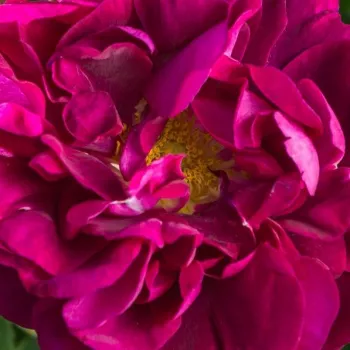
Tuscany Superb – purple historic Gallica rose – Rivers
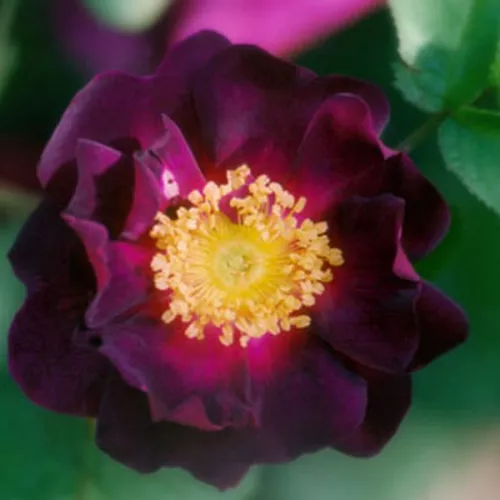
With its velvety, dark crimson-purple blooms and strong, classic perfume, Tuscany Superb brings a sense of coastal theatre to even the smallest shingle garden or veranda, thriving in breezy sites where it can provide a gentle living screen and naturally cope with blustery, salt‑tinged weather. This historic Gallica shrub rose flowers once in early summer, but does so with unforgettable abundance, creating a rich backdrop for relaxed afternoon tea after a walk on the shoreline. Its bushy, upright habit and dense foliage give a reassuring feeling of privacy in small family gardens, while the 2‑litre own‑root plant form supports long‑term stability and dependable regeneration if stems are cut back hard. In the first year it concentrates on firm rooting, in the second on stronger shoots, and by the third season it settles into full ornamental character that fits beautifully beside sea kale, ornamental grasses and weathered timber furniture.
Usage options
| Target area |
Reasoning |
| Coastal veranda windbreak |
The dense, bushy habit forms a semi‑transparent green screen that softens onshore winds without overwhelming a small seating area. Once-a-year flowering keeps pruning straightforward, ideal for a low‑maintenance windbreak beside a shingle veranda for beginners. |
| Historic focal point in small garden |
As a specimen, its rich purple blooms and heritage character make a striking summer highlight that reads beautifully against gravel, pebbles or pale walls. The strong fragrance creates a sense of occasion without needing complicated border designs for casual home gardeners. |
| Seasonal flowering hedge |
Planted at hedge spacing, its upright, thorny growth knits into an informal barrier that offers structure for much of the year. The once‑blooming display becomes a cherished seasonal event, while own‑root resilience supports a long‑lived, slowly maturing hedge for patient coastal owners. |
| Mixed border with grasses |
Its midsized framework sits comfortably with low grasses and perennials, allowing the dark flowers to shine without dominating the border. Moderate self‑cleaning keeps the plant tidy after flowering when paired with sea kale and Festuca for relaxed, naturalistic gardeners. |
| Sheltered shingle courtyard |
The compact spread and height suit tight courtyard plots where space is at a premium. In a well‑drained, sunny spot, the shrub provides vertical interest and perfume without demanding elaborate care routines, appealing to time‑pressed urban families. |
| Clay soil restructuring project |
Once established, its woody framework and deepening root system help anchor improved heavy soils, provided you create a free‑draining planting hole and avoid waterlogging. Over time this supports a more stable planting, helpful for homeowners gradually reworking challenging ground. |
| Collector’s historic rose bed |
With a pedigree dating back to 1837, it fits seamlessly into themed historic plantings. The AGM status underlines its garden merit where attentive care is available, rewarding enthusiasts prepared for regular monitoring in return for authentic period character. |
| Large container on sheltered balcony |
Grown in a sturdy 40–50 litre container with good drainage, the shrub can be enjoyed close to seating where its fragrance is most appreciated. The confined root space makes height easy to manage, suiting balcony owners wanting traditional roses in a controllable format. |
Styling ideas
- Coastal-veranda screen – line a shingle strip beside decking, underplant with silver grasses and sea kale, and add weathered timber furniture – ideal for seaside homeowners wanting shelter and drama.
- Historic-courtyard accent – plant one shrub in a gravel circle with a low box or Carex edge, plus a simple wooden bench – suits period cottages and townhouses seeking a single, characterful rose.
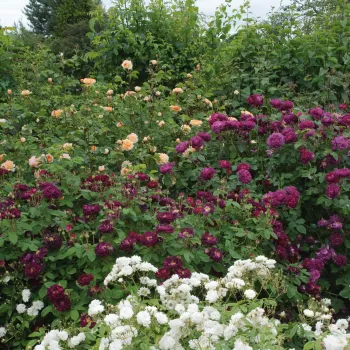
- Romantic-hedge run – create a loose hedge along a garden path, weaving in Clematis ‘Snow Queen’ for extra flower height – for families wanting privacy with a once-a-year burst of colour.
- Mixed-grass tapestry – combine with Festuca, sea kale and low lavender in a free-draining border to contrast textures and colours – perfect for relaxed gardeners favouring soft, naturalistic planting.
- Balcony-heritage pot – grow in a 40–50 litre clay pot with trailing thyme at the base and pale cushions on nearby chairs – suited to balcony or veranda owners who value scent and history over constant flowers.
Technical cultivar profile
| Property |
Data |
| Name and registration |
Historic Gallica shrub rose, registered cultivar name Tuscany Superb, used as current trade and exhibition name; part of the historic rose collection, unregistered but authenticated for true-to-name supply. |
| Origin and breeding |
Originated in the United Kingdom as a sport or seedling of ‘Tuscany’, bred and introduced by Thomas Rivers & Son Ltd, Sawbridgeworth, around 1837, reflecting early Victorian garden preferences. |
| Awards and recognition |
Holds the Royal Horticultural Society Award of Garden Merit, indicating proven performance under UK conditions where appropriate care and disease management are provided. |
| Growth and structural characteristics |
Bushy, upright shrub 100–150 cm tall and 80–120 cm wide, densely thorned with matt mid‑green foliage. Moderate self‑cleaning; occasional deadheading or tidying improves appearance after flowering. |
| Flower morphology |
Semi-double, flat flowers with 17–25 petals, medium-sized and borne in clusters on the bush; not remontant, giving a single but notable flowering flush in early summer under normal conditions. |
| Colour data and phenology |
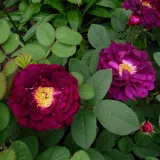
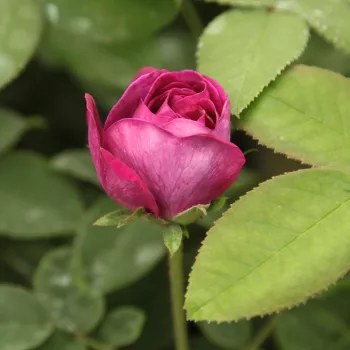
Deep crimson with purple tone, ARS dr, RHS 60A–60B; buds open rich crimson-purple, darkening towards smoky purple, then lightening or turning bluish in strong sun while remaining darker in cool weather. |
| Fragrance and aroma |
Very strongly scented with a classic, long-lasting rose fragrance; ideal where scent near seating is valued. Semi-double form offers only moderate pollen access, so pollinator value is limited. |
| Hip characteristics |
Hip set is usually slight; when present the plant forms small, spherical red hips around 12–18 mm across, adding a modest seasonal interest after flowering in some seasons. |
| Resistance and winter hardiness |
Fully hardy to approximately −29 to −32 °C, RHS H7 and Swedish zone 5. Disease resistance is weak, needing vigilant control for black spot and rust, especially in damp or overcrowded plantings. |
| Horticultural recommendations |
Best in borders, hedging or as a specimen with sun and air flow. Suitable for partial shade but blooms best in light. Requires regular pest and disease management for reliable ornamental display in UK gardens. |
Tuscany Superb offers intensely fragrant, once-a-year purple blooms on a compact, hedge-forming shrub whose own-root vigour supports long-term structure; consider it if you enjoy classic roses and can provide attentive, regular care.