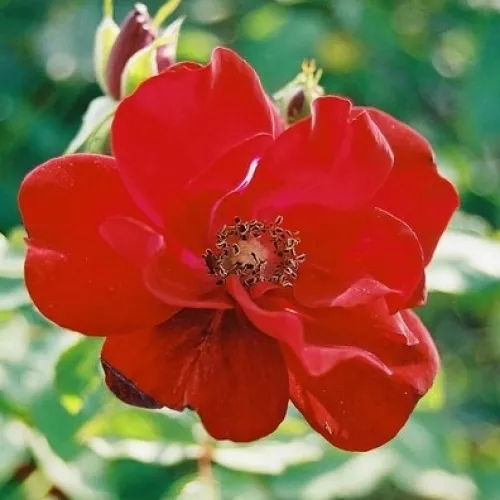
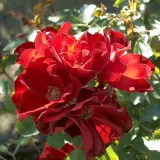
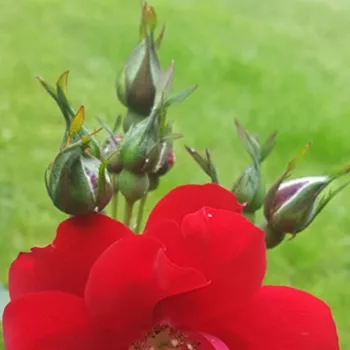
VILLE D'ETTELBRUCK – dark red bedding shrub rose - Lens
Imagine returning from a breezy shoreline walk to enjoy afternoon tea behind a living windbreak of vivid, deep red blooms: Ville d’Ettelbruck settles in calmly, coping well with exposed conditions and helping to steady gardens where weather often feels unsettled, naturally anchoring lighter soils and clay alike. This versatile shrub rose forms a dense, upright screen that flowers repeatedly, its semi‑double clusters offering a long season of colour from early summer well into autumn. Medium, manageable height keeps the plant in good scale for family gardens and coastal verandas, while its own‑root habit supports long‑term regrowth and reliable performance after harsh winters. In a 40–50 litre container or a sunny shingle bed, you can expect a steady rhythm of new clusters as the plant shifts from establishing roots to building framework and finally to full ornamental value over its first three years.
Usage options
| Target area |
Reasoning |
| Coastal veranda container (40–50 litres) |
Well suited to a generous pot on a balcony or veranda, where the dense, upright growth makes a natural privacy screen without overwhelming the space, and repeat clusters keep colour close to seating areas for busy coastal-style beginners who like simplicity. |
| Small family front garden bed |
Compact spread and medium height allow you to edge a drive or pathway with strong colour that remains tidy and proportionate, while own-root growth supports a durable, long-lived planting for homeowners wanting reassurance. |
| Shingle or gravel strip in a coastal garden |
Performs reliably in free-draining shingle or gravel with appropriate watering, its root system gradually firming the planting pocket so the shrub feels secure where weather can be blustery and erratic for householders seeking stability. |
| Mixed border with sea kale and grasses |
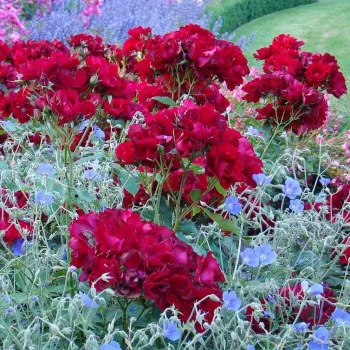
The blood-red flowers sit beautifully against silvery sea kale and fine blue Festuca, giving a long, repeating highlight while the glossy foliage provides structure, appealing to design-conscious gardeners who appreciate contrast. |
| Informal low hedge as a windbreak |
Planted at hedge spacing, the dense foliage and upright habit form a semi-transparent barrier that softens wind over time, shaping a more comfortable microclimate on breezier plots for families who value outdoor comfort. |
| Urban courtyard or small back garden focal point |
A single shrub or small group offers a strong vertical accent without casting deep shade, with semi-double clusters providing colour and light bee interest, ideal for urban owners wanting manageable impact. |
| Public-facing bed by front gate or path |
Good remontant flowering and medium maintenance needs make it suitable for visible spots where you want a presentable display without constant deadheading, suiting householders who prioritise low-effort neatness. |
| Seasonal feature with autumn hips |
If you leave some clusters untrimmed, the spherical red hips add late-season texture and interest, extending ornamental value into autumn and early winter for gardeners who quietly enjoy seasonal detail. |
Styling ideas
- Seaside-Veranda Screen – position Ville d’Ettelbruck in a 40–50 litre clay container with gravel mulch to echo beach shingle, creating a flowering privacy panel beside outdoor seating – perfect for coastal veranda owners wanting soft shelter.
- Crimson-Shingle Ribbon – weave a short line of shrubs through a pale gravel strip, repeating in threes for rhythm and pairing with low Festuca, for those who favour simple, graphic planting along paths or driveways.
- Harbour-Edge Mix – combine with sea kale and calamint in a sunny border, letting the blood-red clusters rise above silvery foliage and soft mauve clouds – ideal for gardeners chasing a relaxed harbour-town mood.
- Family-Garden Welcome – flank the front gate with two or three plants underplanted with dwarf Michaelmas daisies to extend colour into autumn – suited to families wanting a cheerful, low-fuss entrance.
- Urban-Patio Accent – grow one shrub in a large wooden tub with lavender and fine gravel top-dressing, keeping watering straightforward while providing season-long colour – good for time-pressed city gardeners.
Technical cultivar profile
| Parameter |
Data |
| Name and registration |
Modern shrub, bed rose type; registered as LENivill and marketed as Ville d'Ettelbruck bedding rose LENivill, with ARS exhibition name Ville d’Ettelbruck for show use. |
| Origin and breeding |
Bred by Louis Lens in Belgium from ‘Satchmo’ × ‘Skyrocket’; breeding completed 1981 and introduced in 1983 by Lens Roses NV and Pépinières Louis Lens SA for garden and landscape use. |
| Awards and recognition |
Bronze medal at the Baden‑Baden International Rose Competition 1982, acknowledging its ornamental quality and garden performance among modern shrub and bedding rose introductions of that period. |
| Growth and structural characteristics |
Upright shrub reaching about 110–150 cm high and 65–95 cm wide, with dense, glossy dark green foliage and moderate prickles, forming a full, bushy outline suited to beds, hedging and specimen roles. |
| Flower morphology |
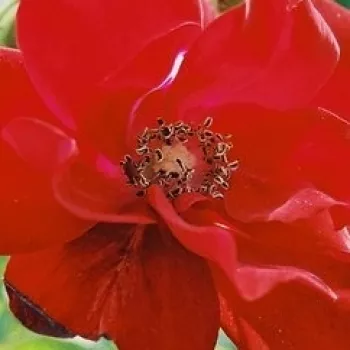
Semi-double, flat, cluster-flowered blooms of medium size with roughly 13–25 petals; flowers are freely produced in trusses and show good remontant behaviour with abundant second flushes in suitable conditions. |
| Colour data and phenology |
Dark blood-red flowers (RHS 53A–53B; ARS dr) with velvety texture; buds open brilliant and deepen slightly before a modest lightening in strong sun, maintaining an overall rich, dark-red impression across the season. |
| Fragrance and aroma |
Light, discreet fragrance of delicate character; semi-double blooms expose stamens, offering some pollen access and making the plant partially attractive to bees and other pollinating insects in mixed plantings. |
| Hip characteristics |
Forms small red spherical hips about 8–12 mm across in moderate numbers; ornamental in autumn and early winter where spent blooms are left untrimmed, contributing an additional textural season. |
| Resistance and winter hardiness |
Hardy to approximately −21 to −18 °C (RHS H7, USDA 6b, Swedish Zone 3); medium disease resistance overall with strong black spot resistance but moderate susceptibility to powdery mildew and rust. |
| Horticultural recommendations |
Best in sunny positions with well-drained soil; moderate maintenance, needing occasional pest and disease checks plus watering in dry spells, with spacing from 50–90 cm depending on hedge, mass or solitary planting. |
Ville d'Ettelbruck offers long-season blood-red clusters, reliable structure and attractive hips in an own-root form that supports lasting, low-fuss planting; a considered choice for coastal-inspired family gardens and verandas.