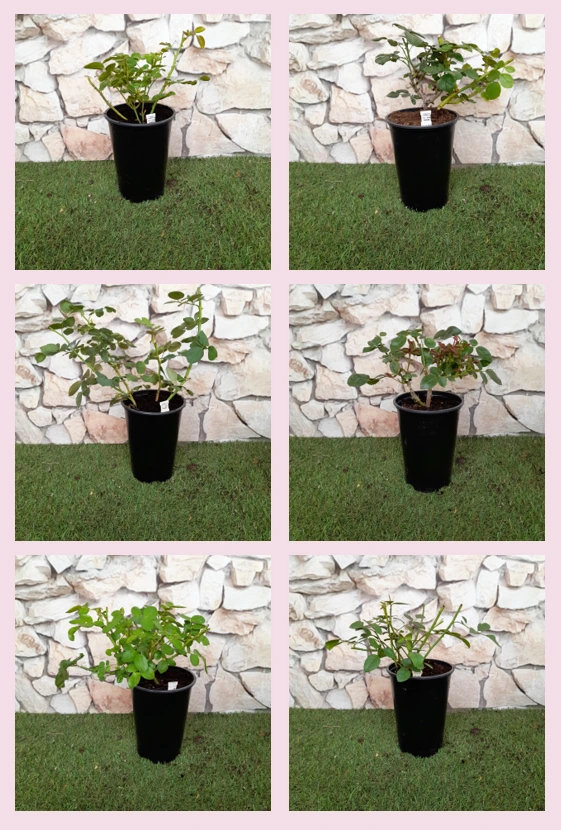
VIOLET VALEDA – violet-purple landscape shrub rose – De Ruiter
Imagine a sheltered coastal corner where you can sit with afternoon tea after a walk on the beach, surrounded by violet blooms that shrug off brisk sea breezes and salty air while feeling utterly at home in an ordinary family garden. Violet Valeda forms a compact, bushy shrub that fits easily into smaller beds or shingle borders, giving reliable colour from early summer onwards with simple, open flowers that delight both you and visiting pollinators. The maintenance is reassuringly minimal, with low feeding needs and light pruning, so you can enjoy its long season of flower and autumn hips rather than constant jobs. As an own-root rose in a practical 2‑litre pot, it establishes steadily in UK gardens – roots in the first year, fuller top growth in the second, then a settled, long‑lived display by the third – making it a dependable choice where coastal winds and heavy showers test more delicate plants.
Usage options
| Target area |
Reasoning |
| Small coastal flower bed by a veranda |
Compact, bushy growth keeps Violet Valeda neat in modest beds while its tolerance of salty, windy conditions means it copes where other roses struggle, giving a calm, low-effort focus beside seating for beginners. |
| Mixed family border in heavy garden soil |
The dense, fibrous root system of this own-root shrub anchors well and gradually builds a durable structure, suiting typical UK clay borders when planted with added drainage, ideal for time-pressed homeowners. |
| Informal low hedge along a path |
Planted at hedge spacing, its compact height and bushy habit give a soft, walk-height line of colour and autumn hips without demanding tight clipping, perfect for relaxed gardens used daily by families. |
| Large container on a sheltered balcony or terrace |
In a 40–50 litre pot with free-draining compost, Violet Valeda stays nicely proportioned, flowers freely and reshoots reliably from its own roots, providing long-term value for busy urban-gardeners. |
| Pollinator-friendly coastal-style planting |
Single, open flowers with exposed stamens offer easy nectar access, drawing bees and other beneficial insects throughout the flowering period, adding movement and life around seating areas for nature-minded gardeners. |
| Low-maintenance family play garden |
Good disease resistance and modest feeding and pruning needs keep care simple, so the shrub remains attractive even when gardening time is limited, fitting well into lived-in spaces for busy-parents. |
| Long-season colour anchor in a mixed bed |
Remontant flowering gives a generous second flush, while the colourful hips extend interest into autumn, ensuring the planting still feels composed when other perennials fade, appreciated by design-conscious enthusiasts. |
| Edging for productive or herb areas |
Abundant, vitamin C-rich hips in late season add practical harvest potential as well as structure, supporting a gentle kitchen- or herb-garden feel for creatively minded home-growers. |
Styling ideas
- Shingle-edge serenity – Combine with sea kale and dwarf Festuca along a gravelled, coastal-style path to echo beach hues – ideal for lovers of relaxed Cornwall- or Devon-inspired gardens.
- Violet tea corner – Plant beside a small bistro set with lavender and low thyme to create a scented windbreak for afternoon tea – suited to homeowners wanting easy elegance without fuss.
- Play-friendly hedge – Use as a low, informal hedge near lawns, weaving in Rudbeckia and ornamental grasses for soft movement – good for families needing resilient structure around play areas.
- Container jetty – In a 40–50 litre tub, underplant with trailing sea thrift and silvery foliage to frame a veranda or balcony – perfect for urban gardeners seeking a coastal feeling in limited space.
- Autumn hips border – Mix with Crocosmia ‘Lucifer’ and pink lupins so summer colour hands over to bright hips and seedheads – appealing to those who enjoy naturalistic, wildlife-friendly planting.
Technical cultivar profile
| Parameter |
Data |
| Name and registration |
Violet Valeda, Valeda Collection shrub rose, hybrid Rugosa, landscape bed rose; registered as RUIrj0110A, traded as Violet Valeda Valeda RUIrj0110A for consumer garden use. |
| Origin and breeding |
Bred and introduced by De Ruiter Innovations B.V., Netherlands; parentage unpublished but linked to ‘Snow Pavement’, ‘Louise Bugnet’ and ‘Short Track’; commercial introduction reported from 2019. |
| Growth and structural characteristics |
Compact, bushy shrub 60–85 cm tall and 50–75 cm wide with dense, glossy dark green foliage and moderate prickles; moderately self-cleaning, with spent blooms followed by decorative hips. |
| Flower morphology |
Single, flat flowers with 5–12 petals in small clusters, medium sized at roughly 4–7 cm across; remontant habit provides an abundant second flush after the main early-summer flowering. |
| Colour data and phenology |
Closed buds deep purplish-violet; flowers vivid cool violet, then mid-toned purple-lilac before softening to smoky mauve-lilac with a subtle silvery sheen; colour retention moderate to poor in strong sun. |
| Fragrance and aroma |
Moderately strong, classic rose-like fragrance detectable at close range in still air; scented enough for seating areas and paths without being overpowering near doors, windows or smaller balconies. |
| Hip characteristics |
Produces numerous spherical orange-red hips about 20–30 mm across; high vitamin C content and suitable for kitchen or craft use; main harvest period typically from September into October in the UK. |
| Resistance and winter hardiness |
Very hardy shrub rated RHS H7, tolerating approximately −37 to −34 °C and exposed sites; good heat and moderate drought tolerance; strong resistance to powdery mildew, black spot and rust. |
| Horticultural recommendations |
Best in sunny positions with well-drained soil; low feeding and pruning needs; planting distances from 50 to 90 cm depending on use, equating to roughly 2.8–3.2 plants per square metre in mass plantings. |
Violet Valeda offers compact, coastal-tolerant colour, pollinator-friendly single blooms and long-season hips, and as an own-root shrub it matures into a stable, low-effort feature worth considering for everyday gardens.