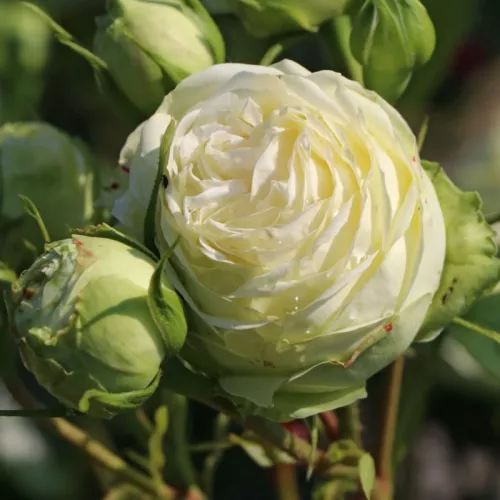
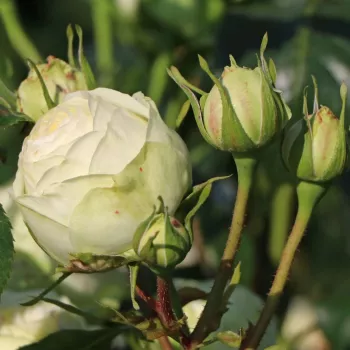
Mancera hybrid tea rose – pharmaROSA® ORIGINAL 2-litre own-root
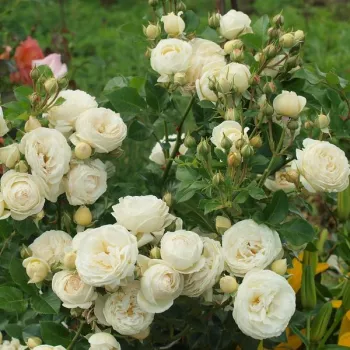
After a breezy coastal walk, Mancera settles calmly into your garden, its creamy blooms echoing seashell tones while handling blustery days and careful drainage in British clay soils. This compact hybrid tea forms a bushy, medium-height shrub, ideal where space is limited yet you still want a refined focal point near a veranda or seating area. Strong, long-lasting fragrance brings a soft, sweet-fruity note to your afternoon tea corner, while reliable repeat flowering keeps colour going from early summer well into autumn. Excellent disease resistance supports genuinely low-maintenance care, so you spend more time enjoying than pruning or spraying. As an own-root plant, it offers long-term stability, regenerating well from the base and suiting relaxed family gardens. In its first three years it focuses on roots, then shoots, then full ornamental impact, building a durable presence in your coastal-style space.
Usage options
| Target area |
Reasoning |
| Small coastal veranda container (40–50 L) |
Suited to larger containers of 40–50 litres, this compact hybrid tea delivers an elegant, upright presence without overwhelming a veranda. Its moderate height frames seating areas, giving shell-like cream blooms at eye level for relaxed evening views – ideal for beginners. |
| Shingle or gravel bed near the house |
The bushy, medium-sized habit anchors well in a sheltered shingle or gravel strip by the house, offering structure without excessive bulk. With thoughtful soil preparation for better drainage, it copes reliably with breezy, salt-tinged conditions along exposed British coasts – reassuring for homeowners. |
| Low-maintenance family front garden |
Strong resistance to black spot, powdery mildew and rust supports a genuinely low-intervention approach, useful where regular spraying is not realistic. A simple seasonal tidy and feeding regime is usually enough to keep foliage healthy and flowering consistent – perfect for busy owners. |
| Scented seating corner or tea spot |
Large, fully double blooms carry a strong, long-lasting sweet-fruity perfume with a subtle peppery note, creating a sensory highlight beside benches or small dining sets. Flowers are held at a convenient height to appreciate both their colour and fragrance – appealing to garden-lovers. |
| Long-season focal point in a mixed border |
Remontant flowering brings an early flush followed by generous repeats, so the plant remains visually relevant from early summer onwards. This extended display helps knit together herbaceous planting, filling gaps between perennials and maintaining a calm, creamy focus – ideal for planners. |
| Long-lived structural rose in family gardens |
As an own-root rose, it can regenerate naturally from its base, avoiding graft failures and prolonging its useful life in a settled planting scheme. Once established, it offers steady, predictable growth and ornamental value over many years with modest input – reassuring for families. |
| “Girly” coastal-style pastel scheme |
Delicate lemon–vanilla buds opening to cream with greenish tones harmonise with soft coastal palettes, pairing well with sea kale, Festuca and pale Lavandula. The shell-like tones bring a gentle, feminine feel without becoming overly bright or brash – attractive for stylers. |
| Wind-exposed yet sheltered-by-structure spots |
The moderately dense, glossy foliage and bushy frame help it stand up to everyday coastal breezes, especially where fences or buildings offer partial shelter. Good overall health reduces stress in such positions, making it a steady performer in real-world British weather – helpful for newcomers. |
Styling ideas
- Seaside-Veranda Nook – position Mancera in a 40–50 litre pot by a south- or west-facing railing, combining with low Festuca and a pale outdoor rug for a breezy tea corner – for time-poor veranda owners.
- Cream-Shell Border – weave Mancera through a narrow front border with sea kale and soft pink diascia, using its repeat blooms as a calm cream anchor – for lovers of understated elegance.
- Pastel-Gravel Courtyard – plant in a gravel bed with lavender and Hakonechloa macra, allowing the creamy flowers to glow against stone and golden grass movement – for fans of Mediterranean-coastal moods.
- Fragrant-Reading Spot – place a single shrub near a bench, underplanted with low thyme, so strong fragrance drifts over while keeping maintenance light – for evening readers and tea drinkers.
- Soft-Hedge Rhythm – repeat plants at 55 cm spacings along a path to form a low, scented line of cream flowers backed by Italian clematis on supports – for structured yet gentle layouts.
Technical cultivar profile
| Parameter |
Data |
| Name and registration |
Mancera, hybrid tea rose type; current trade name Mancera Hybrid tea rose pharmaROSA®; hybrid tea group; exhibition data not specified; meaning and former names not documented. |
| Origin and breeding |
Discovered in Germany in 2010 and developed by PharmaRosa®; introduced by PharmaRosa® Ltd. (Hungary); precise registration and introduction years not recorded in available documentation. |
| Growth and structural characteristics |
Bushy, medium-height shrub reaching about 95–130 cm tall and 80–110 cm wide; moderately dense, glossy mid-green foliage; moderately thorny stems; suitable for specimen, small groups and low hedging. |
| Flower morphology |
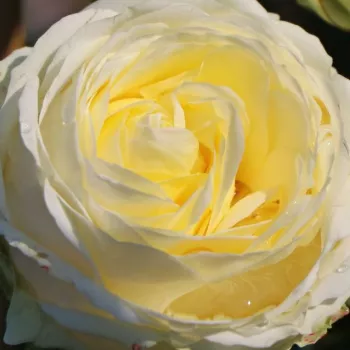
Hybrid tea style, fully double rosette blooms with 26–39 petals; large flowers around 2.75–3.95 inches across, usually in clusters of three to five per stem; remontant with a generous second flush. |
| Colour data and phenology |
Cream flowers with soft lemon–vanilla centres fading to greenish cream and finally uniform cream, edges sometimes beige; ARS DP, RHS 62A outer and 58B inner; good colour retention on the plant. |
| Fragrance and aroma |
Strong, long-lasting fragrance with a sweet-fruity rose character and a subtle peppery nuance; scent noticeable at close to moderate distance, making it well suited to seating areas and paths. |
| Hip characteristics |
Produces hips only in small quantities; rounded fruits around 10–16 mm in diameter; colour and precise shape are not fully documented; hips are usually secondary to the plant’s ornamental flowering role. |
| Resistance and winter hardiness |
Shows good resistance to powdery mildew, black spot and rust under typical garden conditions; hardy to approximately −26 to −23 °C (RHS H7, Swedish Zon 4, USDA 5b), appropriate for most UK regions. |
| Horticultural recommendations |
Low-maintenance requirements; benefits from well-drained, improved clay or loam and regular feeding; recommended spacing about 65 cm for mass planting, 55 cm for hedging and 100 cm as a specimen. |
Mancera Hybrid tea rose pharmaROSA® brings repeat creamy blooms, strong fragrance and durable, disease-resistant own-root growth to compact coastal-style gardens, making it a thoughtful, long-lived choice if you value beauty with minimal complication.