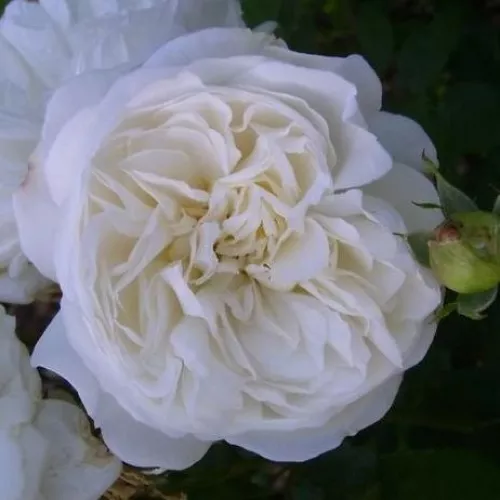
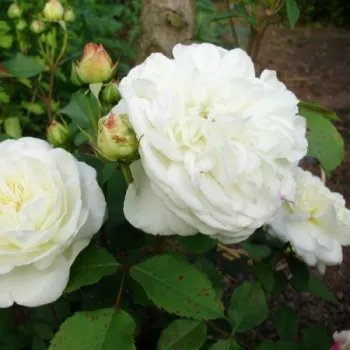
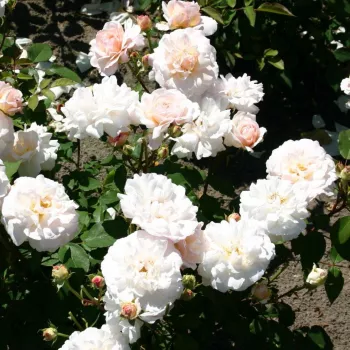
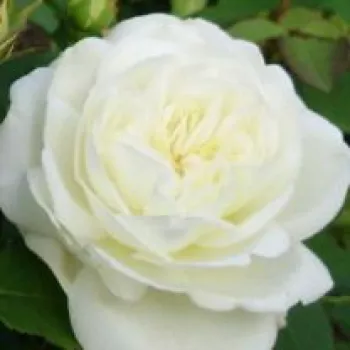
WEISSE GRUSS AN AACHEN™ – white bedding floribunda rose
Imagine sitting down to coastal tea, sheltered from the breeze by a compact curtain of white blooms: WEISSE GRUSS AN AACHEN™ brings softly cupped flowers that open ivory‑cream and settle into clear white, giving your garden a calm, elegant glow from early summer onwards. Its naturally compact, bushy habit is easy to place in small beds, shingle strips or a 40–50 litre container by the veranda, where you can enjoy medium‑strength, classic rose fragrance on salty, windy days with sunlight glancing off the sea. Own‑root planting supports longevity and reliable regrowth after harsh winters, while its bushy, leafy structure helps hold the soil and stay steady in blustery conditions. With medium maintenance needs and moderate disease resistance, it suits gardeners who prefer straightforward care routines over constant spraying, yet still want a refined look. Over time it settles in gently – first building roots, then stronger shoots, and by the third year offering its full ornamental value as a quietly impressive coastal companion rose.
Usage options
| Target area |
Reasoning |
| Small coastal front garden bed |
The compact, bushy habit fits neatly into narrow beds by front paths or drives, giving ordered structure without overwhelming limited space, while own‑root vigour supports long, reliable performance for busy homeowners who prefer minimal replacement planting beginner‑friendly |
| Shingle strip or seaside border |
The dense foliage and steady framework cope well with brisk breezes and help keep light, coastal soils in place, offering a calming white accent and dependable flowering even where wind and salty, rainy weather are everyday realities coastal‑style‑lover |
| 40–50 litre container on veranda or balcony |
Its moderate height and rounded outline make it ideal for a single large pot, where regular watering is straightforward and the flowers can be enjoyed up close from a chair or table over multiple summers thanks to its long‑lived, own‑root character urban‑veranda‑owner |
| Family seating area windbreak |
Planted in a short row or loose hedge, the fairly dense, leafy framework helps filter the prevailing wind, adding comfort around seating and play spaces while the pale blooms reflect light and keep the area feeling fresh and bright family‑garden‑owner |
| Mixed flower border with perennials and grasses |
The refined white flowers blend easily with coastal plants such as Festuca, sea kale or dwarf Miscanthus, giving a soft, maritime look while the repeat flowering ensures the rose continues to contribute structure and colour between perennial flushes design‑conscious‑gardener |
| Partially shaded side passage or courtyard |
Its tolerance of partial shade means it will still flower and keep a tidy shape where sun is filtered by neighbouring houses or fences, offering a light, airy feel instead of bare walls and making practical corners more welcoming time‑pressed‑homeowner |
| Low, easy‑reach flower bed for light tending |
With a height around 60–85 cm and few thorns, tending, deadheading and occasional cleaning of spent blooms can be done comfortably and safely, which suits gardeners who appreciate gentle, unrushed tasks rather than strenuous work hobby‑gardener |
| Long‑term planting in established family garden |
Own‑root growth offers a stable framework that regenerates well after pruning and winter, so the rose can mature in place over many years, evolving from initial root building to full ornamental presence without frequent replacement long‑term‑planner |
Styling ideas
- Coastal veranda pot – place a single plant in a 40–50 litre clay container with pale gravel mulch to echo shingle beaches – ideal for coastal veranda owners wanting calm white flowers beside outdoor seating.
- Soft white hedge – line a low path with repeated plants at hedge spacing to form a gentle, flowering boundary – suitable for family gardens needing subtle wind‑filtering without tall, solid fencing.
- Shingle ribbon border – mix with sea kale, dwarf Miscanthus and blue Festuca along a drive for a breezy, seaside feel – appeals to design‑minded gardeners recreating Cornish or Devon coastal moods.
- Part‑shade courtyard – combine with mock orange and lilac around a small terrace, where the white blooms and fragrance lighten shaded corners – for homeowners turning overlooked side yards into calm seating spaces.
- Compact family bed – set as a focal clump in a small front bed with low lavender edging to add scent and structure across the season – perfect for beginners wanting easy structure and colour near the front door.
Technical cultivar profile
| Parameter |
Data |
| Name and registration |
Weisse Gruss an Aachen (Weisse Gruss an Aachen™), floribunda bed rose; ARS exhibition name identical; unregistered sport of ‘Gruss an Aachen’ used mainly in garden and bedding contexts. |
| Origin and breeding |
Bred by Max Vogel in Germany around 1944 as a sport of ‘Gruss an Aachen’; introduced in the mid‑1940s, with precise breeder records limited but long established in European gardens. |
| Growth and structural characteristics |
Low, bushy and compact shrub, typically 60–85 cm high and 50–70 cm wide, with dense, dark green, slightly glossy foliage and relatively few prickles, forming a rounded, orderly bedding rose. |
| Flower morphology |
Full, many‑petalled, cup‑shaped flowers, usually in small clusters; large bloom size for a bed rose, approximately 7–10 cm, with remontant flowering and a particularly generous second flush in suitable seasons. |
| Colour data and phenology |
Pure white overall with a soft creamy centre; buds greenish‑white to ivory, opening to white with slight ivory‑cream, sometimes gently cream‑toned in strong sun; ARS white; RHS 155C outer, 155D inner. |
| Fragrance and aroma |
Clearly perceptible, medium‑strength classic rose scent, noticeable around seating areas in still weather; strongly double blooms limit pollinator access, so it is grown mainly for ornamental fragrance rather than wildlife value. |
| Hip characteristics |
Hip set is usually sparse due to very full flowers; when present, produces small, spherical, red hips (RHS N45A), around 7–10 mm in diameter, offering occasional fine detail rather than a prominent autumn display. |
| Resistance and winter hardiness |
Hardy to approximately −21 to −18 °C (RHS H7, USDA 6b, Swedish zone 3); tolerates normal summer heat but needs watering in prolonged drought; disease resistance moderate to black spot, mildew and rust. |
| Horticultural recommendations |
Suited to beds, borders, low hedging and larger containers; plant around 35–65 cm apart, in well‑drained but moisture‑retentive soil; partial shade tolerated; deadhead and prune lightly to maintain shape and flowering. |
WEISSE GRUSS AN AACHEN™ offers compact, fragrant, white flowering on a long‑lived own‑root framework, making it an easy, enduring choice for relaxed coastal or family gardens; consider it if you value calm beauty without complicated upkeep.