WEKSMOPUR – plum-lilac bedding floribunda rose - Carruth
Imagine settling with a mug of tea behind a living rose windbreak, the air carrying a citrusy, spicy perfume that feels as bracing as the sea breeze after collecting shells on a Cornish beach. This compact floribunda slips easily into small coastal gardens and verandas, coping well with blustery weather and salt‑tinged air while rewarding you with rich, plum‑lilac blooms from early summer onwards. Its remontant flowering keeps colour returning in waves, while glossy foliage and naturally resistant health keep maintenance pleasantly light. As an own‑root rose, it builds longevity and stability below ground, so once planted in good drainage it will quietly anchor itself and mature into a reliable feature. Over the first three seasons it develops from focused roots to stronger shoots and, by year three, full ornamental impact, giving you lasting coastal‑garden ease.
Usage options
| Target area | Reasoning |
|---|
| Small coastal flower bed near a seating area |
The compact, bushy habit stays neat in limited spaces yet carries generous clusters of plum‑lilac flowers at eye level, ideal beside a bench or bistro set in a family garden by the sea where salt‑tinged winds are common – perfect for the time‑pressed beginner. |
| Low, fragrant hedge along a path or drive |
Planted at hedge spacing, the uniform height and dense foliage knit into a low boundary that softens hard edges while releasing strong, spicy‑citrus scent as you pass, giving structure and perfume without complex clipping for the busy homeowner. |
| Feature rose in a 40–50 litre veranda container |
In a generous pot, its compact root system and good health deliver reliable flowering on a sheltered coastal veranda; a 40–50 litre container balances moisture and drainage, reducing watering fuss and overwinter worries for the balcony‑loving gardener. |
| Mixed coastal border with ornamental grasses |
The rich plum‑lilac blooms contrast beautifully with silver and blue grasses, while the plant’s naturally strong disease resistance means it keeps its dark, glossy foliage through changeable, windy weather, suiting relaxed, low‑spray schemes for the eco‑minded family. |
| Season‑long colour anchor in a shingle garden |
Repeat flowering provides recurring waves of colour between spring perennials and late‑season grasses, so the bed never feels bare; the sturdy framework and own‑root resilience help it settle permanently into well‑drained shingle for the long‑term‑planning planner. |
| Cut‑flower corner by the back door |
Clustered, long‑lasting blooms with a strong, characterful scent make this rose ideal for informal cutting; planting it close to the house keeps stems within arm’s reach, offering easy, everyday pickings for the scent‑loving enthusiast. |
| Low‑maintenance front‑garden focal point |
With naturally high resistance to key rose diseases, upkeep is mostly limited to basic watering and a light annual prune, making it a dependable focal plant that looks looked‑after even when life is busy for the hands‑off owner. |
| Family play‑area edge or lawn corner |
The moderately compact size, sparse prickles and steady, repeat flowering create a colourful but manageable boundary near lawns or play areas, adding interest without dominating the space or work schedule for the child‑focused household. |
Styling ideas
- Coastal Veranda Nook – Place WEKSMOPUR in a 50 litre container with blue Festuca and a small lavender, adding a bistro set for sheltered evening tea – ideal for seaside veranda owners.
- Shingle Drift Bed – Dot plants through a shingle area with sea kale and low grasses, letting plum‑lilac blooms rise from the stones – suited to relaxed coastal‑style gardeners.
- Fragrant Path Edge – Line a short path at 50 cm intervals, underplant with thyme between stepping stones, and enjoy the strong scent as you brush past – perfect for scent‑seeking families.
- Compact Colour Corner – Combine with dwarf asters and feather reed grass in a small triangular bed to keep interest from summer to autumn – good for small‑plot homeowners.
- Easy Cut‑Flower Row – Plant a simple row near the back door, with open space in front for access, to clip scented stems quickly for the kitchen – great for busy beginners.
Technical cultivar profile
| Parameter | Data |
|---|
| Name and registration |
Floribunda bedding rose, registered as WEKsmopur, marketed as Ebb Tide / WEKSMOPUR, bush rose floribunda type suitable for garden and container use in family gardens. |
| Origin and breeding |
Bred by Thomas F. Carruth (USA, 2001) from complex floribunda and hybrid tea lines including ‘Sweet Chariot’, ‘Blue Nile’ and Rosa soulieana derivatives; introduced by Weeks in 2006. |
| Awards and recognition |
Certificate of Merit at the National Rose Trial Garden of Australia (2005) and Most Fragrant Rose at the Rose Hills International Rose Trials, United States (2011). |
| Growth and structural characteristics |
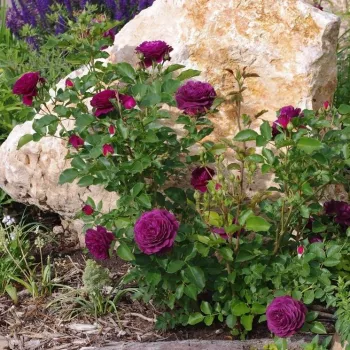
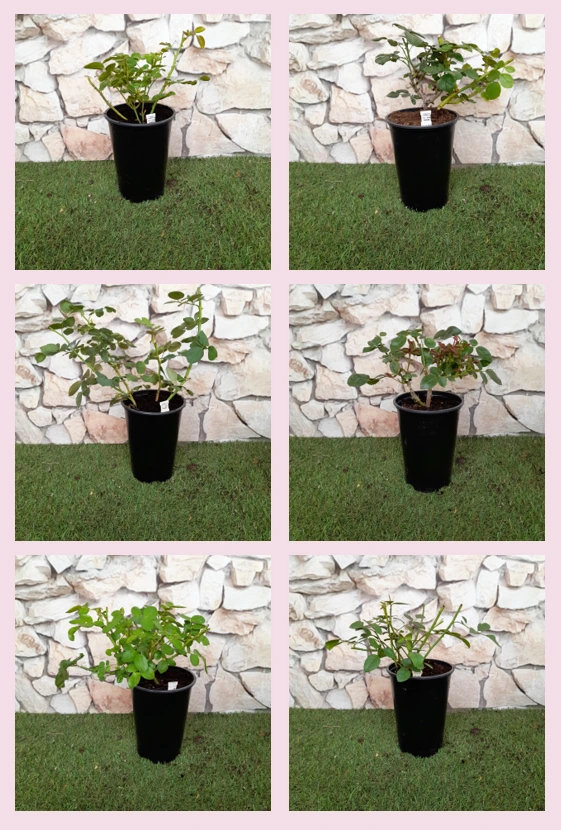
Compact, bushy floribunda to around 60–85 cm high and 50–70 cm wide, with dense, dark green glossy foliage and relatively sparse prickles, forming tidy, low bedding or edging plantings. |
| Flower morphology |
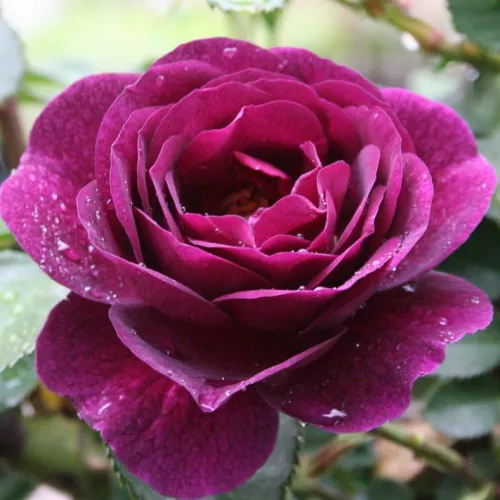
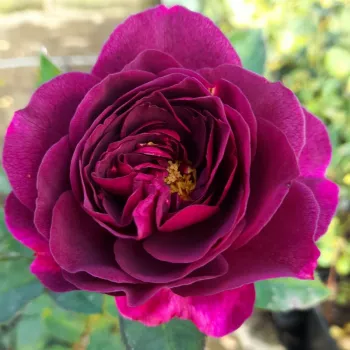
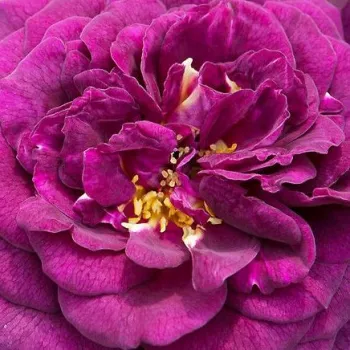
Clusters of large, double, cup-shaped blooms, typically 26–39 petals, borne 1–5 per stem; remontant, producing an abundant second flush and further repeat waves in favourable conditions. |
| Colour data and phenology |
Deep plum‑lilac with a smoky tone, RHS 59A outer and 71A inner; buds dark plum purple, blooms deepen in cooler weather and fade somewhat in hot sun, giving varied purple‑brownish shades over time. |
| Fragrance and aroma |
Strong and clearly perceptible fragrance with distinct citrus and spicy notes; double flowers still show accessible stamens and offer moderate attractiveness to visiting garden pollinators. |
| Hip characteristics |
Forms spherical orange‑red hips, about 12–16 mm, in moderate quantities if spent flowers are left; hips add late‑season colour and potential wildlife interest in informal garden plantings. |
| Resistance and winter hardiness |
Rated resistant to powdery mildew, black spot and rust; hardy to about −21 to −18 °C (RHS H7, USDA 6b, Swedish zone 3), performing well in typical UK winters with standard care. |
| Horticultural recommendations |
Best in sunny positions with well‑drained soil; plant 50–60 cm apart in beds, 100 cm as specimens, and use at least 40–50 litre containers; keep evenly watered in heat and deadhead for tidiness. |
WEKSMOPUR brings compact, long‑season plum‑lilac colour, strong fragrance and durable, own‑root resilience to small coastal or family gardens, a thoughtful choice if you’d like an easy yet characterful rose.