Diamond Eyes – miniature dark‑purple rose for coastal verandas
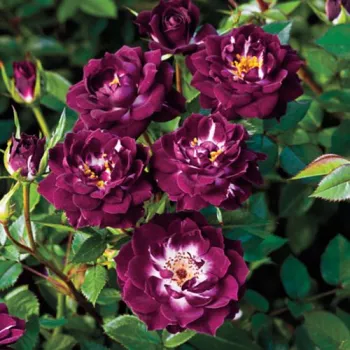
Diamond Eyes brings a touch of seaside theatre to small gardens and verandas, its velvety purple petals and white “eye” glinting like shells on shingle. Compact and well-branched, it suits sheltered corners where windbreaks matter, thriving in containers and raised beds with reliable drainage. Strong, spicy fragrance adds a refreshing note to evening tea outdoors, while repeat flowering keeps colour coming from early summer onwards. As an own-root rose it offers reassuring longevity, steady shape and easy regrowth after pruning or coastal weather. In a 40–50 litre pot it settles quickly, the first year quietly building roots, the second year bushing up with more shoots, and by the third year delivering its full ornamental show.
Usage options
| Target area |
Reasoning |
| Coastal veranda container (40–50 litre) |
A naturally compact habit and dense, glossy foliage make Diamond Eyes ideal for a statement pot on a Cornish or Devon veranda, where a heavier container helps in blowy weather for those who enjoy low-effort impact. |
| Small family garden patio pot |
Its dwarf height fits easily beside outdoor seating, giving children and adults alike close-up views of the dramatic dark blooms without overgrowing the space for those who like comfortable proximity. |
| Low edging along a sheltered path |
Short, even growth allows a neat edging line that will not flop into walkways, with clusters of flowers drawing the eye down paths or around corners for those who appreciate orderly borders. |
| Feature plant near a seating area |
The strong spicy scent carries well at short distance, so one or two plants near a bench or table give a vivid fragrance experience without demanding extensive maintenance for those who prioritise scented relaxation. |
| Mixed planting with lavender and grasses |
The intense purple-and-white flowers contrast beautifully with silver foliage and fine grasses, while its steady repeat blooming anchors summer displays in breezier gardens for those who favour harmonious colour. |
| Urban balcony or roof terrace |
Good performance in containers and moderate heat tolerance suit warmer, built-up sites, provided you water during dry spells, offering reliable colour where space is at a premium for those seeking city-friendly planting. |
| Low, informal hedge in front garden |
Planted at 35–45 cm centres, its bushy dwarf structure forms a low ribbon of purple along drives or boundaries, easy to trim and keep tidy over years for those wanting manageable structure. |
| Long-term own-root specimen |
As an own-root rose it matures steadily, gaining character each season and recovering well from pruning or weather, giving stable ornamental value over many years for those who value enduring planting. |
Styling ideas
- Shingle Chic – set Diamond Eyes in a 50 litre clay pot on coastal-style gravel with sea kale and blue fescues – ideal for veranda owners wanting a relaxed seaside feel.
- Perfumed Corner – flank a small bench with two containers, underplant with Calamintha and white violas – suited to those who cherish intimate evening scent.
- Mini Hedge – create a low, 3–5 m run along a path, interspersed with dwarf grasses – for gardeners aiming for subtle structure without heavy pruning.
- Urban Jewel – combine with narrow-leaved lavender in a large trough for a high-contrast, low-maintenance city balcony – for busy homeowners needing reliable colour in little space.
- Collector’s Accent – place a single specimen near a doorway, backed by dark evergreens to frame the white “eye” – for enthusiasts who enjoy distinctive, show-bench-quality blooms.
Technical cultivar profile
| Parameter |
Data |
| Name and registration |
Miniature rose, commercial type dwarf mini; registered as WEKwibypur, marketed as Diamond Eyes; Mini – dwarf rose collection; ARS exhibition mini rose, authenticity verified for vivianaROSE ORIGINAL. |
| Origin and breeding |
Bred by Tom Carruth (United States, 2011) for Weeks Roses; parentage ‘Wild Blue Yonder’ × [(seedling × ‘Baby Love’) × ‘Night Owl’]; registered 2015 with US Plant Patent PP26,202. |
| Awards and recognition |
American Rose Society Award of Excellence (2013) in the miniature class, reflecting combined merit in garden performance, bloom quality and suitability for container or edging display. |
| Growth and structural characteristics |
Dwarf, compact shrub to about 45–55 cm high and wide, evenly branched with dense, glossy, dark green foliage and moderate prickles; naturally forms a neat mound without complex pruning. |
| Flower morphology |
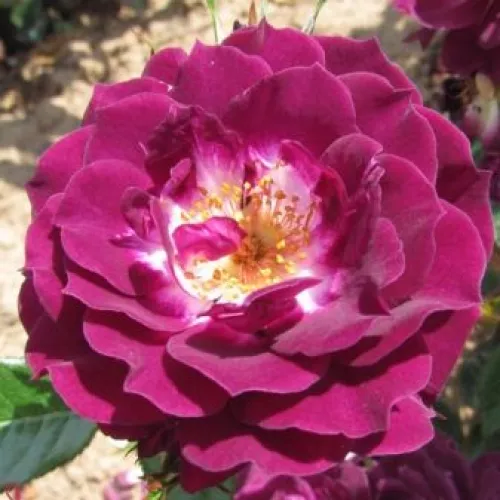
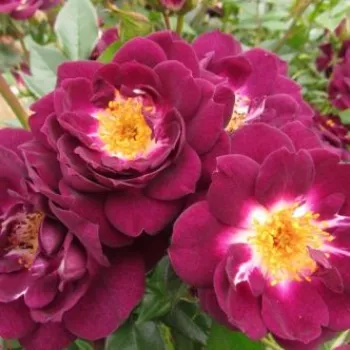
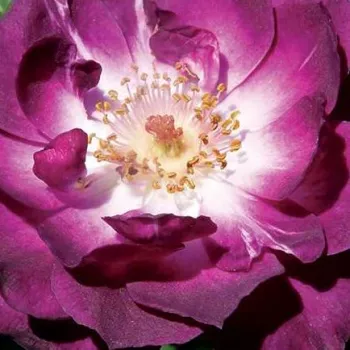
Semi-double, flat flowers with 13–25 petals, borne mainly in clusters on short stems; small bloom size (around 1–3 cm) yet produced freely, with a good repeat flush after initial flowering. |
| Colour data and phenology |
Velvety dark purple to blackish-purple petals with a clear cream-white central eye and yellow stamens; colour lightens slightly in strong heat and deepens in cooler weather, maintaining good definition. |
| Fragrance and aroma |
Strong spicy fragrance, noticeable at close range and drifting slightly in still air; distinctive scent character considering bloom size, adding sensory value around seating areas and paths. |
| Hip characteristics |
Rose-hip set usually slight; where present, small spherical red hips about 6–8 mm across may appear late season, offering modest additional interest without significant self-seeding issues. |
| Resistance and winter hardiness |
Hardy to about −32 to −29 °C (RHS H7, USDA 4b, Swedish zone 5); medium resistance to black spot, powdery mildew and rust, requiring observation and timely treatment in high-pressure seasons. |
| Horticultural recommendations |
Suited to containers, borders, edging, low hedges, specimens and urban spaces; prefers well-drained soil, regular watering in dry spells and light deadheading to maintain continuous flowering. |
Diamond Eyes offers compact growth, repeat flowering and a strong spicy scent in an own-root form that promises lasting, steady performance, making it a thoughtful choice for long-lived containers or small gardens.