WHITE JACQUES CARTIER – white historic perpetual hybrid rose - Pedersen
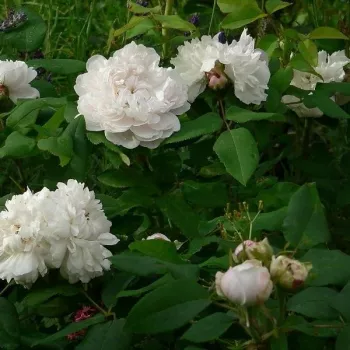
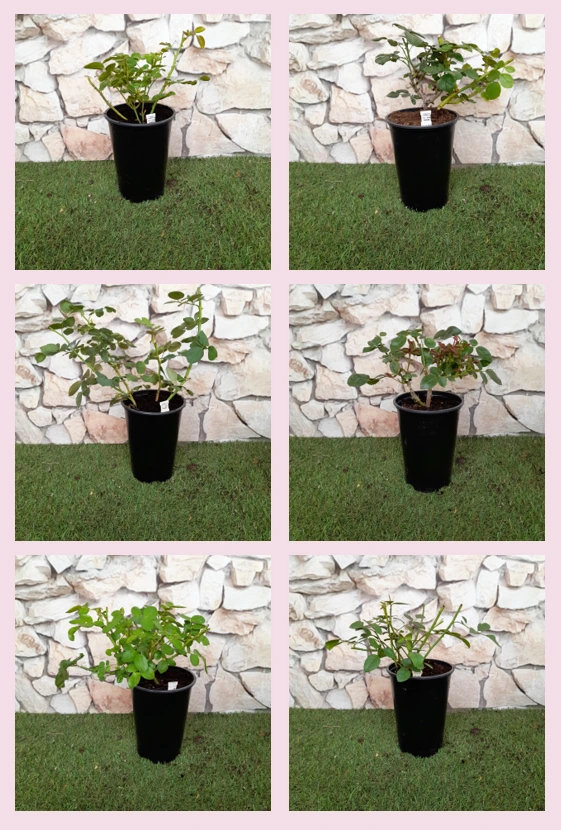
Imagine returning from a breezy coastal walk to sit with tea, wrapped in the refreshing perfume of a white heirloom rose that copes calmly with salty air and brisk seaside winds while forming a steady backdrop to shingle and pots. WHITE JACQUES CARTIER brings romance to compact family gardens and verandas, its bushy, upright habit suiting sheltered corners where you can enjoy its fragrance at close range. As an own-root plant it offers reassuring longevity, quietly rebuilding itself after harsh winters or pruning, and rewarding light, regular care with repeat flushes of flowers. It is well adapted to UK conditions, from mild Cornish bays to cooler inland plots, and in a 40–50 litre container its structure remains tidy and dense. Plant once, water and feed sensibly, allow the roots to settle in the first year, shoots to build in the second, and by the third enjoy the full character of this historical rose as it becomes a permanent, gently wind-sheltering presence in your outdoor space.
Usage options
| Target area | Reasoning |
|---|
| Small coastal front garden border |
Bushy, upright growth and dense foliage make a soft, low windbreak that still feels airy in a small coastal plot, while its own-root longevity suits gardeners wanting a once-and-done planting; ideal for the time-poor beginner. |
| Veranda pot, 40–50 litre container |
Performs reliably in a sizeable container where its compact spread and tidy outline frame seating areas, and own-root growth copes well with occasional neglect, fitting busy lifestyles on exposed verandas near the sea; perfect for the balcony homeowner. |
| Part-shade side path or narrow bed |
Tolerates partial shade, so it can brighten the less sunny side of a house with luminous white rosettes and strong scent, creating a cool, fresh feel after hot days without demanding complex maintenance; suited to the practical gardener. |
| Historic-style focal shrub in a family garden |
Its old-rose heritage, rosette blooms and classic perfume give instant period character without intricate pruning, allowing you to enjoy a traditional look in a modern family garden with straightforward seasonal care; attractive for the heritage-loving collector. |
| Mixed border with perennials in heavy but drained soil |
Works well among perennials in typical UK clay soils once basic drainage is ensured, bringing repeat white flowering and structure that anchor looser planting, while own-root resilience supports long-term design plans; ideal for the planning-focused DIYer. |
| Low, scented hedge along a terrace |
Recommended planting distances allow it to knit into an even, low hedge whose dense foliage gives gentle enclosure and privacy, with fragrant white blooms softening hard landscaping and paving; appealing to the outdoor-living family. |
| Cutting patch or picking corner |
Large, very double blooms on bushy stems provide traditional, scented stems for the house; own-root plants re-sprout well after cutting, keeping the patch productive over many seasons; suitable for the scent-loving stylist. |
| Coastal-style shingle planting with sea-hardy companions |
Forms a stable visual anchor among low grasses and coastal perennials, coping well with brisk onshore winds and light salt spray while maintaining its shape and ornamental value over time; designed for the coastal-garden enthusiast. |
Styling ideas
- Seaside veranda nook – Place one specimen in a 40–50 litre pot beside a bistro set, underplanting with creeping thyme to soften the rim and echo shingle textures – for relaxed coastal veranda users.
- White-on-green calm – Combine with dark green grasses and low mounds of Festuca for a restrained, wind-brushed palette that highlights the rose’s pure white rosettes – for minimal, easy-care gardeners.
- Historic cottage strip – Line a short path with spaced plants, weaving in Dianthus plumarius and Lychnis viscaria ‘Alba’ to create an old-rose atmosphere with gentle structure – for lovers of period charm.
- Shaded side retreat – Use in a part-shade border near a bench, pairing with ferns and pale perennials so the white blooms and strong fragrance lift a cool, tranquil corner – for evening readers outdoors.
- Family cutting corner – Group a few shrubs at recommended spacing beside veg beds, allowing easy access for picking scented stems while keeping a neat, upright outline – for practical home florists.
Technical cultivar profile
| Parameter | Data |
|---|
| Name and registration |
White Jacques Cartier is a historical Hybrid Perpetual shrub rose marketed as WHITE JACQUES CARTIER – white historic perpetual hybrid rose - Pedersen, approved by ARS under the same exhibition name. |
| Origin and breeding |
A white-colour mutation of ‘Jacques Cartier’, bred by Knud Pedersen in Denmark around 2001; commercial introduction followed in the early 2000s, precise registration details remaining unclear. |
| Growth and structural characteristics |
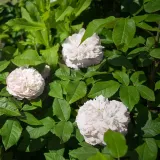
Bushy, upright shrub reaching about 80–130 cm high and 70–120 cm wide, with dense, matte dark green foliage and moderate prickles; poor self-cleaning, so spent blooms benefit from regular deadheading. |
| Flower morphology |
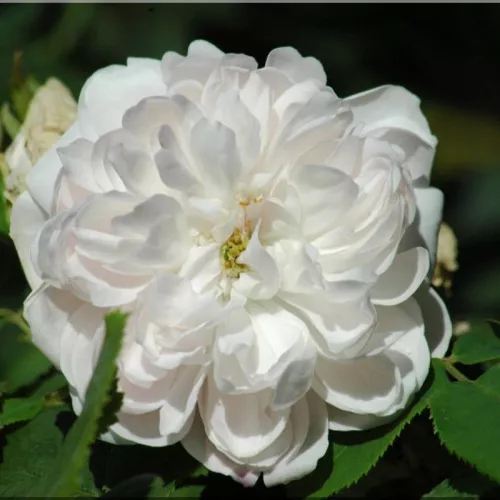
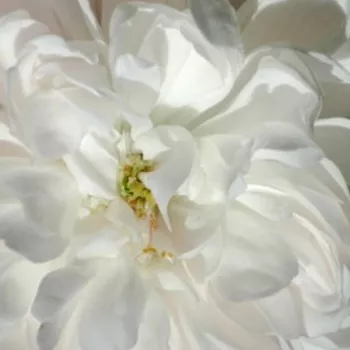
Large, very double rosette blooms with more than 40 petals, usually borne singly on stems; remontant with a good first flush and lighter repeat flowering later, suitable for cutting and close-up viewing. |
| Colour data and phenology |
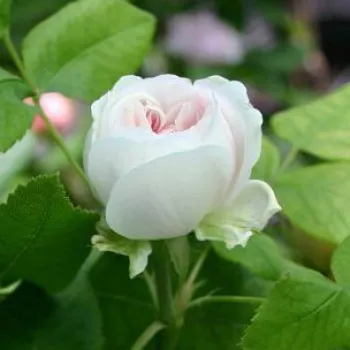
Predominantly pure white with a silky sheen, RHS 155D outer and 155C inner; buds show hints of pale pink, warm weather giving creamy tones and occasional browned petal edges in strong sun. |
| Fragrance and aroma |
Very strongly scented with a full old-rose character that easily fills a small garden space; flowers have limited pollinator value due to the densely double form obscuring most stamens. |
| Hip characteristics |
Forms moderate numbers of small, spherical red hips around 12–19 mm across, adding quiet late-season interest but generally secondary to the display of repeat white blooms. |
| Resistance and winter hardiness |
Hardy to about −29 to −32 °C (USDA 4b, RHS H7) yet disease-prone, showing moderate susceptibility to powdery mildew and black spot and high sensitivity to rust, needing regular plant protection. |
| Horticultural recommendations |
Best in fertile, moist but well-drained soil with regular watering, feeding and fungicide where needed; planting distances from 55–100 cm depending on use, and partial shade is well tolerated in UK gardens. |
WHITE JACQUES CARTIER offers classic fragrance, compact structure and long-lived own-root resilience, making it a thoughtful choice for a quietly elegant, manageable rose in your garden.