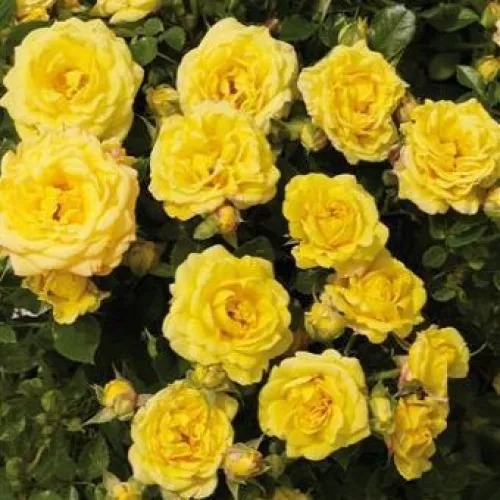
GLAUCA CARMENETTA – mauve-pink park rose - Preston
Imagine sipping tea in a sheltered coastal corner while mauve blooms sway above shingle and sea kale: Glauca Carmenetta settles in reliably, coping with breezy weather and carefully managed drainage in heavier soils. This tall, bushy shrub forms an elegant, arching hedge or standalone feature, its matt grey‑green foliage giving a softly windbreak-like backdrop for once‑a‑year, profuse flowering. The single, lilac‑tinted flowers open in loose clusters, fall cleanly, and leave neat, dark hips where formed, so there is little to tidy. As an own‑root rose it builds longevity, regenerates steadily and, over three seasons, moves from establishing roots to stronger shoots and finally full impact with minimal intervention.
Usage options
| Target area | Reasoning |
|---|
| Coastal wind-filter hedge along a boundary |
The tall, arching habit and dense grey‑green foliage make a natural, softly permeable screen, ideal for breaking salt‑laden breezes without feeling oppressive; maintenance remains modest for busy coastal homeowners. |
| Feature shrub in a small front garden |
Used as a single specimen, its height and elegant form draw the eye without demanding intricate pruning, giving structure and seasonal focus that suits time‑pressed beginners. |
| Loose, informal family-garden backdrop |
Planted at the rear of a border, it forms a relaxed green wall with one generous flush of blossom, then settles into foliage interest, asking little more than occasional checks from casual gardeners. |
| Urban, nutrient-poor or semi-shaded plots |
Bred with robust species parentage, it tolerates drier, slightly undernourished soils and partial shade, provided air movement is decent, supporting reliable growth for city garden owners. |
| Low-input park and communal planting |
Its once‑flowering cycle, good self‑cleaning and strong framework suit areas where routine pruning and deadheading must stay simple for estate and facility managers. |
| Coastal shingle bed with sea-kale and grasses |
Combining salt‑tolerant planting and thoughtful drainage, it stands up well to exposed, breezy sites while providing colour above gravel, complementing sea kale and grasses for coastal‑style enthusiasts. |
| Wildlife-friendly mixed hedge |
The single flowers and occasional dark red hips offer gentle seasonal resources, while the sturdy, arching branches weave readily with other shrubs for nature‑minded households. |
| Large containers on sheltered verandas |
In a 40–50 litre pot with good drainage, it gives architectural height and seasonal blossom on balconies or verandas, needing only straightforward watering and shaping from container gardeners. |
Styling ideas
- Coastal-Veranda Screen – position in a 40–50 litre container against railings, underplant with sea kale and blue Festuca for a soft, maritime veil – ideal for balcony and veranda owners.
- Shingle-Romantic Strip – weave through a narrow shingle border with lavender and ornamental alliums to echo mauve tones and create a breezy, cottage‑meets‑coast feel – suited to relaxed front gardens.
- Family-Hideaway Hedge – plant as a loose boundary hedge behind a play lawn, letting the arching stems form a calm, protective green backdrop – good for young families wanting privacy without fuss.
- Urban-Quiet Corner – combine with drought‑tolerant perennials in a semi‑shaded city plot, using its height to frame a bench and provide a cool, lilac‑tinted focus – perfect for compact town gardens.
- Pollinator-Path Edge – mix into a wildlife hedge by a garden path, pairing with berrying shrubs so flowers, foliage and hips guide the eye along the route – attractive for wildlife‑minded walkers.
Technical cultivar profile
| Parameter | Data |
|---|
| Name and registration |
Shrub rose, botanical park type; current trade name Glauca Carmenetta, ARS exhibition name Carmenetta; unregistered cultivar originating in specialist collections, verified premium authenticity. |
| Origin and breeding |
Bred by Isabella Preston at Agriculture Canada’s Central Experimental Farm, Ottawa; Rosa glauca × Rosa rugosa cross introduced in 1923, reflecting early hardy shrub rose development for cold climates. |
| Growth and structural characteristics |
Tall, bushy shrub 240–360 cm high and 160–260 cm wide, with upright, arching branches and moderately dense, matt grey‑green foliage; moderately thorny stems form a durable, long‑lived framework. |
| Flower morphology |
Single, flat flowers with 5–12 petals, small size in loose clusters; non‑remontant once‑flowering display, good self‑cleaning as petals drop and occasional hips remain for a neat overall appearance. |
| Colour data and phenology |
Medium‑light mauve‑pink with subtle lilac cast; buds deep and cool‑toned, opening to soft pastel pink that fades gently in strong sun; overall effect is fresh, cool and harmonious in coastal light. |
| Fragrance and aroma |
Mild, restrained scent of soft, elegant character; not overpowering near seating areas, but lends a gentle rose note that blends discreetly with other garden fragrances on sheltered terraces. |
| Hip characteristics |
Sparse but decorative hips; when produced, they are small, spherical and dark red, around 12–18 mm in diameter, adding subtle late‑season colour against the cool grey‑green foliage backdrop. |
| Resistance and winter hardiness |
Exceptionally hardy to about −40 °C (RHS H7, USDA 3a); moderate tolerance of heat and drought with irrigation in extremes; disease resistance moderate, with some susceptibility to black spot in damp shade. |
| Horticultural recommendations |
Best in well‑drained soil with sun or light shade; spacing 190–300 cm depending on hedge or specimen use; plant deeply on own roots, water to establish, then keep pruning and feeding straightforward. |
Glauca Carmenetta offers tall, low-input structure, cool mauve-pink blossom and enduring shrub strength in own-root form; consider it where you want long-lived, quietly reliable coastal or family-garden planting.