ZENTA – burgundy dwarf mini rose – Márk
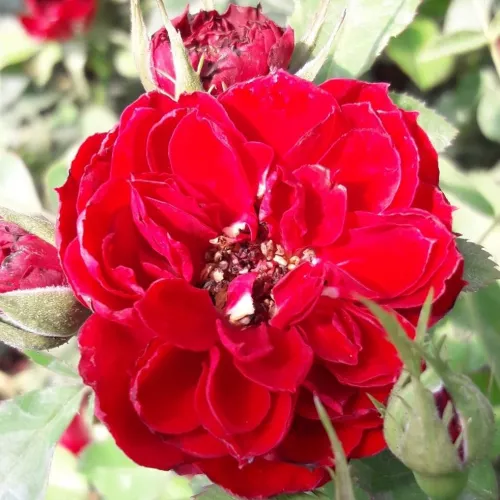
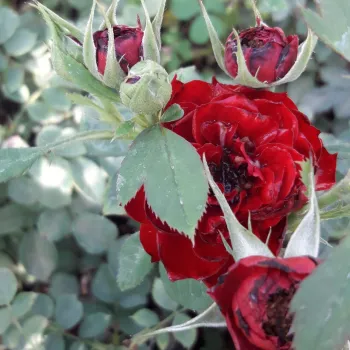
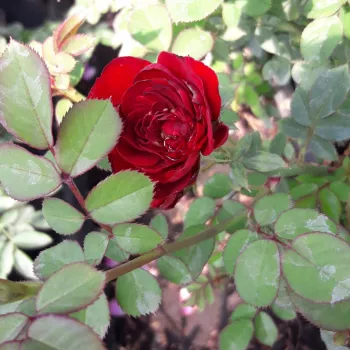
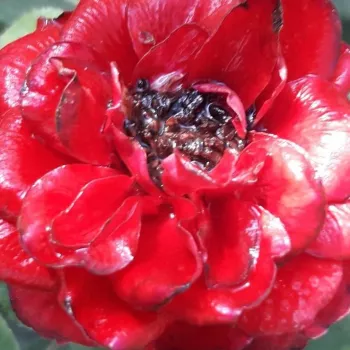
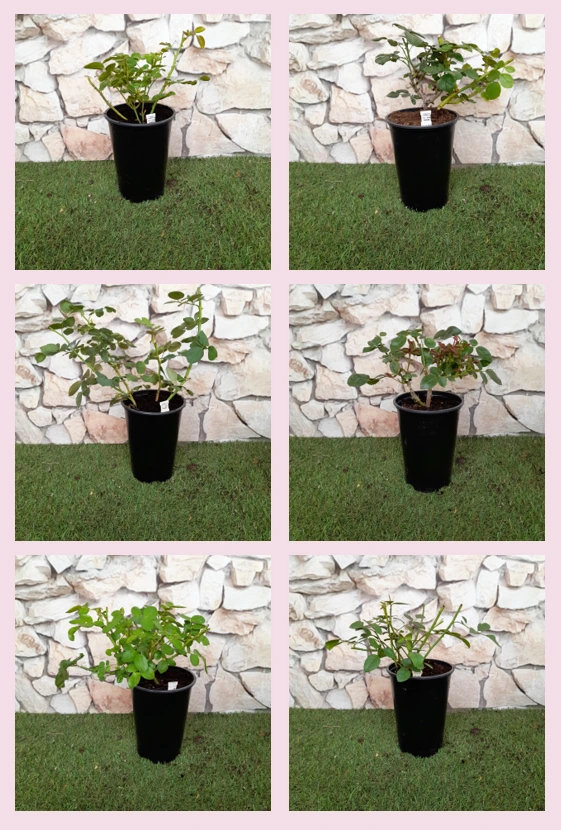
Created for breezy coastal verandas and compact family gardens, ZENTA is a dwarf burgundy mini rose that thrives with minimal fuss yet offers a long, reliable season of colour. Its compact, bushy form stays neat in containers and narrow borders, settling securely even where soil needs good drainage and careful water management in wet, windy weather. Dense mid‑green foliage sets off rich, velvety blooms that keep their deep colour remarkably well, darkening to a sultry burgundy with a faint purplish veil. Ideal for small urban spaces or Cornish and Devon shingle gardens, it is easy to position in a light, sheltered corner where you can enjoy its refined miniature cups at eye level. As an own‑root shrub it offers reassuring longevity, regenerating steadily and maintaining stable ornamental value over many years, from a quietly rooting first season through more branching shoots in the second and full garden presence by the third. Its modest size makes planting simple, whether massed in a sunny strip or grouped in large 40–50 litre containers on a veranda. With good basic care and only occasional plant protection, ZENTA delivers dependable flowering from early summer onwards, creating a petite but striking accent among gravel, sea kale and ornamental grasses – a touch of coastal drama without demanding expert gardening skills.
Usage options
| Target area |
Reasoning |
| Balcony boxes and rail planters |
The compact, dwarf habit (around 35–45 cm high) keeps ZENTA perfectly in scale with balcony boxes, giving you an elegant mini rose that will not outgrow rail planters or small ledges, ideal for beginners who want tidy, controllable growth on limited space for balcony gardeners |
| Large coastal veranda containers |
In 40–50 litre tubs ZENTA anchors well, its dense foliage and short, bushy framework coping with breezy conditions while allowing soil to be improved for drainage and watering, especially helpful where coastal rain and wind regularly challenge planting for veranda owners |
| Front of border edging |
The miniature size and neat spread of about 20–30 cm make this variety excellent for edging family borders, forming a low, burgundy ribbon that is easy to maintain, fits between paths and lawns, and offers long-season structure with minimal shaping for busy households |
| Rock and gravel gardens |
ZENTA’s good drought tolerance and modest water demand suit rockery pockets and gravel strips, where its velvety dark burgundy flowers punctuate sea kale or Festuca without constant watering, rewarding relaxed, low‑input care over many years for water-conscious gardeners |
| Small urban front gardens |
The own‑root form builds up as a durable, regenerating mini shrub that copes with everyday city conditions, maintaining ornamental value even after harder pruning, letting you re‑shape or refresh it without fear of losing the variety over time for townhouse owners |
| Mass planting in narrow strips |
At 20 cm spacing and high planting densities, this miniature rose creates a tight, continuous burgundy carpet along drives or paths, giving strong colour impact from relatively few plants and simplifying maintenance where access for detailed gardening is limited for practical planners |
| Season-long colour near seating areas |
Repeated, abundant clusters of small, cup-shaped blooms appear through the season, and though unscented they provide consistent visual interest at close range, ideal beside a bench or tea corner where you want reliable colour without daily deadheading for relaxation seekers |
| Containers for learners and children |
The gradual own‑root development from a settling first year to fuller flowering by the third teaches patience and basic care without complexity, giving novice gardeners a forgiving, small-scale rose they can observe, prune and water confidently for beginners and families |
Styling ideas
- Coastal-Veranda Trio – Group ZENTA in 50 litre clay pots with blue Festuca and sea kale for a salty, windswept look on sheltered decks – ideal for coastal veranda owners wanting structure and low care.
- Ruby-Edged Path – Plant a repeating line along a front path, underplanting with pale gravel to reflect light and show off the dark blooms – suitable for homeowners seeking neat, formal edging in tight spaces.
- Mini-Rock Garden – Tuck ZENTA among stones with Calamintha ‘Elfin Purple’ for a jewel-like burgundy and lilac tapestry that needs only occasional watering – perfect for time-poor gardeners favouring drought-tolerant schemes.
- Balcony-Bistro Pot – Place one rose per 45 litre container with a simple underplanting of silver thyme, keeping maintenance light while enjoying close-up flowers at table height – great for apartment dwellers creating a petite café corner.
- Family-Friendly Pocket – Use a cluster of three plants in a low border where children can observe buds and blooms at eye level, learning gentle pruning and watering – ideal for families introducing youngsters to easy roses.
Technical cultivar profile
| Characteristic |
Data |
| Name and registration |
Miniature rose marketed as ZENTA – burgundy dwarf mini rose – Márk; exhibition name Zenta; part of the Mini – dwarf rose collection, targeted at container, edging and balcony use. |
| Origin and breeding |
Bred in Hungary by Márk Gergely and introduced in 2002 by PharmaRosa Ltd.; exact parentage and breeding institution details are not recorded, so performance is judged from long-term garden use. |
| Growth and structural characteristics |
Compact, bushy dwarf plant reaching about 35–45 cm in height and 20–30 cm spread, with dense mid-green, slightly glossy foliage and moderate thorns, forming a small, solid shrub ideal for containers and edging. |
| Flower morphology |
Small, double, cup-shaped flowers (about 0.5–1.5 inches across) with 26–39 petals, produced in clusters of 3–10 per stem; remontant habit provides a generous second flush and continued blooming in suitable conditions. |
| Colour data and phenology |
Velvety dark burgundy blooms with faint purplish veil; ARS code DRR, RHS 187A outer and 187B inner petals; colour fades very little, instead deepening to near blackish burgundy before petals finally fall. |
| Fragrance and aroma |
No noticeable fragrance; bred primarily for colour and compact habit rather than scent; the double flowers partly hide stamens, making it mainly ornamental rather than a pollinator-attracting variety in mixed plantings. |
| Hip characteristics |
Rose hips form only occasionally; when present they are small spherical berries about 5–7 mm across, bright red (RHS 44A), adding a modest decorative accent late in the season without significant self-seeding. |
| Resistance and winter hardiness |
Rated H5 and USDA Zone 8a; tolerates typical mild UK winters down to about −12 °C with shelter; disease resistance is moderate to powdery mildew, black spot and rust, so occasional preventive care is recommended. |
| Horticultural recommendations |
Best in sunny, well-drained sites for containers, borders, rock gardens or balconies; plant 20 cm apart for masses or 35 cm as solitary; maintenance is medium, requiring basic feeding, watering and periodic plant protection. |
ZENTA – burgundy dwarf mini rose – Márk offers compact, container-friendly growth, season-long burgundy flowering and dependable own-root longevity, making it a refined, easy-care choice for quietly transforming smaller gardens and verandas.